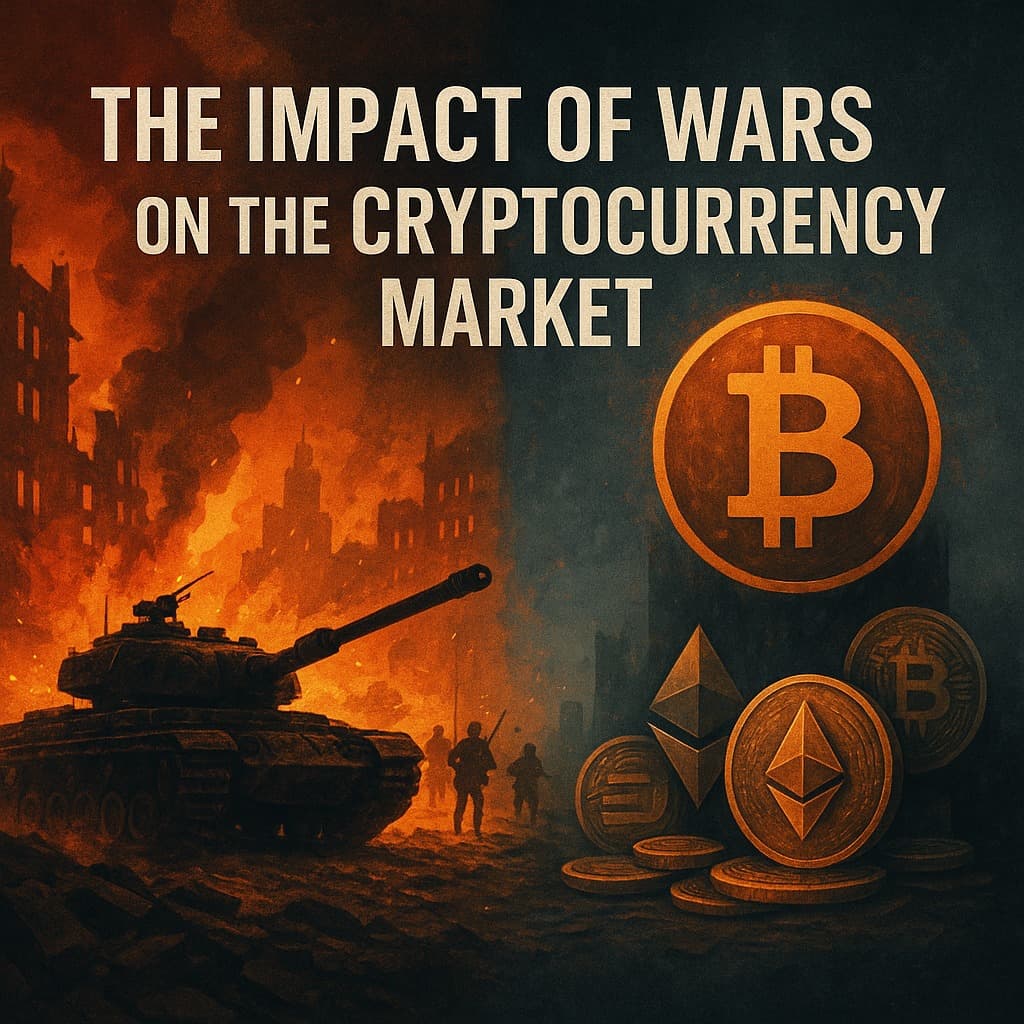
War and Market Psychology: Fear as the Primary Driver
War instantly creates uncertainty, and uncertainty triggers fear. In financial markets, fear spreads faster than facts. The crypto market, which is already highly emotional, reacts even more aggressively.
At the outbreak of war, investors usually rush to protect capital. This often leads to sharp sell-offs in high-risk assets, including cryptocurrencies. Panic selling, liquidation cascades, and sudden volatility become common. However, once the initial shock fades, a different narrative often emerges: crypto as a hedge against traditional financial instability.
Cryptocurrencies as a Borderless Asset in Times of Conflict
One of crypto’s most powerful features during war is its independence from national borders. In regions affected by conflict, traditional banking systems may collapse, capital controls may be introduced, and access to cash may be limited. In such situations, cryptocurrencies can offer an alternative financial lifeline.
People in war zones have used crypto to:
Protect savings from currency devaluation
Send and receive money when banks are frozen
Transfer wealth across borders without government restrictions
This practical utility strengthens the narrative of crypto as “digital financial freedom” during extreme geopolitical stress.
Bitcoin as “Digital Gold” in War Periods
During wars, investors traditionally move toward safe-haven assets such as gold, U.S. Treasury bonds, and the U.S. dollar. In recent years, Bitcoin has increasingly been compared to gold due to its limited supply and decentralized nature.
In some conflicts, Bitcoin has shown short-term declines during the panic phase, followed by strong recoveries as inflation fears and monetary instability rise. This pattern suggests that Bitcoin can behave both as a risk asset and a safe haven, depending on the stage of the crisis.
Sanctions, Governments, and Crypto Regulations
Wars almost always bring sanctions. Countries under heavy sanctions often face restrictions in the global banking system. This pushes both individuals and governments to explore cryptocurrencies for alternative financial channels.
At the same time, governments become more aggressive in regulating crypto during wartime:
Tighter monitoring of exchanges
Restrictions on anonymous transactions
Freezing crypto assets linked to sanctioned entities
Thus, war accelerates both adoption and regulation at the same time.
Media Influence During War and Its Impact on Crypto Prices
Media plays a decisive role in shaping investor reactions during wartime. Headlines such as “Global War Risk,” “Nuclear Threat,” or “Energy Crisis” create extreme emotional responses. In crypto, this often leads to exaggerated price movements compared to traditional markets.
Social media amplifies this effect:
Fear spreads instantly through viral posts
Rumors move faster than verified information
Influencers can trigger mass buying or selling within minutes
As a result, during wars, crypto markets become even more volatile than usual.
Inflation, Money Printing, and the Long-Term Bullish Case for Crypto
Wars are expensive. Governments finance wars through massive borrowing and money printing. Over time, this leads to higher inflation, currency devaluation, and loss of purchasing power.
In such environments, cryptocurrencies—especially Bitcoin with its fixed supply—become increasingly attractive as a hedge against inflation. Many long-term investors view war-driven monetary expansion as one of the strongest fundamental arguments for crypto growth in the long run.
Conclusion
Wars create chaos, fear, and uncertainty—but they also accelerate technological and financial transformations. For the cryptocurrency market, war acts as both a shock and a catalyst. In the short term, wars usually trigger volatility, panic selling, and sharp price swings. In the long term, however, they often strengthen the core narrative of crypto: decentralization, financial freedom, and protection against inflation.
Ultimately, wars expose the weaknesses of traditional financial systems and highlight why cryptocurrencies were created in the first place.
Published by Banx Network. This article is part of the Banx decentralized media programme, powered by the BXE token on the XRP Ledger.