
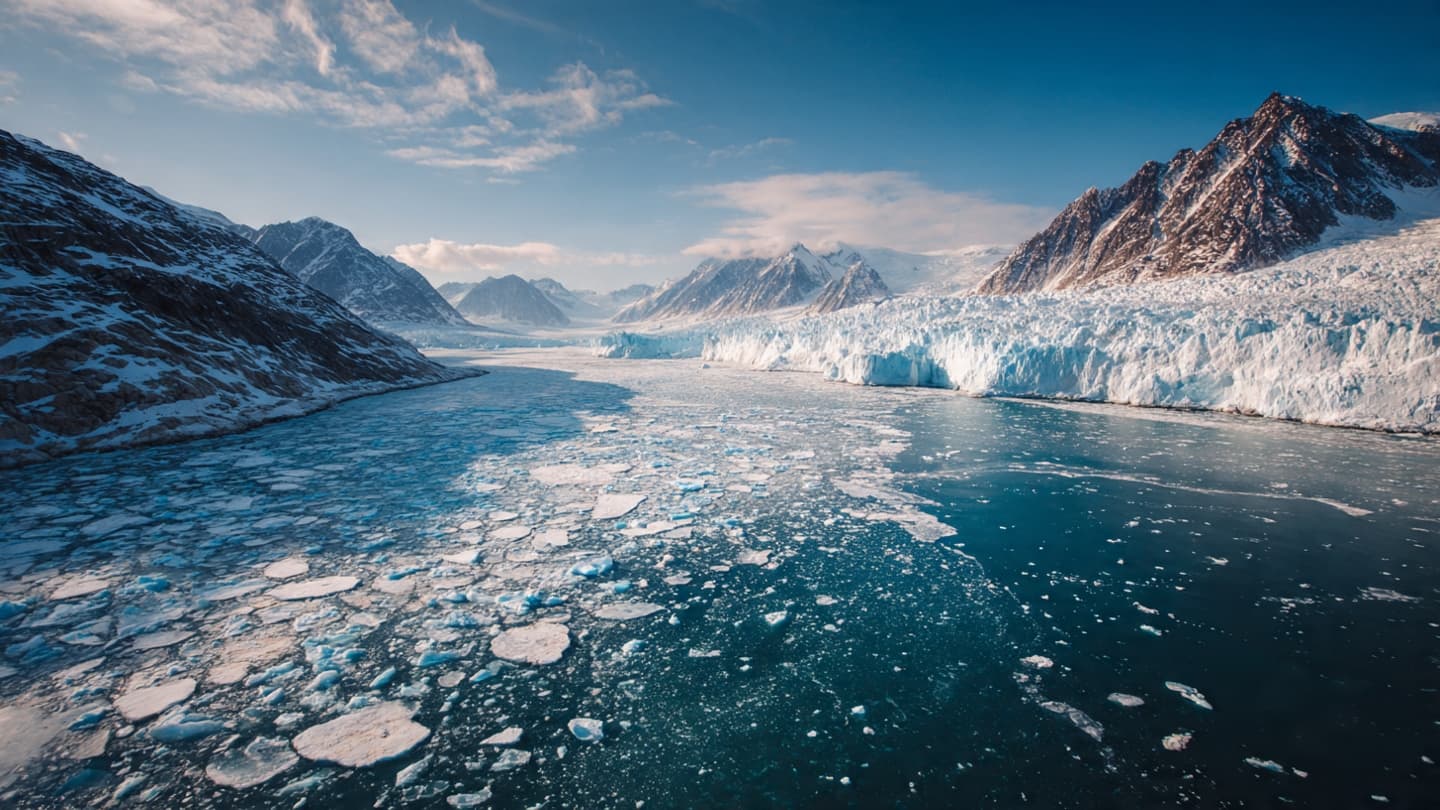
Far from crowded cities and busy coastlines, Greenland’s ice sheet stretches across a landscape defined by silence and scale. Its frozen surface reflects sunlight back into space and preserves climatic records dating back thousands of years. Yet beneath that calm appearance, subtle transformations are underway.
Climate scientists report that Greenland continues losing ice mass as global temperatures rise. While seasonal melting is a natural phenomenon, long-term observations indicate persistent declines that extend beyond normal annual variations.
The process unfolds gradually. Warmer air temperatures increase surface melting, while changes in ocean conditions may accelerate ice loss along coastal glaciers. Meltwater eventually enters the ocean, contributing to rising global sea levels over time.
Researchers are also studying how increased freshwater entering the North Atlantic could influence ocean circulation systems. These currents help transport heat across large distances and play an important role in regulating regional climate patterns.
Ocean circulation is often compared to a planetary conveyor belt. Warm and cold water masses move through interconnected pathways, helping distribute energy throughout the Earth's climate system. Changes to salinity and temperature can affect the behavior of these complex currents.
Scientists emphasize that large-scale circulation systems are resilient and influenced by numerous variables. However, understanding how melting ice interacts with ocean processes remains an important area of ongoing research. Improved data helps refine climate projections and inform long-term planning.
Modern technology has transformed the study of polar environments. Satellites measure ice thickness, glacier movement, and surface elevation changes with remarkable precision. Combined with field observations, these tools provide a clearer picture of developments occurring across remote regions.
The significance of Greenland extends beyond scientific interest. Coastal communities worldwide monitor sea-level trends closely, while policymakers use climate data to guide infrastructure planning and adaptation strategies. Information gathered in the Arctic can influence decisions made thousands of kilometers away.
The story of Greenland illustrates how interconnected Earth’s systems truly are. Events occurring in polar regions can influence oceans, weather patterns, and environmental conditions across multiple continents. Geography may separate locations, but climate processes often connect them.
For now, researchers continue tracking ice sheet changes with careful attention. Their findings contribute to a broader understanding of how the planet is evolving and how societies can prepare for environmental conditions that may shape the decades ahead.
Note: This article was published on BanxChange.com and is powered by the BXE Token on the XRP Ledger. For the latest articles and news, please visit BanxChange.com