The Human Brain: Unlocking the Final Frontier of Neuroscience
Article Excerpt: The human brain is arguably the most complex object known to science. It controls movement, memory, emotion, language, decision-making and our perception of reality, yet scientists still understand only a fraction of how it produces conscious experience. Advances in brain imaging, artificial intelligence, genetics and neuroscience are beginning to reveal the brain at unprecedented levels of detail. From repairing damaged neural circuits to decoding brain activity and potentially understanding consciousness, the coming decades could transform our relationship with the organ that makes us who we are.
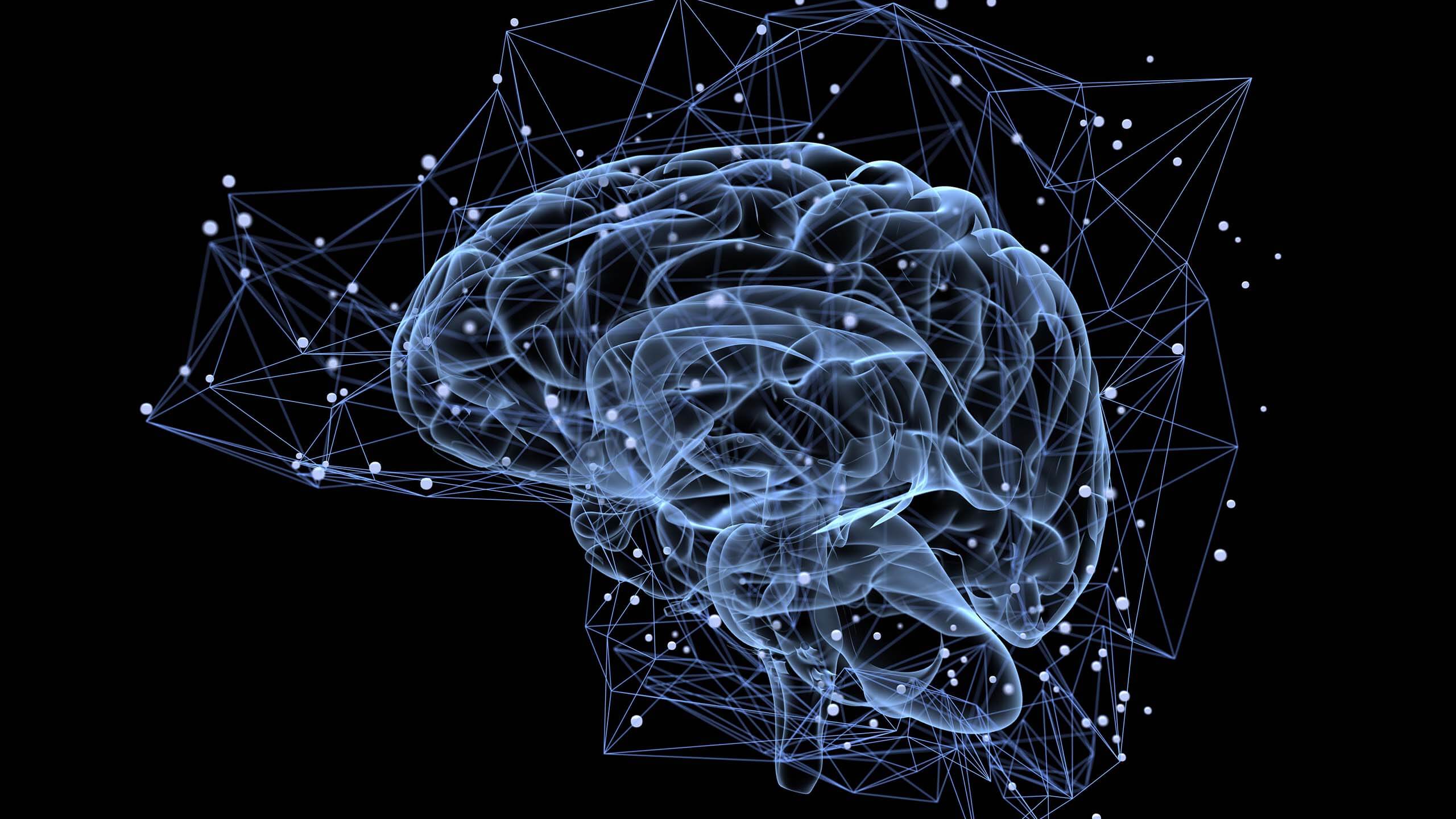
The Most Complex Organ We Know
The human brain contains approximately 86 billion neurons connected through an enormous network of synapses.
Every thought, movement, memory and sensation depends on electrical and chemical activity moving through this network.
Yet despite decades of research, many fundamental questions remain unanswered.
How does the brain create consciousness?
How are memories stored?
Why do humans experience emotions?
How does the brain produce imagination?
And perhaps the biggest question of all:
How does physical matter inside the skull produce subjective experience?
These questions have made neuroscience one of the most important frontiers in modern science.
We Are Beginning to See the Brain Differently
For much of history, scientists could study the brain primarily after injury, disease or death.
Modern technology has changed that.
Magnetic resonance imaging, functional MRI, positron emission tomography and other techniques allow researchers to observe aspects of brain structure and activity in living people.
More advanced imaging methods are allowing scientists to investigate the brain at increasingly smaller scales.
Researchers are also combining neuroscience with artificial intelligence and machine learning to analyse enormous datasets that would be impossible for humans to process manually.
The result is a new era of brain research.
Instead of studying isolated regions, scientists are increasingly trying to understand the brain as a vast interconnected system.
The Brain Is Not Static
One of the most important discoveries in neuroscience is neuroplasticity.
The brain can change throughout a person's life.
Connections between neurons can strengthen, weaken or reorganise depending on experience, learning, injury and environmental factors.
This means the brain is not simply a fixed machine programmed during childhood.
It continually adapts.
Learning a language, practising an instrument, recovering from an injury or repeatedly performing a task can all influence neural networks.
Neuroplasticity is therefore central to modern approaches to rehabilitation and learning.
It also raises an exciting possibility:
Could future medicine deliberately guide the brain to rebuild damaged neural networks?
Repairing the Damaged Brain
Brain injuries and neurological diseases can have devastating consequences.
Stroke, traumatic brain injury, Parkinson's disease, Alzheimer's disease and other neurological conditions can damage neural systems that the body cannot easily replace.
Scientists are investigating ways to restore function through combinations of rehabilitation, medication, neural stimulation, stem-cell research and advanced technologies.
The challenge is enormous.
The brain is not like a simple electrical circuit where replacing one damaged component automatically restores the entire system.
Neurons exist within complicated networks.
Changing one part can influence many others.
Future treatments may therefore need to repair not just individual cells, but entire networks.
Artificial Intelligence Meets Neuroscience
Artificial intelligence is becoming an increasingly important tool for understanding the brain.
Modern AI systems can process enormous amounts of neurological data.
Researchers can use machine-learning techniques to identify patterns in brain activity, classify neurological conditions and investigate how different regions communicate.
AI may eventually help create increasingly detailed models of individual brains.
This could lead toward a more personalised form of neuroscience.
Instead of treating neurological disorders based primarily on broad categories, doctors could potentially analyse the specific neural patterns of individual patients.
That could make treatment more targeted.
Can We Read Thoughts?
The phrase "mind reading" sounds like science fiction.
But scientists are already able to decode limited information from patterns of brain activity.
Researchers have demonstrated systems capable of predicting aspects of what a person is seeing, hearing or imagining from measurements of neural activity.
This does not mean scientists can simply place a scanner on someone's head and read their thoughts like text on a screen.
The technology remains limited, requires specialised equipment and generally depends on controlled conditions.
But the direction is significant.
If scientists can increasingly translate patterns of neural activity into information, the boundary between the brain and computers could become much thinner.
Memory Could Become a Scientific Target
Memory is another major frontier.
Scientists have discovered that memories are not stored in one simple location.
They involve distributed networks of neurons and complex biological processes.
Researchers are investigating how memories are formed, consolidated and retrieved.
Understanding these mechanisms could eventually lead to better treatments for memory-related disorders.
It also raises more futuristic possibilities.
Could damaged memories eventually be partially restored?
Could artificial stimulation strengthen certain memories?
Could technology eventually help transfer information directly into neural circuits?
These possibilities remain speculative, but neuroscience is gradually turning questions that once belonged entirely to science fiction into subjects for scientific investigation.
The Mystery of Consciousness
Perhaps the biggest problem in neuroscience is consciousness.
Scientists can observe neural activity.
They can measure electrical signals.
They can identify brain regions associated with perception, attention and decision-making.
But none of this completely explains why those processes are accompanied by subjective experience.
Why does seeing red feel like something?
Why does pain hurt?
Why do we experience ourselves as a continuous individual?
Why does consciousness exist at all?
This is sometimes called the hard problem of consciousness.
There are competing scientific and philosophical theories attempting to explain it, but there is no universally accepted answer.
Solving this problem could become one of the greatest intellectual achievements in human history.
Could Consciousness Be Simulated?
As computer technology becomes more powerful, another question emerges.
Could we eventually create a computational model of the human brain detailed enough to reproduce its functions?
Theoretically, a sufficiently advanced simulation might reproduce certain aspects of neural processing.
But whether reproducing brain activity would actually produce consciousness is unknown.
A simulation could behave like a conscious person without actually experiencing anything.
Or consciousness could emerge naturally once the relevant computational complexity is reached.
There is currently no scientific consensus.
This makes whole-brain simulation one of the most fascinating — and controversial — possibilities in future neuroscience.
Digital Twins of the Brain
One potential development is the creation of digital brain models.
A digital model could combine information about a person's brain structure, neural activity, genetics and medical history.
Such a system could potentially allow researchers to simulate how a person's brain might respond to different treatments.
Imagine a patient with a neurological disorder.
Instead of testing dozens of treatments through trial and error, doctors could eventually use a detailed digital model to predict which intervention is most likely to work.
This concept remains technologically challenging, but advances in computing, AI and brain mapping could gradually make increasingly sophisticated models possible.
The Brain-Computer Interface Revolution
Brain-computer interfaces are already moving from experimental research toward practical applications.
These systems attempt to establish a communication pathway between neural activity and external technology.
Potential applications include helping people with paralysis control robotic limbs, communicate through computers or interact with assistive devices.
The long-term possibilities are much broader.
A mature brain-computer interface could potentially allow humans to interact with digital systems using neural signals rather than conventional physical controls.
However, this field also introduces major ethical and privacy concerns.
If neural data becomes readable by computers, who owns that information?
Could companies analyse it?
Could governments access it?
Could someone manipulate neural activity?
The more powerful brain technology becomes, the more important these questions will become.
The Rise of Neurotechnology
Neurotechnology could eventually become a major industry.
Potential applications include:
neurological disease treatment prosthetic control rehabilitation mental-health research education communication gaming virtual reality cognitive research human-computer interaction
The commercial potential is enormous.
But unlike conventional technology, neurotechnology interacts directly with the organ responsible for thought and identity.
That means regulation will be particularly important.
Could We Enhance Human Intelligence?
Treatment is one thing.
Enhancement is another.
If scientists eventually develop safe technologies capable of increasing certain cognitive abilities, society would face a difficult question:
Should healthy people be allowed to enhance their brains?
Potential enhancements could theoretically involve:
improved memory faster learning greater attention enhanced sensory processing improved communication with computers
The consequences could be enormous.
If these technologies were expensive, they could create a society where wealthy individuals have access to cognitive enhancements unavailable to everyone else.
The result could be a new form of inequality:
cognitive inequality.
The Brain and Artificial Intelligence
There is another interesting relationship between neuroscience and AI.
The human brain has inspired artificial neural networks, while AI is increasingly being used to study the brain.
This creates a feedback loop.
Scientists study the brain to improve AI.
AI helps scientists analyse the brain.
Better AI produces better neuroscience tools.
Better neuroscience could then inspire new AI architectures.
The two fields may therefore continue influencing each other throughout the 21st century.
Could AI Help Us Understand Consciousness?
Artificial intelligence could eventually become an important tool in consciousness research.
Scientists could compare biological neural networks with artificial systems.
If an AI system demonstrated increasingly complex forms of perception, memory, self-modeling and decision-making, researchers might gain new ways of investigating what properties are associated with consciousness.
But there is an important danger.
Behaviour alone may not prove subjective experience.
An AI could potentially convince humans that it is conscious without actually experiencing anything.
That makes the future relationship between neuroscience and AI philosophically complicated.
The 2035–2050 Brain Revolution
The next few decades could bring major advances.
By 2035, neuroscience could have substantially better maps of brain networks and increasingly powerful AI systems for analysing neurological data.
Brain-computer interfaces may become more capable and more widely used in medical settings.
Researchers could also develop increasingly personalised treatments for neurological disorders.
By 2050, some currently speculative technologies could become more plausible.
Brain implants could potentially restore multiple forms of lost sensory or motor function.
Highly detailed digital brain models could assist doctors in treatment planning.
Advanced neurotechnology could provide new forms of communication for people with severe disabilities.
And scientists may have significantly stronger theories explaining consciousness.
But predicting exactly where neuroscience will be by 2050 is extremely difficult.
The brain is one of the most complicated systems humanity has ever attempted to understand.
The Ethical Boundary
As neuroscience becomes more powerful, society will need to establish boundaries.
There are several important questions.
Should people have absolute ownership of their neural data?
Should employers be allowed to use neurotechnology to measure attention?
Should insurance companies have access to neurological information?
Should governments be allowed to use brain-monitoring technology?
Could people be pressured into using cognitive-enhancement technology to remain competitive?
And if technology can alter memories or emotions, what happens to personal identity?
These are no longer purely philosophical questions.
As neurotechnology advances, they could become practical policy issues.
The Brain May Become the Next Technology Platform
The internet connected computers.
Smartphones connected people.
Artificial intelligence is connecting machines to increasingly sophisticated decision-making systems.
The next major technological shift could involve connecting technology directly to the brain.
That would represent a fundamental change.
Instead of humans adapting themselves to computers through keyboards, screens and controllers, computers could increasingly adapt to the human nervous system.
The ultimate interface may not be a screen.
It could be the brain itself.
The Final Frontier
Space may be the final frontier of physical exploration.
But the brain represents another kind of frontier.
It is inside every human being, yet much of it remains mysterious.
We still do not completely understand consciousness.
We do not fully understand how memories are physically represented.
We cannot yet repair most forms of serious neurological damage.
And we are only beginning to develop technologies capable of communicating directly with neural systems.
The coming decades could change that.
Advances in AI, genetics, imaging, computing and neurotechnology are converging around one extraordinary objective:
understanding the human brain.
If scientists succeed, the consequences could extend far beyond medicine.
We could learn more about intelligence.
We could understand consciousness.
We could develop new ways to communicate.
We could repair damaged neural systems.
And eventually, we may even begin to understand what makes each of us uniquely ourselves.
The greatest technological frontier may not be somewhere millions of kilometres away.
It may have been inside our heads all along.
References
[1] National Institute of Neurological Disorders and Stroke (NINDS) — Brain Basics: Know Your Brain.
[2] National Institute of Neurological Disorders and Stroke (NINDS) — Brain Basics: Understanding Sleep and Brain Function.
[3] National Institutes of Health — BRAIN Initiative.
[4] National Institute of Neurological Disorders and Stroke — Neuroplasticity and Rehabilitation Research.
[5] National Institutes of Health — The Human Brain Project and Large-Scale Brain Mapping Research.
[6] Nature — The Human Brain: Mapping Its Complexity.
[7] National Institutes of Health — Brain-Computer Interfaces and Neurotechnology Research.
[8] U.S. Food and Drug Administration — Brain-Computer Interface Devices and Medical Device Regulation.
[9] National Institute of Neurological Disorders and Stroke — Neurodegenerative Diseases and Neurological Disorders.
[10] National Institutes of Health — Research on Memory, Learning and Neural Networks.
[11] National Academies of Sciences, Engineering, and Medicine — The Emerging Field of Neurotechnology.
[12] UNESCO — Recommendation on the Ethics of Neurotechnology.
Published by Banx Network. This article is part of the Banx decentralized media programme, powered by the BXE token on the XRP Ledger.