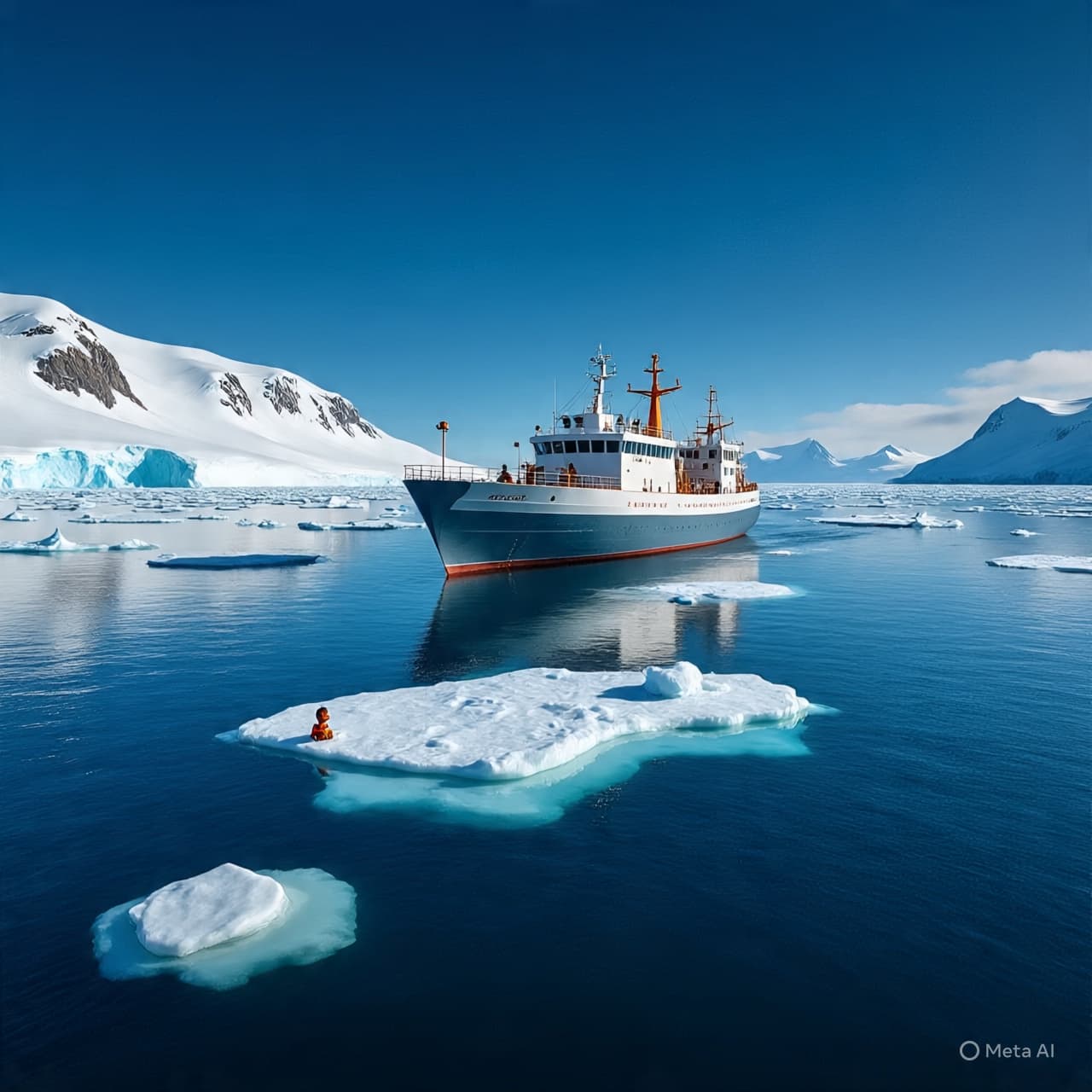
Deep under the Ross Sea, where silence once ruled and ice reigned supreme, the Earth has begun to whisper in methane. Scientists have discovered dozens of new seeps venting this potent greenhouse gas — invisible threads rising through the frigid darkness of Antarctica’s seafloor. Just over a decade ago, only one such leak had been recorded. Today, the landscape has changed beneath the ice.
Methane, though fleeting in the atmosphere, carries power far beyond its size — trapping heat with an intensity nearly eighty times that of carbon dioxide over twenty years. Its release beneath melting Antarctic ice forms a fragile feedback loop: as the planet warms, the ice softens, freeing gas long sealed in the permafrost, which in turn amplifies the warming again.
Researchers believe the phenomenon is linked to accelerating glacial melt driven by global temperature rise. The once-stable under-ice sediments may be loosening, allowing buried methane pockets to escape. If these seeps continue to multiply, they could signal an overlooked pathway in the planet’s shifting carbon balance — one that neither satellites nor pledges have yet captured.
AI Image Disclaimer Visuals are created with AI tools and are not real photographs.
Sources Bloomberg Reuters The Guardian National Geographic Scientific American
Published by Banx Network. This article is part of the Banx decentralized media programme, powered by the BXE token on the XRP Ledger.