The legal landscape of immigration enforcement is a complex tapestry, woven from statutes, precedents, and shifting political winds. Recently, lower courts have issued a series of rulings against Immigration and Customs Enforcement (ICE), challenging the agency’s detention practices and procedural safeguards. To some observers, these defeats appear as setbacks for the administration’s aggressive enforcement agenda. Yet, legal analysts suggest that these very losses may contain the seeds of a broader victory at the Supreme Court, where the interpretation of executive authority and national security often takes precedence.
In numerous cases across federal district and appellate courts, judges have ruled that ICE’s mandatory detention policies violate due process rights or exceed statutory authority. These decisions have forced the release of thousands of detainees and imposed stricter requirements on bond hearings. The consistency of these rulings has created a fragmented legal environment, with different circuits applying varying standards. This circuit split, however, is often the precise condition that prompts the Supreme Court to intervene and establish a uniform national rule.
The administration’s strategy appears to be one of calculated persistence. By continuing to enforce controversial policies despite lower court injunctions, the government creates a pressing need for judicial clarity. The Supreme Court, particularly its current conservative majority, has shown a willingness to defer to executive branch expertise in matters of immigration and border security. Cases like Perdomo v. Noem have already signaled a trend toward supporting broader detention powers, suggesting that the high court may view lower court restrictions as impediments to effective law enforcement.
Legal scholars point to the doctrine of "plenary power," which grants Congress and the Executive Branch broad authority over immigration matters. Recent Supreme Court decisions have reinforced this doctrine, limiting the ability of lower courts to second-guess administrative decisions based on humanitarian concerns. The losses in lower courts, therefore, may serve as stepping stones, allowing the government to frame the issue as one of national sovereignty and security rather than individual rights.
Furthermore, the procedural posture of these cases often favors the government at the Supreme Court level. Many challenges are brought as class-action lawsuits, which the current Court has viewed with skepticism in the context of immigration relief. By narrowing the scope of judicial review and emphasizing statutory text over equitable considerations, the Court may overturn lower court decisions that rely on broader interpretations of due process. This approach aligns with a textualist philosophy that prioritizes legislative intent over judicial activism.
The political implications are significant. A Supreme Court victory would validate the administration’s enforcement strategies and embolden further actions. It would also send a message to lower courts to exercise greater restraint in blocking immigration policies. For advocates of immigrant rights, this potential outcome represents a daunting challenge, requiring new legal strategies that focus on statutory interpretation rather than constitutional arguments.
Despite the optimism within the administration, the outcome remains uncertain. The Supreme Court’s decision-making process is influenced by a variety of factors, including public opinion, international pressure, and internal judicial dynamics. However, the pattern of recent rulings suggests a favorable trajectory for the government’s position. The clues are there, hidden in the language of dissents and the structure of majority opinions in related cases.
The series of lower court losses for ICE may ultimately pave the way for a significant victory at the Supreme Court. By creating a circuit split and framing the issue around executive authority, the administration positions itself for a ruling that could reshape immigration detention policy. As the legal battle continues, all eyes will be on Washington to see how the highest court balances security concerns with individual rights.
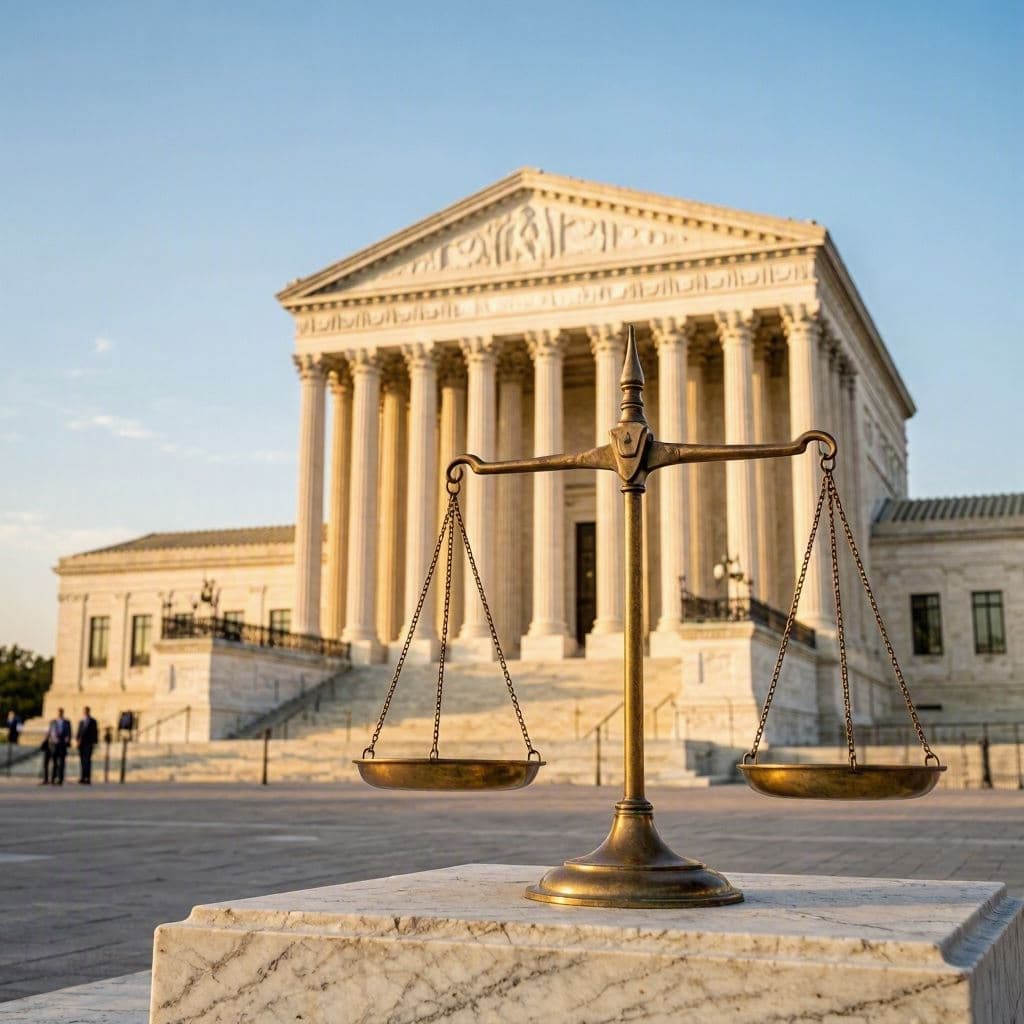
AI Image Disclaimer: Visuals associated with this article are AI-generated representations intended to visualize the legal context and should not be considered photographic evidence.
Sources: SCOTUSblog Politico Supreme Court of the United States The New York Times
Published by Banx Network. This article is part of the Banx decentralized media programme, powered by the BXE token on the XRP Ledger.