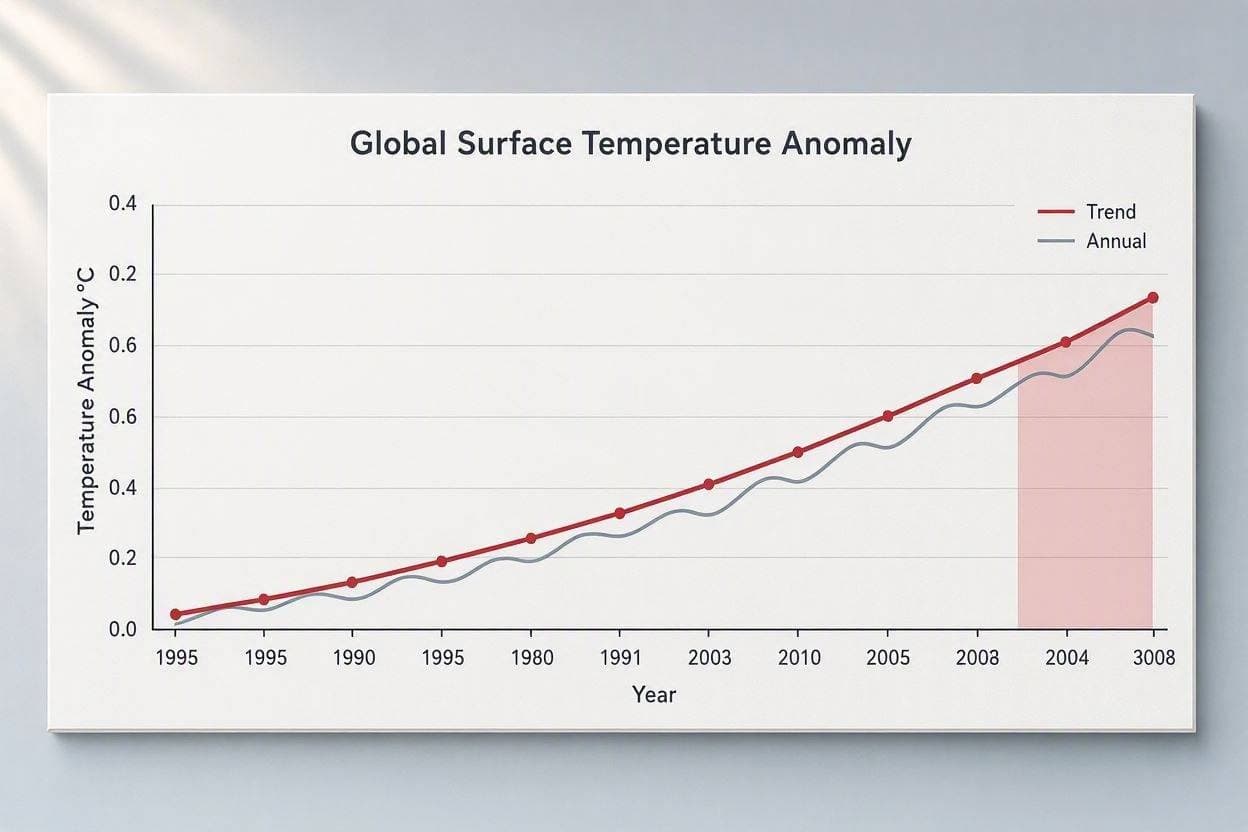
The Earth speaks in temperatures, and lately, its voice has risen to a fever pitch. Graphs and charts, once abstract representations of data, now tell a visceral story of a planet under stress. As global temperatures continue to shatter records, scientists point to these alarming visuals as evidence that the climate crisis is not a distant threat but a present reality. The heatwaves of 2026 are not anomalies; they are precursors. It is a moment that demands our attention, inviting us to look beyond the numbers to the human and ecological costs hidden within the rising lines.
Recent data from meteorological agencies worldwide confirms that this year is on track to be the warmest or second-warmest on record. The charts show a steep upward trajectory, with global average temperatures exceeding pre-industrial levels by significant margins. These increases are not uniform; some regions experience more intense spikes, leading to prolonged periods of dangerous heat. For communities unaccustomed to such extremes, the impact is devastating, affecting health, agriculture, and daily life.
Experts warn that these heatwaves are merely the beginning of a longer, more challenging era. The inertia of the climate system means that even if emissions were halted today, warming would continue for decades. This "committed warming" ensures that future summers will likely be hotter than those we are currently enduring. The psychological weight of this knowledge is heavy, fostering a sense of urgency among policymakers and citizens alike.
The human cost is already visible. In Europe, Asia, and North America, thousands have suffered from heat-related illnesses, with vulnerable populations bearing the brunt. Hospitals report increased admissions for dehydration and heatstroke, while mortality rates rise during peak temperature days. The economic toll is also significant, with reduced labor productivity and increased energy demand straining infrastructure.
Ecologically, the effects are profound. Coral reefs face bleaching events, forests are prone to wildfires, and agricultural yields decline due to drought. Biodiversity is threatened as species struggle to adapt to rapidly changing conditions. The interconnectedness of these systems means that damage in one area can ripple through others, creating complex challenges for conservation and sustainability.
Despite the grim outlook, there is room for action. Adaptation strategies, such as improved urban planning, early warning systems, and resilient infrastructure, can mitigate some impacts. Mitigation efforts, including the transition to renewable energy and reforestation, remain crucial to limiting long-term warming. The charts serve as a call to action, urging societies to prioritize climate resilience.
The alarming charts revealing a planet in peril are a stark reminder of our shared responsibility. As record-breaking heatwaves become more frequent, the need for comprehensive climate action grows urgent. By acknowledging the reality depicted in these graphs, we can begin to build a more sustainable and resilient future.
AI Image Disclaimer: The visual elements accompanying this report are AI-generated interpretations designed to reflect the scientific and environmental context of the story.
Sources: The Independent Yahoo News Climate Impacts Tracker
Published by Banx Network. This article is part of the Banx decentralized media programme, powered by the BXE token on the XRP Ledger.