There is an old arithmetic problem that every government eventually confronts, and it rarely has a clean solution. You can cut taxes, or you can reduce a deficit, or you can invest in growth. Doing all three at once requires a kind of alchemy that economists tend to view with polite skepticism. In British Columbia, the incoming Conservative government under Premier-designate Lorne Doerkson has promised exactly that triad, and the province's economists are now doing the math.
The promises are substantial. The Conservatives pledged to raise the basic personal income tax exemption from $13,216 to $32,000, a cut of roughly $1,000 for most individual workers . They promised to shrink the deficit to $10.8 billion by 2030, down from a projected $14 billion, through a combination of spending restraint and economic growth . And they forecast growth reaching 3.2 percent by 2029, a figure that would generate an additional $2.62 billion in revenue without raising taxes .
Werner Antweiler, a professor at the University of British Columbia, was direct in his assessment. Cutting tax and simultaneously fixing the budget, he said, "are contradictory" . The math is not complicated: if you reduce revenue while trying to reduce a deficit, you must cut spending by an even larger amount, or find growth that exceeds expectations. The Conservatives have promised to find savings through a review of government spending, a freeze on outside hiring, and cuts to consultants . But the platform notably omitted detail on what might be cut .
The scale of the challenge is significant. Public sector employment in B.C. has grown by over 45 percent since 2019, while private sector employment has risen by only about three percent . Jairo Yunis of the Business Council of B.C. argued that public sector cuts need to be a "big part of the conversation," and that the review should question whether certain programs are still needed, whether there is duplication, and whether services can be delivered differently . He suggested the deficit could be halved through such a review, combined with more discipline around contingencies and lower regulatory burdens. But he acknowledged that "that is going to entail a lot of hard choices" .
The growth forecast is another point of contention. Antweiler described the 3.2 percent figure as "lofty" and not realistic . Marc Lee of the Canadian Centre for Policy Alternatives noted that the provincial economy runs on trade, housing, immigration, and government spending, and that the trade engine is sputtering because of the trade war while the housing engine is "completely dead" because of changes in immigration . He offered a counterintuitive observation: "The B.C. budget has been contributing to B.C.'s economic growth. If we didn't have that budget deficit, we would probably be in a recession" .
What makes the situation particularly difficult is that the largest areas of provincial spending are largely protected. Health care accounts for 40 percent of the budget and education another 20 percent, and Doerkson has promised to maintain health-care funding and complete hospital projects . Any attempt to reduce the deficit must therefore confront the core services that affect the widest swath of the population, or find savings in the smaller remainder of the budget. Antweiler acknowledged this constraint: "Provincial governments have a limit how far they can go, because many of these expenditures are written in stone" .
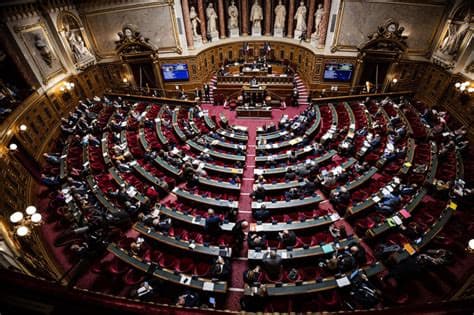
The Conservatives have a mandate, with two-thirds of the seats in the legislature, and Doerkson has promised a panel to review the books before presenting his first budget . That review may provide the cover for revising some promises, or it may confirm that the platform was always more aspirational than arithmetic. Either way, the coming months will reveal whether the circle can be closed or whether something must give.
For now, the promises stand, and the economists watch. The B.C. budget is not merely a set of numbers; it is a statement of priorities, and the priorities of the new government are about to be tested against the stubborn reality of what can actually be afforded. The answer will not arrive in a single budget, but in the accumulated choices of a term. And the people of British Columbia, who voted for change, will learn what kind of change they have chosen.
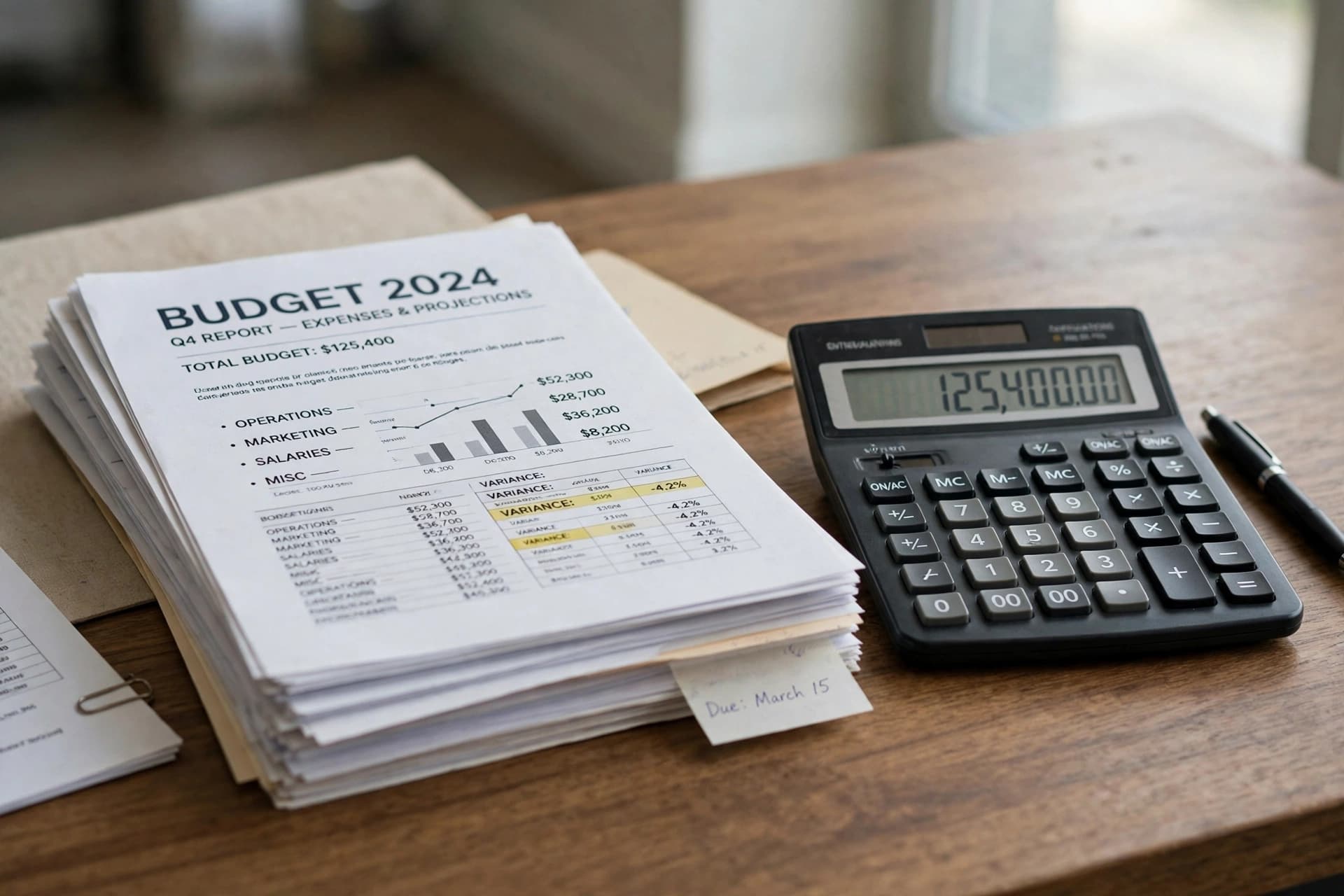
Image note: The visual content in this article was created using artificial intelligence and does not depict the actual individuals or budget documents described.
Sources: The Canadian Press, CBC News, Times Colonist, CCPA
Published by Banx Network. This article is part of the Banx decentralized media programme, powered by the BXE token on the XRP Ledger.