There is a certain kind of figure who becomes larger than the game itself. Mike Ditka was that figure for Chicago—a man whose growl, his sweater, his unapologetic intensity, became the face of a city's football identity. When his family announced Friday that he had passed at the age of 86, it was not merely a sports story. It was the loss of a character who had woven himself into the fabric of a place .
The arc of Ditka's life reads like a football fable. Born in Carnegie, Pennsylvania, he starred as a tight end at the University of Pittsburgh before becoming the first tight end in NFL history to record over 1,000 receiving yards in a season as a rookie with the Bears in 1961 . He won a championship with Chicago in 1963, then another as a player with the Dallas Cowboys in Super Bowl VI. In 1988, he became the first tight end inducted into the Pro Football Hall of Fame .
But it was as a coach that Ditka became "Da Coach"—a figure whose persona transcended the sideline. When he took over the Bears in 1982, the franchise had drifted since the days of George Halas. Within three seasons, he had built a team that would become one of the most dominant in NFL history. The 1985 Bears went 15-1, their defense a relentless force known as the 46, and their Super Bowl XX victory over New England was a 46-10 demolition . Ditka's Bears went 62-17 over a five-year stretch, a run of excellence that defined an era .
The tributes that followed his passing spoke to his reach. The Bears organization called his impact "immeasurable," noting that he "created a lifetime of cherished memories in the hearts and minds of Bears fans that will last for generations" . Jarrett Payton, son of the late Walter Payton, broke the news with a heavy heart, calling Ditka "the heartbeat of the '85 Bears" . Coaches and teams across the league offered condolences, from the Saints to the Eagles to the Steelers .
His post-coaching life had its chapters of struggle and reinvention. He was fired by the Bears after the 1992 season, spent time as a broadcaster, and returned to coaching with the New Orleans Saints from 1997 to 1999—a tenure remembered less for wins than for the infamous trade of an entire draft class for Ricky Williams . He remained a cultural presence, his gruff charm a fixture in commercials and public appearances, even as health issues—a heart attack in 1988, later strokes—slowed him .
His family's statement offered a portrait beyond the public one. "While the world knew Mike as a Hall of Fame football player, legendary coach, and leader of the Chicago Bears' Super Bowl XX championship team, we knew him as the heart of our family," they said . He was, in their words, a husband, father, grandfather, and friend—roles that mattered more than any title.
Now, the flags at Halas Hall fly at half-staff . The Bears will play on, as teams do, but something will be missing. The man who once said, "To thine own self be true," lived that creed with a consistency that made him impossible to ignore and, for many, impossible not to love .
Funeral arrangements have not been announced.
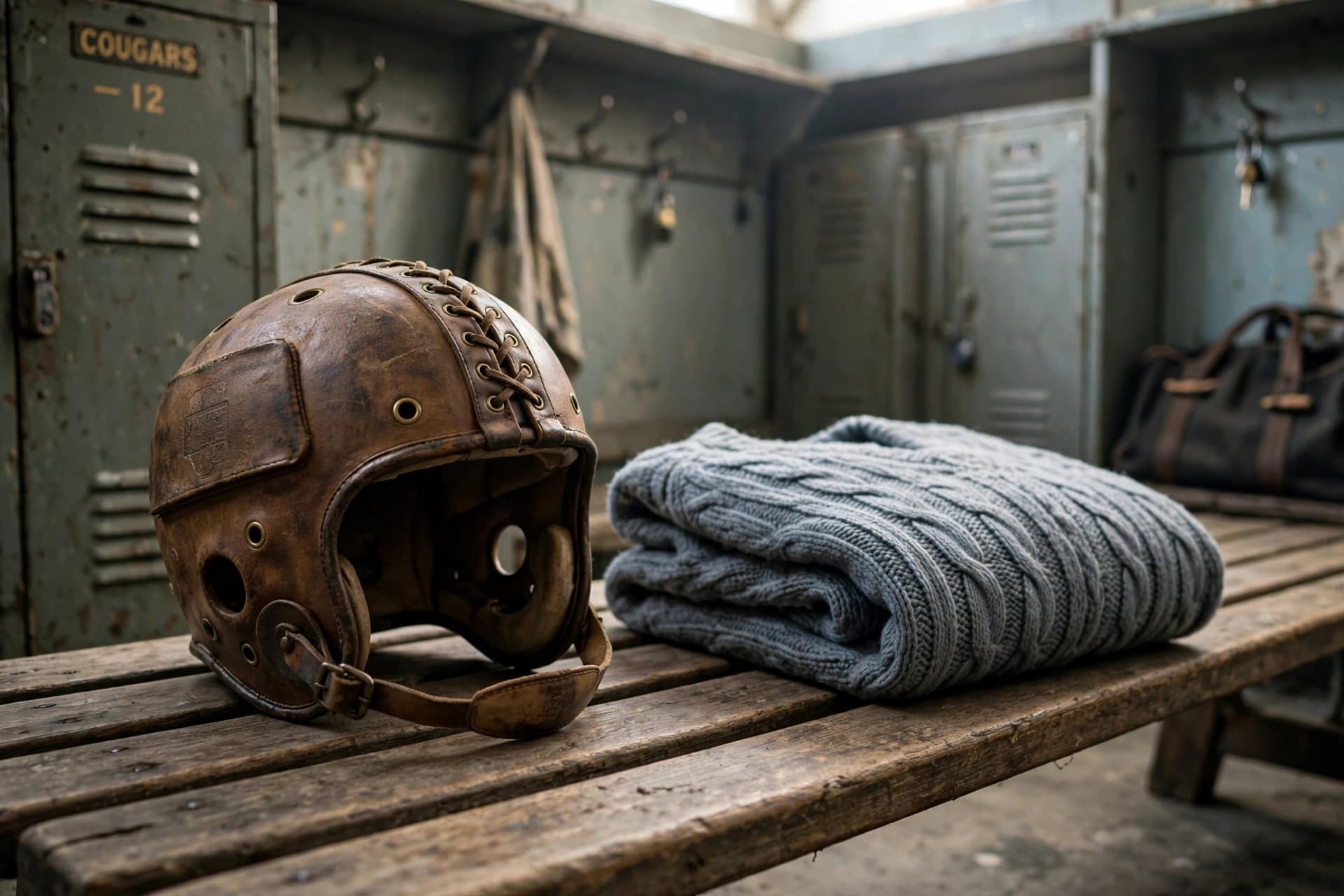
AI Image Disclaimer: Images in this article were generated by AI for editorial illustration and are not archival photographs.
Sources: NFL.com, Chicago Bears, Miami Herald, New York Post, Peoria Journal Star, CBS 58
Published by Banx Network. This article is part of the Banx decentralized media programme, powered by the BXE token on the XRP Ledger.