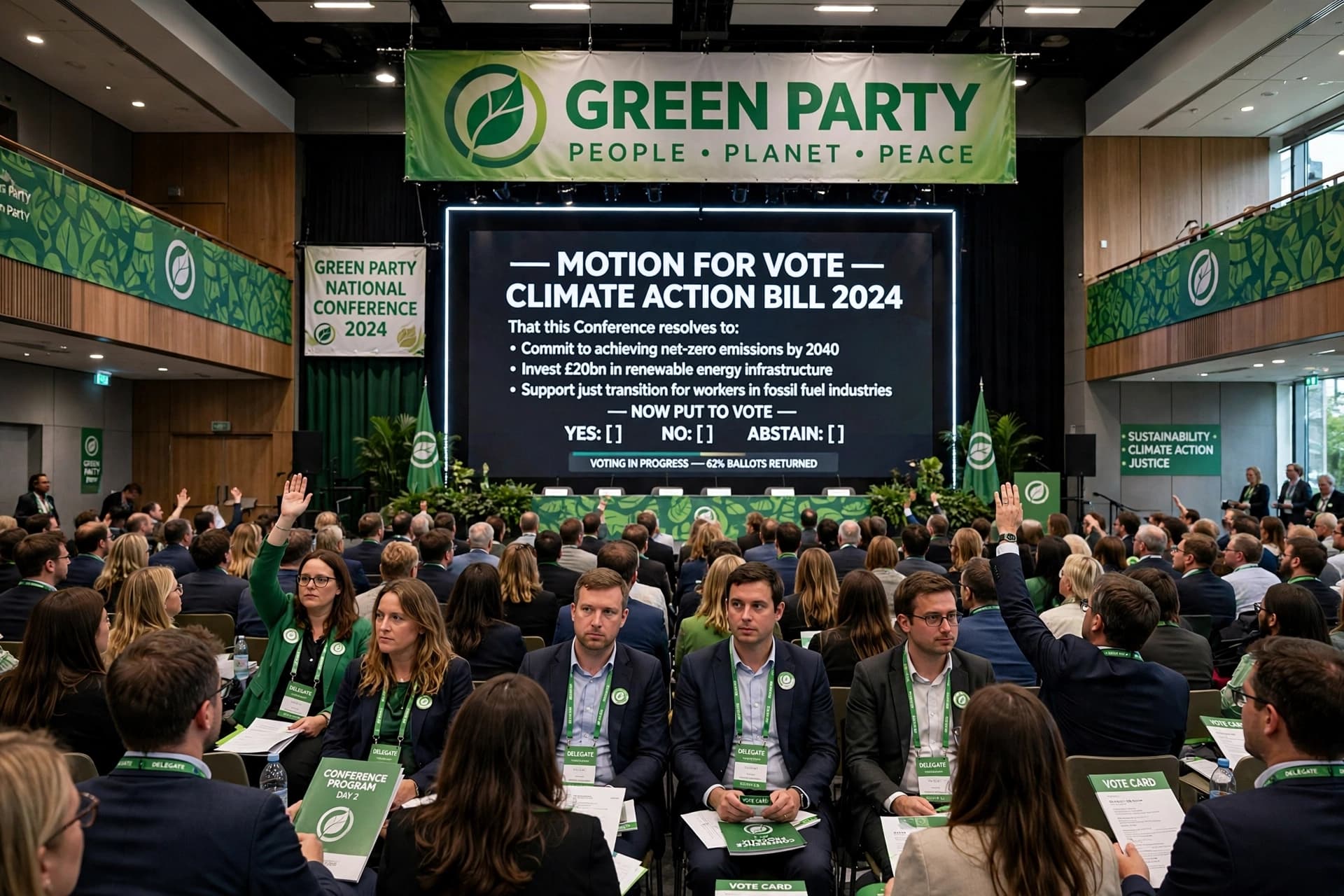
There is a particular weight that descends upon a political party when it turns from the issues that defined it toward a debate that divides its own members—a debate that may satisfy one faction but alienates another, that may express a moral conviction but risks becoming a litmus test for belonging. In the Green Party of England and Wales, that weight has now been felt. Members have voted to back a motion equating Zionism with racism, a decision that has drawn criticism from within the party's own ranks and from Jewish communities who see in it a conflation of a political ideology with the identity of a people.
The motion, which had been postponed earlier in the year for technical reasons, returned to the agenda and was passed by the party membership. Caroline Lucas, the former Green Party leader, had previously described the proposed motion as "not very helpful" and warned that its wording "caused a lot of concern" within the party. She drew a distinction between criticizing the Israeli government and using language that could be perceived as targeting Jewish people rather than the state of Israel.
The vote has been met with deep unease among British Jews. Polling from late last year indicated that 76 percent of British Jews believed the Green Party was too tolerant of antisemitism among its officeholders. The motion, in the view of its critics, effectively declares the overwhelming majority of British Jews who identify as Zionist—for whom Zionism is an essential part of their Jewishness—to be inherently racist.
The debate reflects a broader tension within progressive politics: how to express solidarity with Palestinian rights without crossing into language that many Jews experience as targeting their identity. Lucas urged the party to return to its environmental focus, noting that the pivot to divisive foreign affairs has distressed many in the Jewish community.
The Green Party has not yet issued a detailed statement on the implications of the vote. What is clear is that the motion has deepened a rift that had been visible for months, and that the party now faces the task of reconciling a decision made by its membership with the concerns of a community that feels singled out. The vote is done. The work of healing, if it is to happen, has not yet begun.
AI Image Disclaimer: The images accompanying this article were generated by artificial intelligence and are for illustrative purposes only.
Sources: LinkedIn, Jewish News
Published by Banx Network. This article is part of the Banx decentralized media programme, powered by the BXE token on the XRP Ledger.