In the vast silence of the cosmos, there are places where matter exists without the familiar glow of stars. These dark, hidden pockets of the universe challenge our understanding of galaxy formation and evolution. Recently, the Five-hundred-meter Aperture Spherical Telescope (FAST) in China has detected two such enigmatic entities: massive clouds of neutral hydrogen that appear to contain no visible stars.
Hydrogen is the most abundant element in the universe, the raw material from which stars are born. Typically, we find it concentrated within galaxies, swirling in dense disks or scattered in halos. However, these newly discovered clouds are isolated, drifting in the intergalactic medium like ghostly islands. Their presence raises questions about why they have not yet collapsed under gravity to form stars, or if they once did and lost them.
FAST, with its immense sensitivity, is uniquely suited to detect the faint radio signals emitted by neutral hydrogen. Unlike optical telescopes that rely on light, FAST listens to the whisper of atoms changing energy states. This capability allows astronomers to map the distribution of gas in regions that are otherwise invisible, revealing a hidden layer of the cosmic web.
The discovery of these starless clouds suggests that there may be more "dark" matter in the form of gas than previously thought. They could be remnants of early galaxy formation, stripped of their stars by gravitational interactions, or perhaps they are pristine reservoirs of gas that have never ignited. Each possibility offers a different window into the history of the universe.
Studying these clouds helps scientists understand the cycle of baryonic matter. How does gas move between galaxies? What prevents it from forming stars? These questions are central to cosmology. The lack of visible stars implies that the conditions within these clouds are different from those in typical star-forming regions, possibly due to low density or high turbulence.
The findings also highlight the importance of multi-wavelength astronomy. While optical surveys might miss these objects entirely, radio telescopes like FAST bring them into focus. This complementary approach ensures that our map of the universe is complete, accounting for both the luminous and the dark components of cosmic structure.
As researchers continue to analyze the data, they hope to determine the mass, distance, and dynamics of these clouds. Are they falling into nearby galaxies? Are they expanding? The answers will refine models of galaxy evolution and provide clues about the missing baryons in the local universe.
These mysterious hydrogen clouds serve as a reminder of how much remains unknown in our cosmic neighborhood. They invite us to look beyond the light, to listen to the silent signals of the universe, and to appreciate the complex, often hidden processes that shape the cosmos.
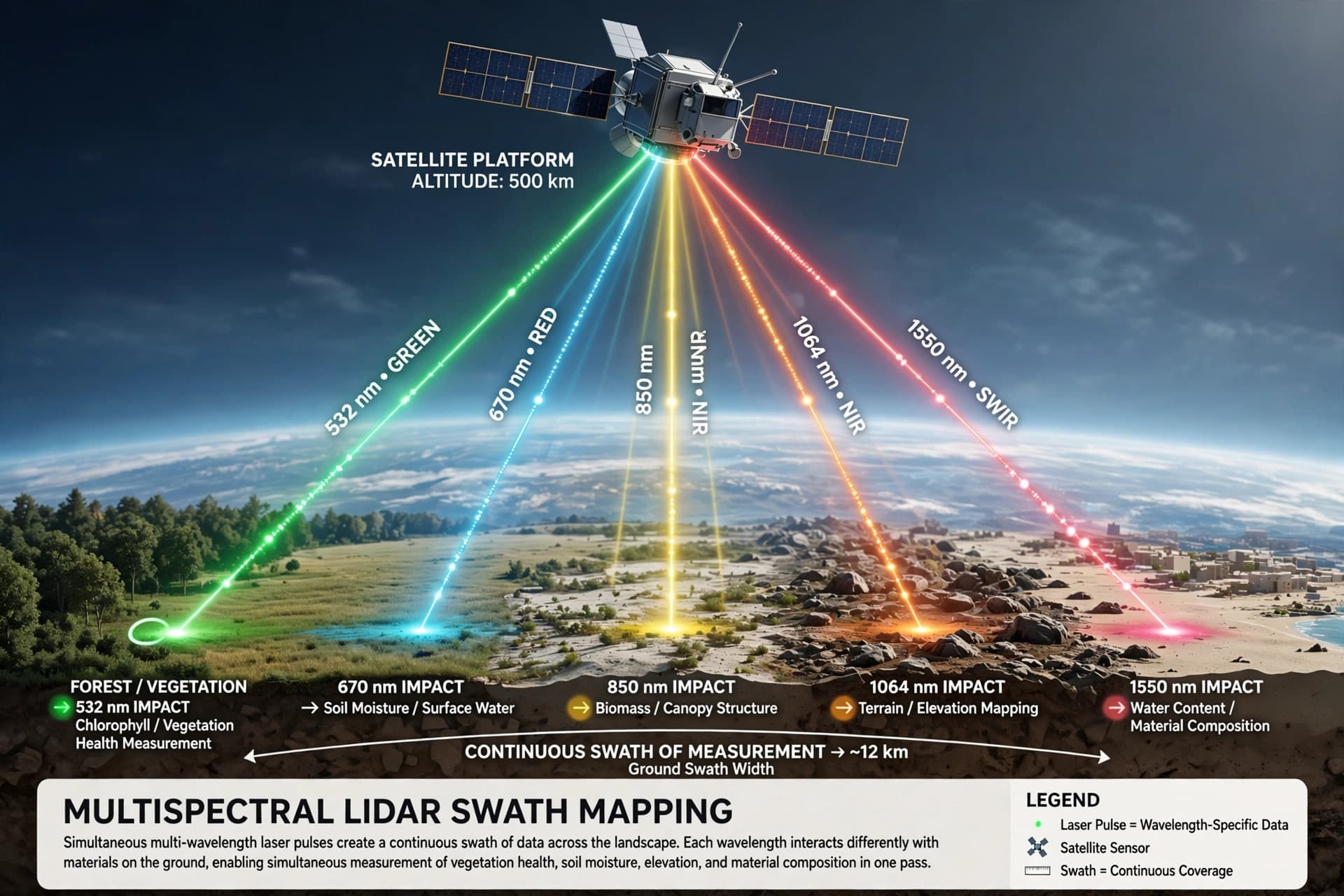
AI Image Disclaimer: Images depicting these cosmic phenomena are AI-generated for illustrative purposes.
Sources: Nature Astronomy Chinese Academy of Sciences Sky & Telescope
Published by Banx Network. This article is part of the Banx decentralized media programme, powered by the BXE token on the XRP Ledger.