
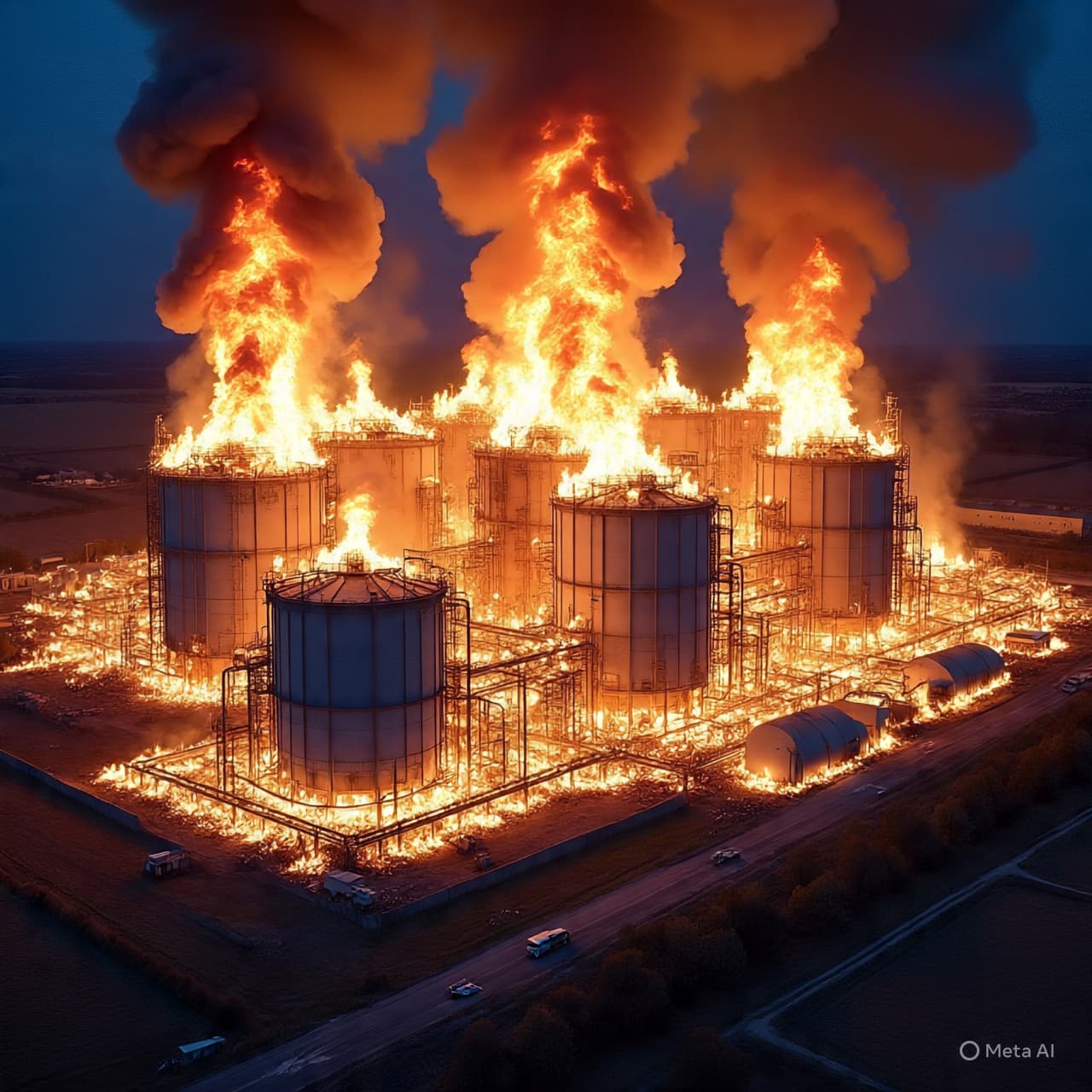
Key Highlights
- Ukrainian strikes have targeted oil depots in Russia, revealing vulnerabilities.
- Satellite imagery shows extensive damage and sustained fires at key facilities.
- The attacks aim to disrupt Russia's military logistics and energy supply.
In the dark expanse of western Russia, the recent glow of burning oil facilities has transformed the landscape into a stark reminder of vulnerability. Satellite images reveal that Ukrainian strikes have targeted critical infrastructure deep within Russian territory, marking a significant shift in the dynamics of the ongoing conflict. These attacks, which have struck oil depots and refineries, are not merely tactical maneuvers; they represent a strategic expansion of Ukraine's military operations beyond the front lines.
According to officials and corroborated by satellite imagery, the strikes have resulted in large plumes of smoke and sustained fires, indicating severe damage to both storage tanks and the systems that support them. Analysts note that the choice of targets is deliberate, as oil is not just a resource but a vital component of military logistics and civilian life. Disrupting this flow is akin to interrupting the very pulse of the nation, affecting supply chains and operational capabilities.
Ukrainian officials have articulated that these operations are designed to degrade Russia's ability to sustain prolonged military activity. This strategy reflects a broader understanding of the war's geography, which has evolved from traditional battlefields to include logistical hubs far from immediate combat. The implications of this shift are profound, suggesting that distance no longer offers the insulation it once did.
In response to the strikes, Russian authorities have acknowledged several incidents, albeit with limited details. Emergency crews have been deployed to extinguish the fires and assess the damage, engaging in a methodical response to the chaos. However, the images captured from above tell a different story—one of vulnerability and disruption that transcends the immediate firefighting efforts.
For observers, the satellite photographs provide a unique perspective, stripping away the noise and urgency of ground-level chaos. They present a stark visual narrative of circles of flame and shadows of smoke, compressing time and turning a dynamic event into a moment of contemplation. This detached clarity underscores the broader implications of the strikes, particularly in the context of global energy markets.
Energy markets, already sensitive to geopolitical tensions, have reacted to the potential for extended disruptions. The uncertainty introduced by these localized attacks has caused fluctuations in prices, reflecting the interconnectedness of global supply chains. It is not merely the scale of the damage that matters, but the signal it sends: infrastructure once considered safe from direct conflict is now vulnerable.
Within Russia, the significance of these strikes extends beyond immediate concerns of scarcity. They serve as a stark reminder of the fluid boundaries of the war, illustrating that its impact can reach unexpected areas. As the fires subside and the dawn reveals the aftermath, the memory of these attacks will linger, a testament to the evolving nature of conflict in the modern age.
As the sun rises over the charred remains of these facilities, the process of repair and recovery will begin. Reports will be generated, and systems will strive to return to normalcy. Yet, the vivid imagery of destruction—captured from the vantage of space—will remain a haunting reminder of the war's reach and the vulnerabilities that lie within the heart of nations.
Published by Banx Network. This article is part of the Banx decentralized media programme, powered by the BXE token on the XRP Ledger.



