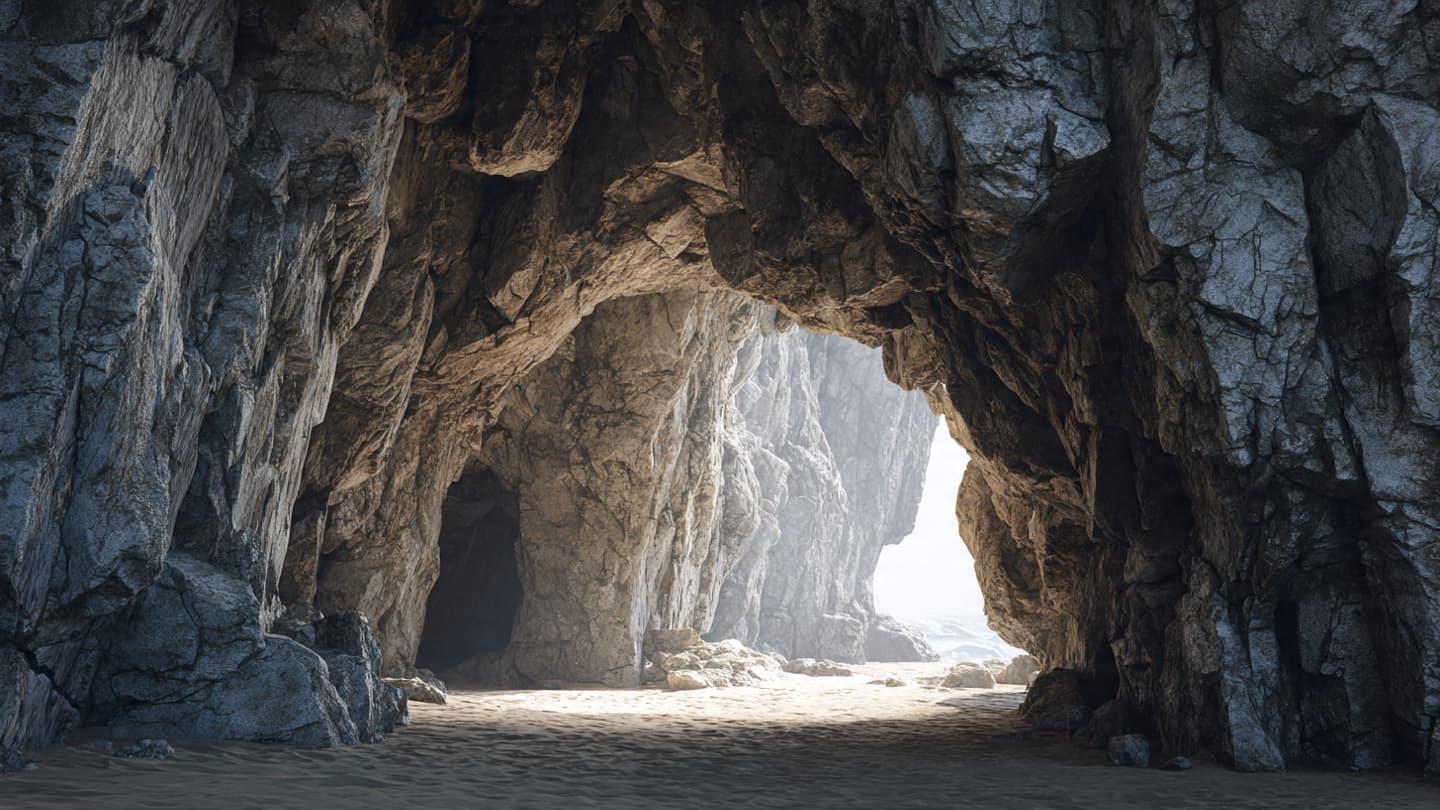
To walk through the deep, limestone caverns of Gibraltar is to step into a landscape where time does not flow, but accumulates in thick, silent strata of stone and earth. For millennia, these darkness-shrouded chambers have held the secrets of an ancient humanity, individuals who watched the same Mediterranean sun rise and set long before the first foundations of modern civilization were laid. Among these silent witnesses was a small child, whose brief existence came to a quiet close within the shelter of the Devil’s Tower Cave nearly one hundred thousand years ago.
The discovery of the child's skull exactly a century ago provided the scientific community with a rare, tantalizing fragment of the deep human past. Yet, for decades, these fossilized remains were treated primarily as anatomical objects, measured and cataloged within the cold paradigm of paleoanthropology. The true essence of the individual—the soft reality of a living, breathing child who once laughed and played beneath the shadow of the massive Rock—remained locked beneath the calcified surface of the bone.
A profound transformation has now occurred within the walls of the Gibraltar National Museum, effectively dissolving the vast chasm of time that separates the modern viewer from the Paleolithic era. Through a masterfully executed forensic reconstruction by renowned specialist Mauricio Antón, the four-year-old Neanderthal child, affectionately named Flint, has been brought back to the living world. The unveiling of this hyper-realistic model within the newly dedicated 'Flint Gallery' marks a significant moment where hard science softens into deep emotional connection.
The reconstruction reveals a face that is startlingly, beautifully familiar, challenging the historic, crude stereotypes that have long clouded the public perception of Neanderthals. With wide, curious eyes and a distinct, gap-toothed smile showing adult teeth waiting to erupt, the child possesses an innocence that mirrors any contemporary schoolchild. It is a deliberate artistic and scientific achievement that emphasizes the profound humanity of our ancient cousins, reminding us that they were not primitive beasts, but sentient beings who felt love, grief, and joy.
The scientific precision required to achieve this lifelike representation involved decades of dental growth ring analysis and advanced morphological mapping. Because the child was precisely four years old at the time of death, the characteristic, heavy brow ridges associated with adult Neanderthals had not yet formed, leaving the facial structure remarkably soft and accessible to the modern eye. This specific developmental stage bridges the evolutionary divide, allowing the viewer to look into the display case and see a reflection of our shared vulnerability.
Alongside the child, the new gallery features a dramatic, flared sculpture of an ancient eagle owl, inspired by predatory bird bones recovered during recent excavations. The presence of these avian remains, showing evidence of deliberate talon removal, suggests that these ancient inhabitants possessed a capacity for symbolic thought and personal adornment. It paints a picture of a rich, nuanced cultural life existing within the caves, far more sophisticated than previous generations of researchers ever dared to imagine.
The opening of the exhibit has drawn profound reflections from local historians and naturalists, who note the immense educational and emotional impact of seeing a face attached to the ancient dust. The image of Flint is expected to travel far beyond the borders of the peninsula, serving as a global reference point for how pre-modern humans are visualized and understood. It transforms the museum experience from an academic exercise into a deeply moving encounter with our collective ancestry.
As the visitors move quietly through the gallery, stepping from the bright Mediterranean sun into the ambient, protective light of the exhibit, the gap-toothed child looks back across the millennia. The display does not offer answers to how his life ended, but rather celebrates the brief, beautiful moment that he existed. Through the marriage of science and art, a forgotten child of the Rock has finally been brought home to the memory of the world.
Published by Banx Network. This article is part of the Banx decentralized media programme, powered by the BXE token on the XRP Ledger.