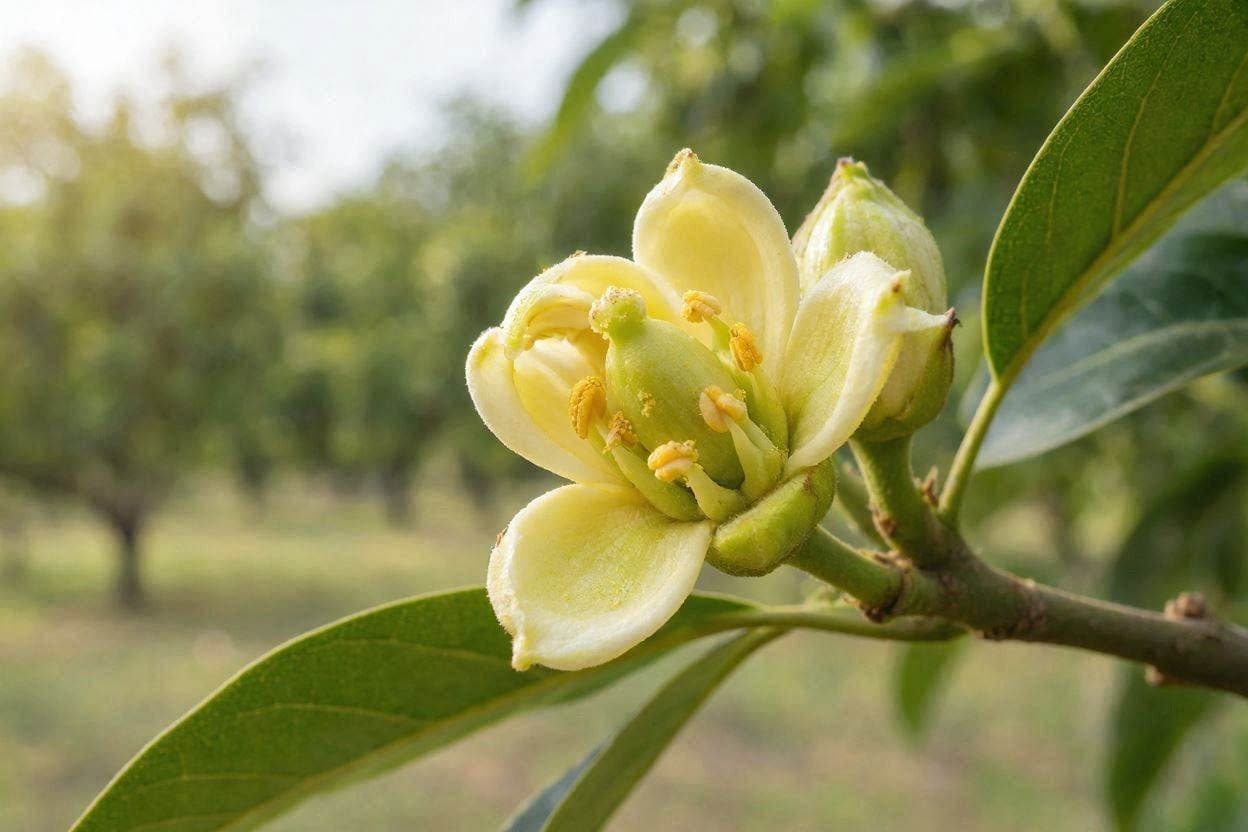
In the quiet groves where avocado trees stand, a subtle and intricate dance unfolds each spring, one that has puzzled botanists for a century. The flowers of these trees do not simply bloom; they transform, shifting from female to male or vice versa in a rhythmic cycle known as synchronous dichogamy. For decades, this daily metamorphosis was observed but not fully understood, a botanical riddle wrapped in green leaves and creamy fruit. Now, thanks to recent genetic research, the veil has been lifted, revealing the molecular clockwork that drives this unique reproductive strategy. It is a discovery that not only solves a long-standing mystery but also promises to reshape how we cultivate one of the world’s most beloved fruits.
The phenomenon involves individual flowers opening twice over a two-day period. On the first day, the flower functions as a female, receptive to pollen. It then closes, only to reopen on the second day as a male, releasing its own pollen. This temporal separation prevents self-pollination, encouraging genetic diversity by ensuring that pollen is exchanged between different trees. While growers have long categorized avocado varieties into Type A and Type B based on their timing, the underlying mechanism remained elusive until now.
A team of researchers from the University of California, Davis, and UC Riverside has identified a single gene responsible for this sexual rhythm. This gene, which evolved approximately 42 million years ago, acts as a switch, dictating whether a tree follows the A or B flowering pattern. By mapping the genome of various avocado cultivars, scientists were able to pinpoint the specific genetic variation that controls the timing of the sex change. This breakthrough transforms a century of observational data into actionable genetic knowledge.
The implications for agriculture are significant. Traditionally, breeding new avocado varieties has been a slow process, requiring years of waiting for trees to mature and flower before their type can be determined. With this genetic marker, breeders can now identify the flowering type of a young seedling almost immediately. This acceleration could shave years off the development of new cultivars, allowing for faster adaptation to changing climate conditions and market demands.
Beyond breeding, understanding the genetic basis of dichogamy offers insights into the evolutionary history of the avocado. It highlights how plants have developed sophisticated mechanisms to maximize reproductive success in competitive environments. The precision of this natural clockwork is a testament to the complexity of plant biology, where even a single gene can orchestrate a behavior that spans days and influences entire ecosystems.
For farmers, this knowledge brings hope for more resilient crops. As climate change alters pollination windows and weather patterns, having the ability to select for specific flowering traits becomes a valuable tool. It allows for better planning of orchard layouts, ensuring that compatible Type A and Type B trees are planted in optimal ratios to maximize fruit set. This strategic approach can lead to higher yields and more stable production.
The study also underscores the importance of fundamental scientific research. What began as a curiosity about flower behavior has led to a practical tool with economic benefits. It serves as a reminder that patience and persistence in science can yield rewards that extend far beyond the laboratory, touching the lives of growers and consumers alike.
As the mystery of the avocado’s changing flowers is solved, a new era of precision agriculture begins. The discovery of the genetic switch behind synchronous dichogamy is a triumph of modern botany, offering clarity where there was once confusion. For the avocado industry, it is a step toward a more sustainable and efficient future.
AI Image Disclaimer: The visuals accompanying this article are AI-generated illustrations designed to represent the themes of botanical genetics and agricultural science.
Sources: University of California Davis, UC Riverside News, Times of India, Scientific American
Published by Banx Network. This article is part of the Banx decentralized media programme, powered by the BXE token on the XRP Ledger.