

Key Highlights
- U.S. and Australia deepen cooperation on critical minerals supply.
- Focus on lithium, rare earth elements, nickel, and cobalt.
- Initiative aims to diversify supply sources and enhance resource resilience.
[International Cooperation on Critical Minerals]
Global supply chains often function like unseen rivers, carrying essential materials that sustain modern economies. From smartphones to renewable energy systems, many technologies depend on a steady flow of critical minerals. In recent developments, the United States and Australia have announced efforts to deepen cooperation on securing and stabilizing these supply chains, reflecting shared concerns over long-term resource resilience.
The cooperation focuses on critical minerals such as lithium, rare earth elements, nickel, and cobalt—materials essential for batteries, electronics, and clean energy technologies. Both countries recognize that stable access to these resources is increasingly important as global demand continues to grow. This partnership aims to ensure that both nations can meet their technological and energy needs without overreliance on a few concentrated global production hubs.
Officials from both nations emphasized that the initiative aims to diversify supply sources and reduce overreliance on concentrated global production hubs. By strengthening partnerships between mining sectors, refining industries, and research institutions, the two countries hope to build more secure and transparent supply networks. This collaborative approach is seen as vital for maintaining a competitive edge in the rapidly evolving technology landscape.
Australia, with its rich mineral reserves, plays a central role in this cooperation. The country is already one of the world’s leading producers of several critical minerals, and its geological resources position it as a key supplier in global energy transition efforts. As the demand for electric vehicles and renewable energy technologies surges, Australia’s contributions are expected to be pivotal in meeting these needs.
The United States, on the other hand, is focusing on expanding domestic processing capacity and encouraging investment in advanced manufacturing. By improving refining and production capabilities, policymakers aim to ensure that raw materials can be converted into finished components within more secure supply chains. This strategy not only aims to bolster national security but also to create jobs and stimulate economic growth in the domestic manufacturing sector.
Industry analysts note that critical minerals have become a strategic priority in global economic planning. As renewable energy technologies expand and electric vehicles become more widespread, demand for these resources is expected to increase significantly over the coming decades. The shift towards greener technologies underscores the urgency of establishing reliable supply chains that can support this transition.
Environmental considerations also play an important role in the discussion. Both governments have highlighted the importance of responsible mining practices, including reducing environmental impact, improving labor standards, and ensuring transparency across supply networks. This commitment to sustainability is crucial as both nations navigate the complexities of resource extraction and environmental stewardship.
Experts say that international cooperation in this sector is likely to continue expanding as countries compete to secure stable access to essential resources. While competition remains part of the global landscape, partnerships like this reflect a growing recognition that collaboration can strengthen resilience for all participants. The initiative underscores a broader shift in global economic strategy, where resource security is increasingly viewed as a foundation for technological progress and national stability.
As implementation continues, both nations are expected to refine policies that balance economic growth, environmental protection, and long-term supply chain security. This evolving partnership may serve as a model for other countries seeking to enhance their resource security in an interconnected world.
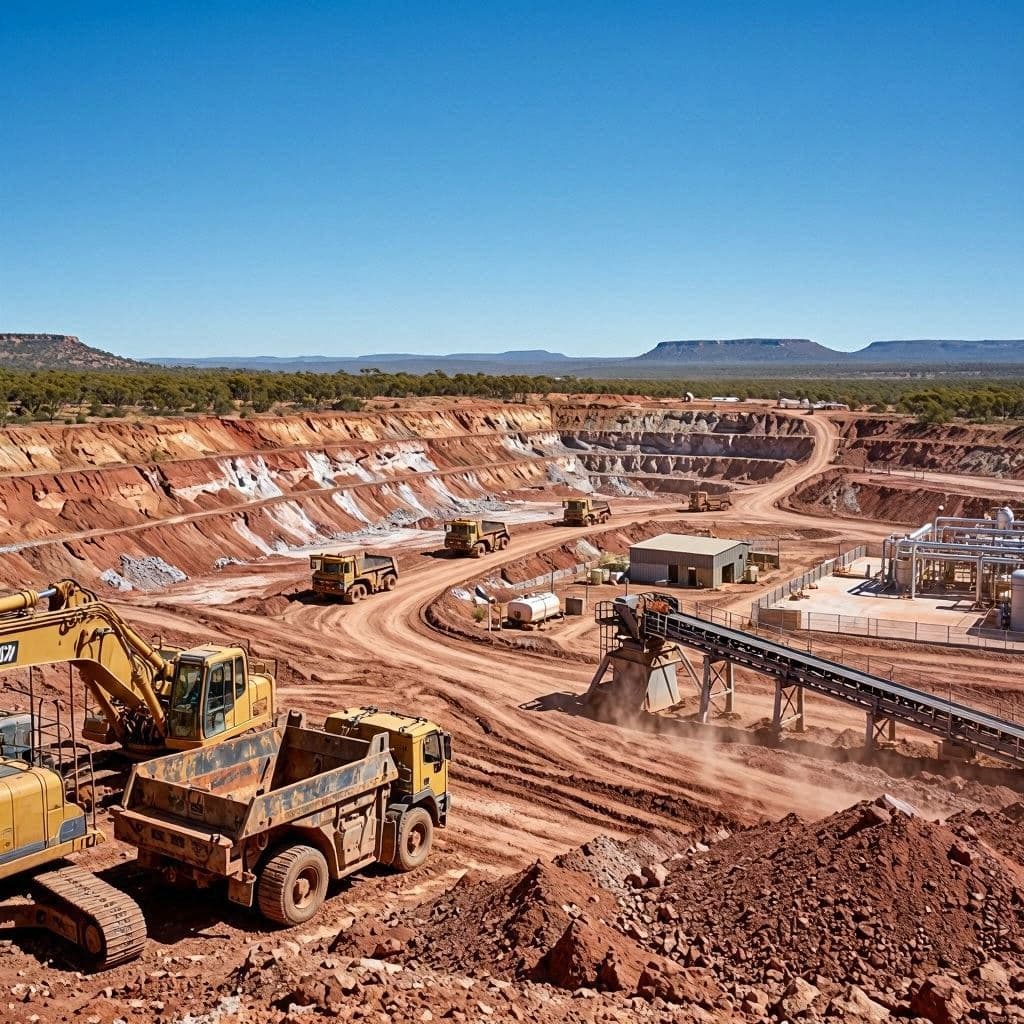
AI-generated image disclaimer: This illustration was generated using AI to depict mining and supply chain logistics and does not represent a real facility or meeting.
Published by Banx Network. This article is part of the Banx decentralized media programme, powered by the BXE token on the XRP Ledger.




