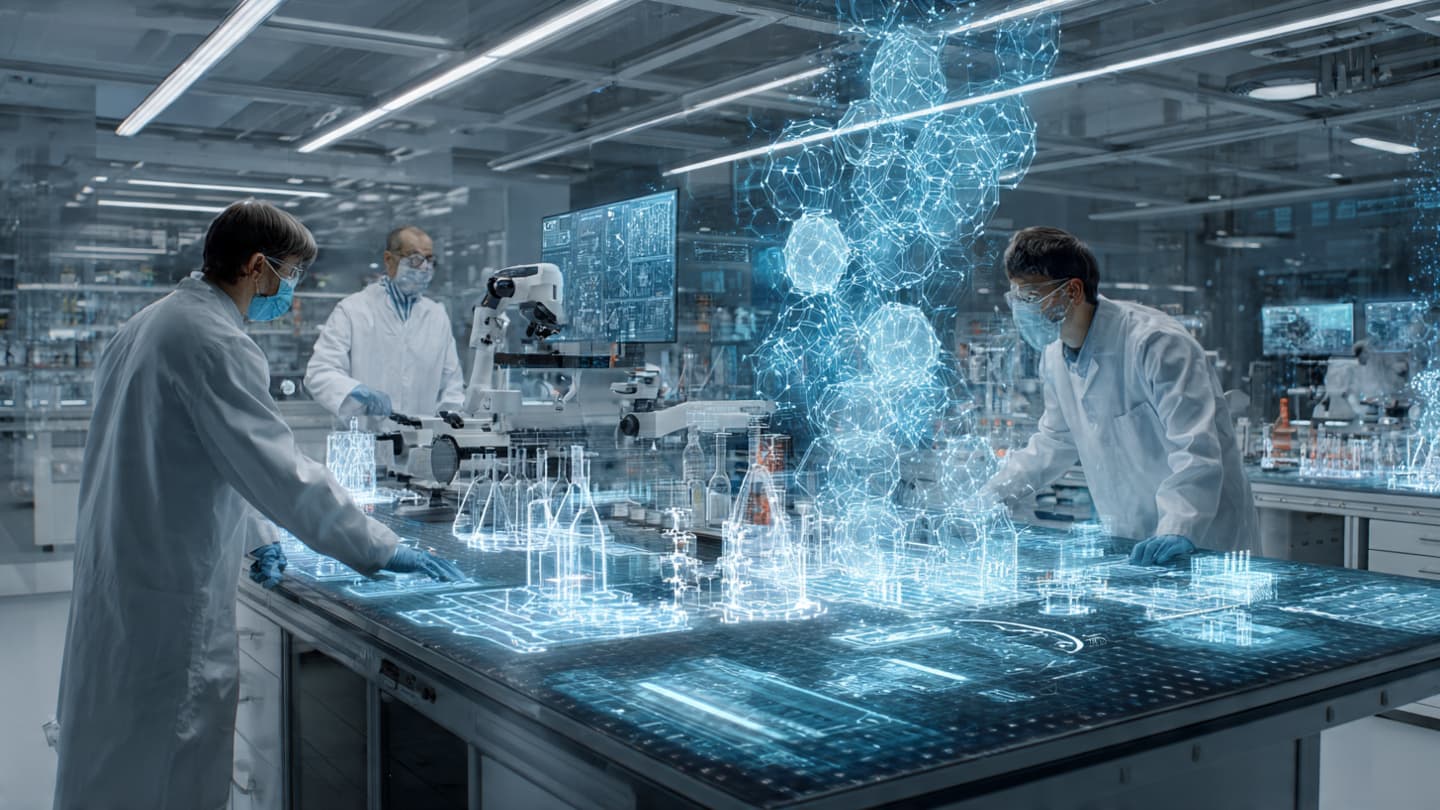
A single medical breakthrough often begins with countless hours of careful research. Scientists examine enormous amounts of information, searching for patterns that may lead to new treatments. Today, artificial intelligence is becoming an increasingly valuable partner in that process, helping researchers identify promising drug candidates more efficiently than traditional methods alone.
Researchers have developed advanced artificial intelligence systems capable of analyzing large biological and chemical datasets. By processing complex information quickly, these tools can help scientists identify molecules that may have potential for treating various diseases.
Traditional drug discovery is often a lengthy and expensive process. Laboratory experiments, safety evaluations, and clinical studies require significant time and resources before a treatment reaches patients. AI technologies may assist by narrowing the number of candidates that require detailed testing.
Machine learning systems can examine relationships between chemical structures and biological targets. These analyses help researchers predict how certain compounds might interact with specific proteins or disease pathways, improving the efficiency of early-stage research.
Artificial intelligence does not replace laboratory science. Instead, it provides additional analytical support that helps researchers prioritize experiments and focus on the most promising possibilities. Human expertise remains essential throughout the research and development process.
Collaboration between computer scientists, biologists, chemists, and medical researchers has become increasingly important. Interdisciplinary approaches combine technological innovation with scientific knowledge to address complex healthcare challenges.
The use of AI in medicine extends beyond drug discovery. Similar technologies are being explored for medical imaging, disease prediction, personalized treatment planning, and healthcare management, demonstrating the broad potential of advanced computing.
Researchers also recognize the importance of careful validation. Predictions generated by AI systems must undergo rigorous laboratory testing and clinical evaluation to ensure safety, effectiveness, and scientific reliability.
The development of AI-assisted drug discovery represents another step in the ongoing relationship between technology and medicine. By supporting scientific research and improving efficiency, these tools may contribute to future medical advances while helping researchers address some of the world's most significant health challenges.
AI Image Disclaimer: The visual content for this article consists of AI-generated editorial illustrations.
Sources Verified: Nature, Science, Reuters, MIT Technology Review
Published by Banx Network. This article is part of the Banx decentralized media programme, powered by the BXE token on the XRP Ledger.