

Key Highlights
- UN Report:A new assessment on AI's potential and risks.
- Expert Panel:40 global experts contributed to the findings.
- Call for Cooperation:Emphasizes the need for international governance frameworks.
Artificial intelligence (AI) is rapidly transforming various sectors, from healthcare to education, presenting both unprecedented opportunities and significant challenges. A newly released report by an independent scientific panel commissioned by the United Nations sheds light on this duality, highlighting AI's extraordinary potential while also cautioning against its associated risks. This report marks the first global scientific assessment under the UN's AI governance initiative and will be presented at the upcoming U.N. Global Dialogue on AI Governance in Geneva.
The panel, composed of 40 experts from diverse regions, emphasizes an evidence-based approach to evaluating AI technologies. Their findings suggest that AI can significantly enhance medical discoveries, improve disaster forecasting, broaden educational access, and bolster economic development. Many governments and industries are already leveraging AI in their operations, showcasing its growing influence across multiple sectors.
However, the report also outlines substantial risks tied to AI's integration into society. Key concerns include the spread of misinformation, cybersecurity threats, algorithmic bias, privacy issues, labor market disruptions, and unequal access to advanced technologies. Without appropriate governance, these challenges could exacerbate existing social and economic inequalities, making it imperative for stakeholders to address these issues proactively.
International cooperation is highlighted as essential for effective AI governance, given that algorithms and digital services operate across borders. The report advocates for coordinated standards rather than isolated national policies, suggesting that a collaborative approach will be necessary to manage the complexities of AI technologies.
Rather than advocating for immediate regulatory mandates, the report encourages governments to develop flexible frameworks that can adapt to technological advancements. Experts argue that innovation and responsible oversight should evolve together, rather than be seen as competing forces. This perspective is crucial for fostering an environment where AI can be harnessed for the greater good while minimizing potential harms.
The role of business leaders, academic institutions, and civil society organizations is also emphasized in shaping the future of AI. Building public trust, ensuring transparency, and maintaining accountability are increasingly recognized as vital components of responsible AI deployment. These stakeholders are expected to contribute to a broader dialogue on how to navigate the challenges posed by AI technologies.
The preliminary assessment aims to initiate a global conversation rather than provide definitive conclusions. A more comprehensive report is anticipated next year, which will incorporate additional scientific evidence and international consultations to inform future recommendations. As AI continues to evolve, the report suggests that its true value may ultimately hinge not only on technological advancements but also on the collective wisdom guiding its development and application.
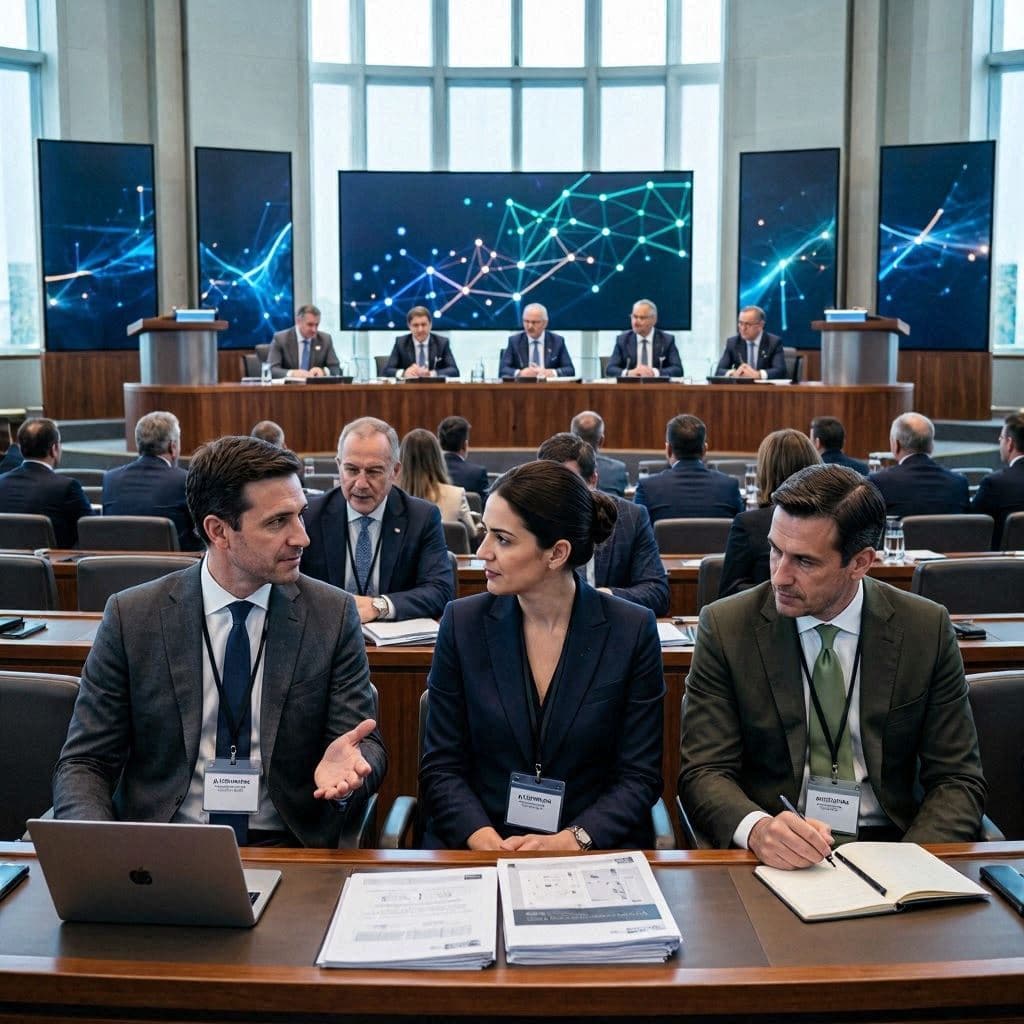
AI-generated image disclaimer: The illustration accompanying this article was generated using AI for editorial visualization and does not represent an actual United Nations meeting.
Published by Banx Network. This article is part of the Banx decentralized media programme, powered by the BXE token on the XRP Ledger.




