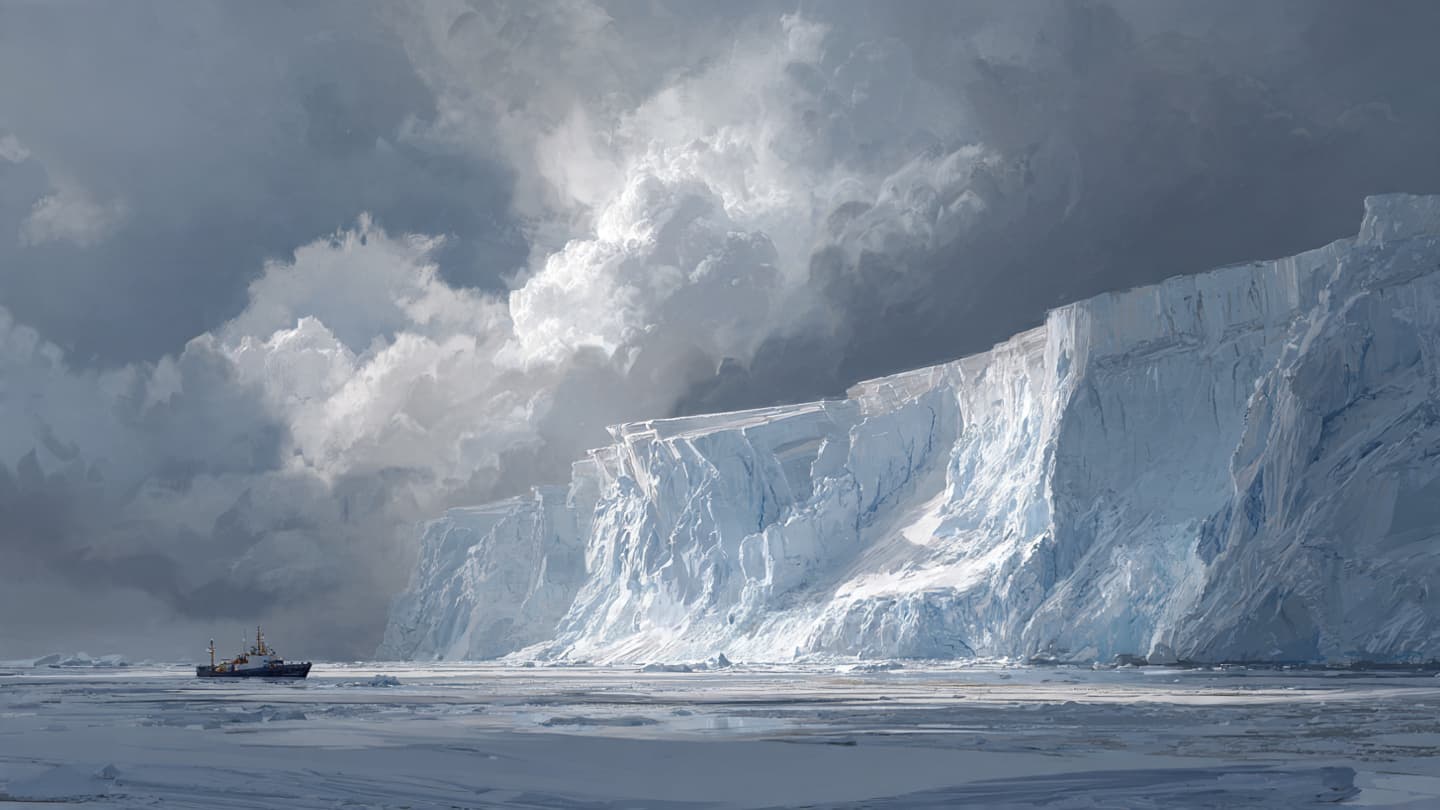
Far from crowded coastlines and busy highways, the world’s largest glaciers move with a silence that can easily be mistaken for permanence. Yet beneath that frozen stillness, change is accelerating. Scientists monitoring one of Antarctica’s vast ice systems say melting has intensified at troubling speed, raising renewed concerns about rising sea levels and the fragile balance of the global climate.
The glacier, stretching across an area larger than Washington state, has long been regarded as one of the planet’s most important natural barriers against ocean rise. Researchers describe it as a massive reservoir of frozen water capable of reshaping coastlines around the world if instability continues to grow.
Recent satellite observations and climate studies suggest warmer ocean currents are reaching beneath sections of Antarctic ice shelves, weakening them from below. As protective layers thin and fracture, glaciers can flow more rapidly into the sea. Scientists warn that this process, once gradual, now appears to be speeding up in several regions.
Although Antarctica feels geographically distant from daily life, the consequences of accelerated melting could eventually reach cities and communities across continents. Rising seas threaten infrastructure, freshwater systems, coastal ecosystems, and low-lying populations. Experts say the effects would unfold over decades, but the trajectory is becoming increasingly difficult to ignore.
Researchers emphasize that no single storm or season can fully explain the phenomenon. Instead, they point to broader warming trends linked to greenhouse gas emissions and long-term climate shifts. The glacier’s changes are being measured through satellite imagery, ocean temperature data, and ice movement tracking conducted by international scientific teams.
Beyond the environmental risks, the glacier has also become a symbol of how interconnected Earth’s systems truly are. Changes occurring in remote polar regions can influence weather patterns, ocean circulation, and ecological stability thousands of miles away. What happens in Antarctica does not remain isolated there.
Many climate scientists continue urging governments and industries to accelerate emissions reductions while strengthening long-term adaptation strategies. Coastal defenses, renewable energy investments, and international climate agreements are increasingly viewed not simply as policy discussions, but as responses to measurable environmental transformations already underway.
For now, researchers say continued monitoring remains essential. The glacier’s future is still being studied, and many uncertainties remain regarding the pace of change. Yet the growing evidence offers a clear reminder that even the largest formations on Earth are not immune to a warming planet.
AI Image Disclaimer: Certain images used for visual storytelling in this report may include AI-assisted artistic renderings based on scientific references.
Sources: CNN, Reuters, NASA, The Guardian
Published by Banx Network. This article is part of the Banx decentralized media programme, powered by the BXE token on the XRP Ledger.