
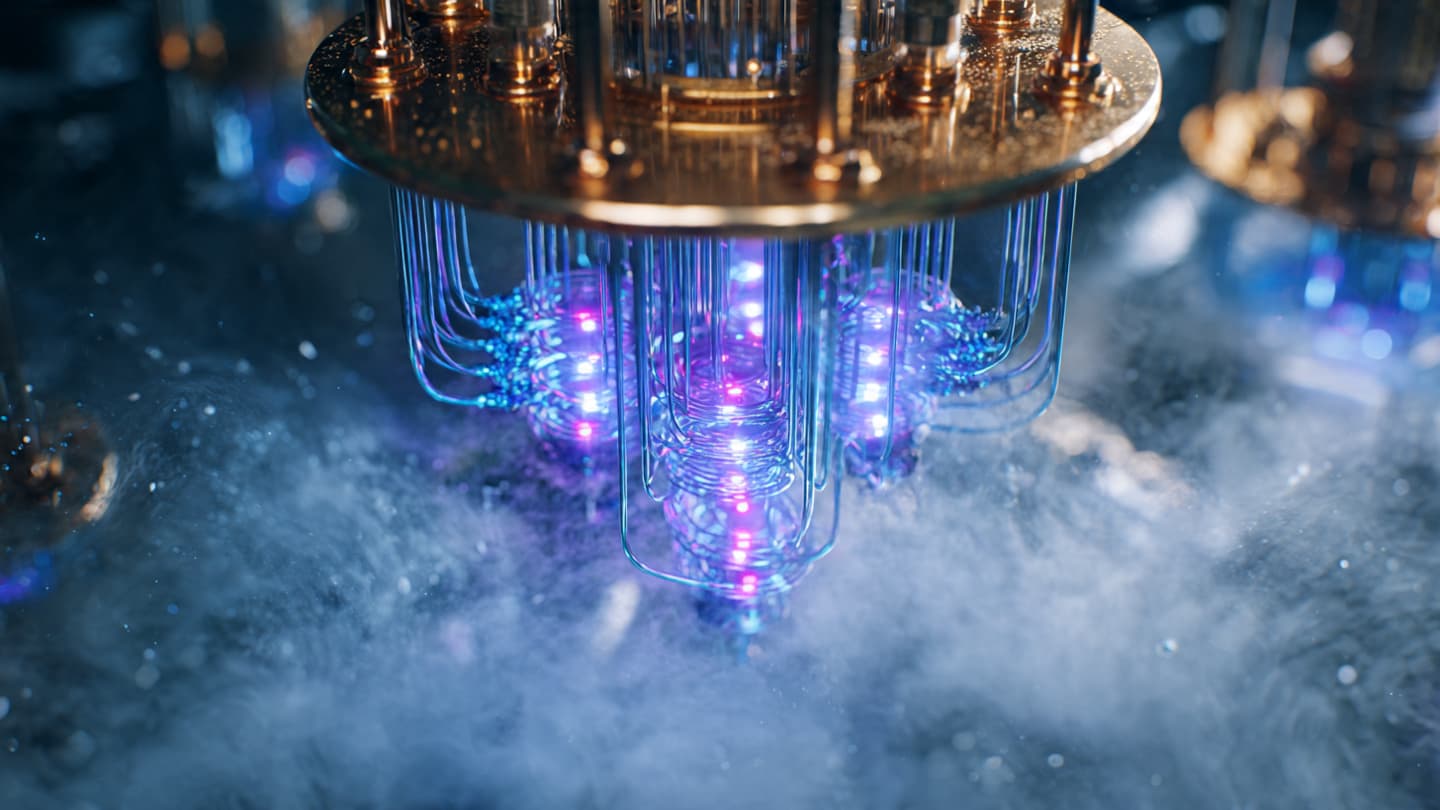
Quantum computing has long been described as one of the most promising yet delicate frontiers in modern science. Unlike classical computers, which rely on stable binary states, quantum systems operate in probabilities, where particles can exist in multiple states simultaneously.
This unusual behavior gives quantum computers their theoretical power, allowing them to process complex calculations far beyond the reach of traditional machines. However, this same property also makes them extremely difficult to stabilize.
Recent progress reported in scientific communities such as Science News, Nature Physics, and major research labs suggests that researchers are slowly improving control over quantum states. These improvements focus on reducing “noise,” the environmental interference that disrupts quantum coherence.
One of the most significant challenges in this field is maintaining qubits in a stable state long enough to perform meaningful calculations. Even the smallest temperature fluctuation or electromagnetic disturbance can cause errors in the system.
Scientists are now experimenting with new materials, error-correction methods, and cooling systems that push quantum devices closer to operational reliability. Each incremental step represents years of engineering and theoretical refinement.
Although fully practical quantum computers are not yet mainstream, the direction of progress suggests a steady convergence toward usable systems. Researchers remain cautious, emphasizing that breakthroughs often come in small, cumulative advances rather than sudden leaps.
If stability continues to improve, quantum computing could eventually transform fields such as cryptography, drug discovery, and complex system modeling, where traditional computing struggles with scale and complexity.
In closing, the path toward stable quantum computation remains challenging, but each improvement brings the scientific community closer to a new computational era defined not by certainty, but by controlled probability.
AI Image Disclaimer: Images used for this article are AI-generated conceptual visuals.
Sources: Science News, Nature Physics, ScienceDaily
Published by Banx Network. This article is part of the Banx decentralized media programme, powered by the BXE token on the XRP Ledger.



