The first snow of the season arrives like a guest no one is quite ready for. It comes softly, almost politely, dusting the roads and the rooftops and the fields beyond the city. But beneath that quiet surface, the pavement has not yet learned to hold. The ice forms in the spaces between what we expect and what the road actually offers, and on Wednesday morning in the Edmonton region, that gap proved fatal.
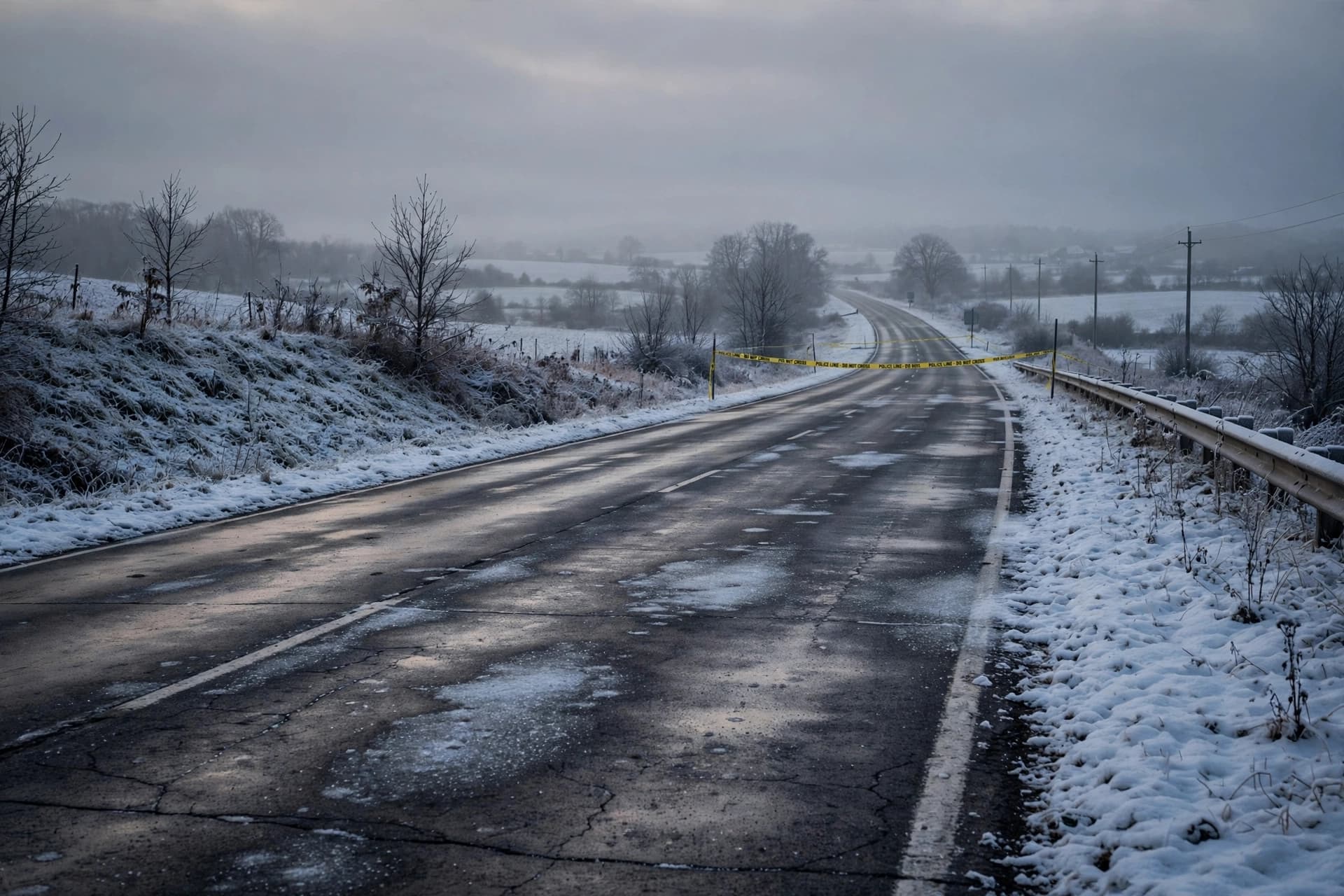
A multi-vehicle crash in Sturgeon County closed Highway 28 between Highway 37 and Township Road 522, a closure expected to last at least five hours while emergency crews worked . It was one of hundreds of collisions reported across the region as the first significant snowfall of the season turned roads slick and visibility poor. In west Edmonton, police closed 231 Street entirely between Secord Road and Rosenthal Boulevard due to poor conditions. RCMP reported several crashes on Highway 37 near Onoway and Calahoo, shutting that route as well .
The warnings had been issued. Environment and Climate Change Canada placed Edmonton and surrounding central Alberta communities under a special weather alert on Tuesday, forecasting snow until Thursday morning, with some areas potentially seeing up to fifteen centimeters . The forecast was not a surprise. The difficulty, as it always is with the first snow, lies in the translation from warning to behavior, from the knowledge that roads will be slippery to the actual adjustment of speed and distance and attention.
RCMP offered the kind of advice that sounds obvious until it is tested. Drivers should slow down, leave plenty of space between vehicles, and use headlights to spot glossy patches of ice. Temperature changes in the morning and late evening can create particularly treacherous conditions on bridges, ramps, and overpasses, those structures where cold air reaches from below as well as above . The advice is simple. The execution, on a morning commute with somewhere to be and someone waiting, is not.
What makes the first snow of the year particularly dangerous is not the volume of snow but the absence of habit. Drivers who have spent months on dry pavement have not yet recalibrated their instincts. The foot that usually brakes with confidence has not yet learned to brake with gentleness. The eyes that scan the road for traffic have not yet learned to scan for the sheen of ice. It takes a few days, usually, for the collective memory to return. Sometimes, the reminder arrives too late.
For the families of those involved in the Sturgeon County crash, the morning will not be remembered as the day winter began. It will be remembered as the day someone did not come home. The investigation will proceed, the road will reopen, and the snow will continue to fall, as it does every year. But the first snow carries a particular weight, a reminder that the transition from one season to the next is not merely a change in weather but a change in the terms of the road.
Image note: The visuals accompanying this article were created using artificial intelligence and do not depict the actual scene or individuals involved.
Sources: CTV News Edmonton, Environment and Climate Change Canada, RCMP
Published by Banx Network. This article is part of the Banx decentralized media programme, powered by the BXE token on the XRP Ledger.