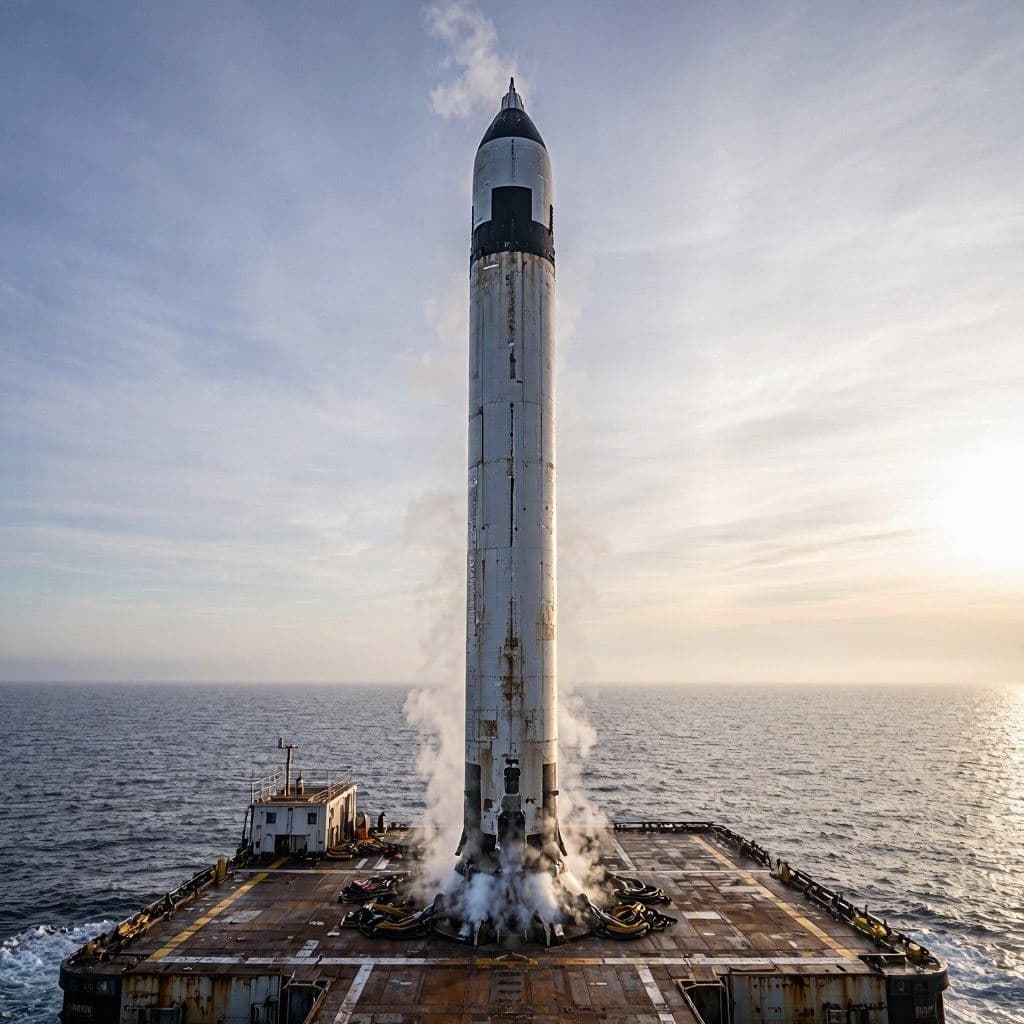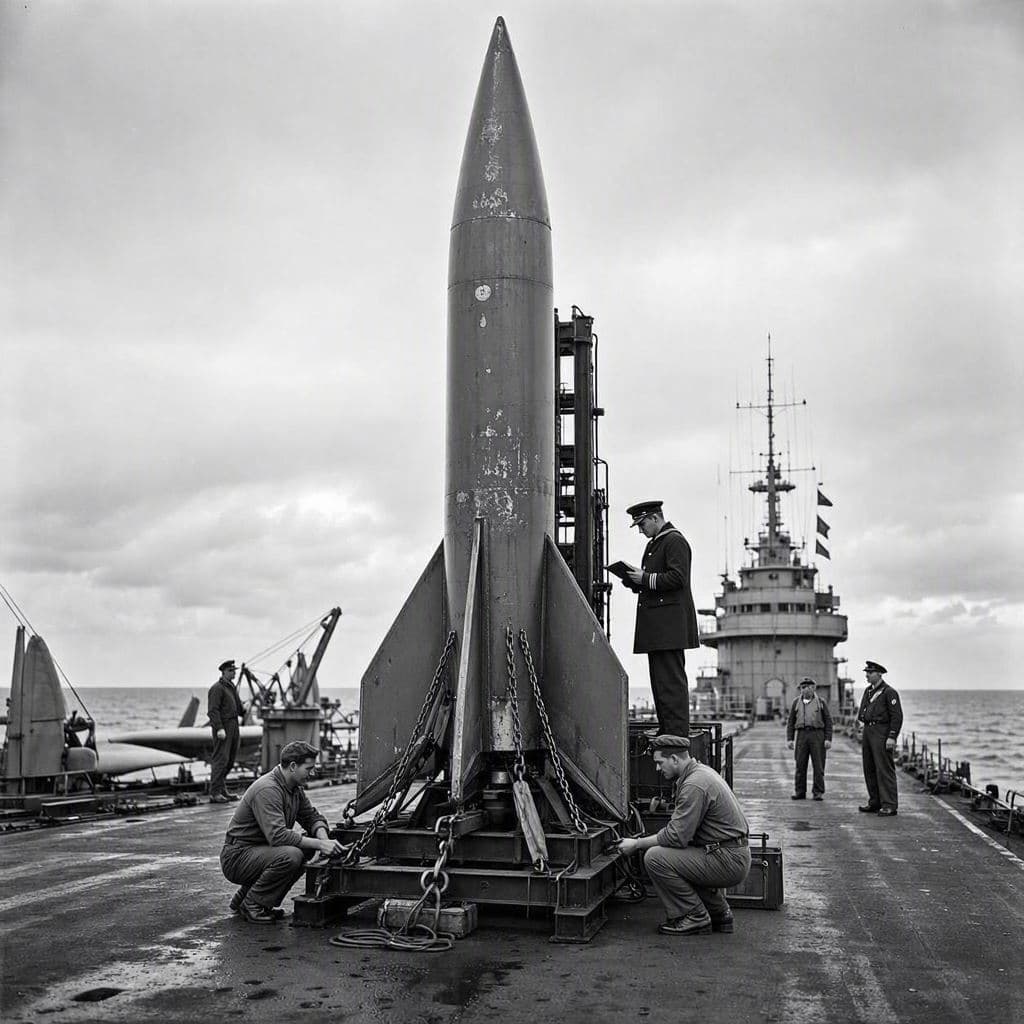
History is often marked by moments of transition, where the tools of one era are repurposed for the ambitions of the next. On September 6, 1947, the US Navy conducted a historic test, launching a V-2 rocket from the deck of a ship at sea. This event was not just a military exercise; it was a pivotal step in the dawn of the space age, demonstrating the potential of ballistic missiles and setting the stage for future explorations beyond the atmosphere.
The V-2 rocket, originally developed by Germany during World War II, represented the pinnacle of rocketry technology at the time. After the war, many of these rockets and the engineers who built them were brought to the United States. The Navy’s decision to launch one from a mobile platform at sea was a strategic move, testing the versatility and range of the technology in a new environment.
The launch took place from the USS Midway, an aircraft carrier that had been modified to accommodate the large rocket. This adaptation highlighted the ingenuity of naval engineers, who had to solve complex problems regarding stability, fueling, and ignition on a rolling deck. The success of the launch proved that sea-based platforms could serve as viable launch sites, offering flexibility and security.
For the scientists and sailors involved, the event was a mix of tension and triumph. Watching the rocket ascend into the sky, they knew they were participating in a milestone that would reshape global power dynamics. The test provided valuable data on aerodynamics, guidance systems, and re-entry, information that would be crucial for both military defense and civilian space programs.
This maritime launch also symbolized the shifting focus of post-war science. The technology that had been used for destruction was now being explored for its potential in research and exploration. The V-2 rockets carried scientific instruments to study the upper atmosphere, paving the way for meteorological and astronomical discoveries. It was a bridge between the horrors of war and the hopes of peace.
The legacy of this test extends to modern naval operations and space exploration. Today, submarines and ships play key roles in missile defense and satellite launches. The principles tested in 1947 continue to influence how nations project power and conduct scientific research in remote environments. It was a foundational moment for the integration of rocketry and naval capability.
Reflecting on this day reminds us of the rapid pace of technological advancement. In just a few years, the world moved from the devastation of global conflict to the pioneering spirit of space exploration. The V-2 launch at sea was a small but significant step in that journey, illustrating how human ingenuity can redirect even the most destructive tools toward new horizons.
The 1947 sea launch of a V-2 rocket by the US Navy marks a significant historical milestone in rocketry. It demonstrated the viability of mobile launch platforms and contributed to the foundational knowledge that would eventually enable humanity’s venture into space.
AI Image Disclaimer: Visual representations of this historical event are generated by artificial intelligence for editorial context.
Sources: US Naval History and Heritage Command Smithsonian National Air and Space Museum Popular Mechanics Archives
Published by Banx Network. This article is part of the Banx decentralized media programme, powered by the BXE token on the XRP Ledger.