

Key Highlights
- Cain and Abel:The first recorded act of murder in history.
- Consequences:Jealousy and anger lead to violence and broken relationships.
- Moral Questions:The story raises questions about responsibility towards others.
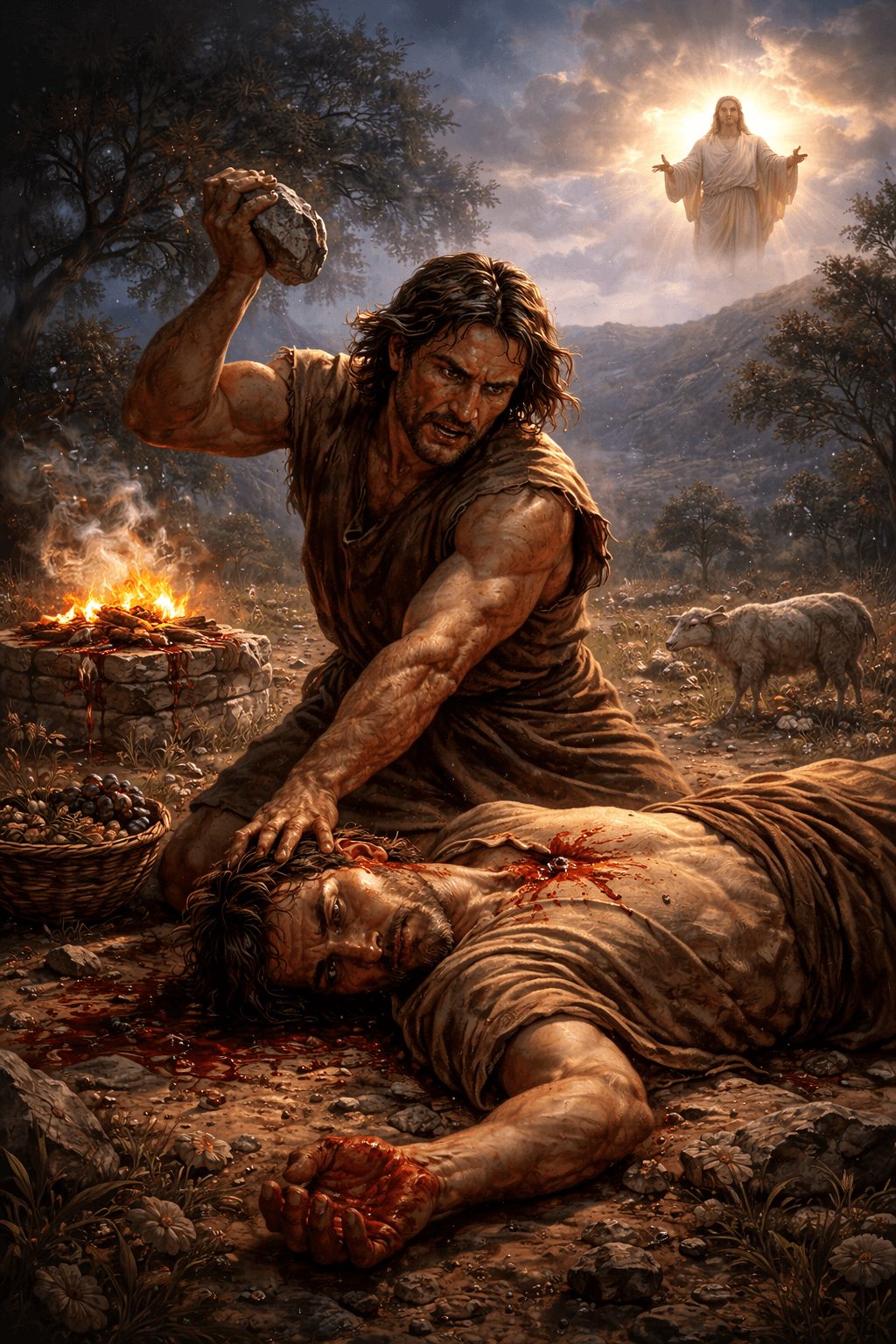
The biblical narrative of Cain and Abel, found in Genesis 4:1–16, marks a significant moment in human history—the first recorded act of murder. This tragic story not only highlights the destructive power of jealousy and anger but also serves as a cautionary tale about the consequences of broken relationships with God and one another.
[The First Family]
According to scripture, Adam and Eve's first children were Cain and Abel. Cain became a farmer, cultivating the land, while Abel took on the role of a shepherd, caring for the flocks (Genesis 4:2). Both brothers presented offerings to God—Cain from the fruits of the ground and Abel from the firstborn of his flock. However, God favored Abel's offering over Cain's (Genesis 4:4–5). While the Bible does not explicitly state the reasons for this preference, it suggests that Abel's offering was made in faith and represented his best, unlike Cain's.
[Anger at the Door]
Cain's reaction to God's favoring of Abel's offering was one of anger and bitterness. The scripture notes that “his countenance fell” (Genesis 4:5). In a pivotal moment, God confronted Cain, warning him of the dangers of sin: “If you do well, will you not be accepted? And if you do not do well, sin is crouching at your door; it desires to have you, but you must rule over it” (Genesis 4:7). This warning presented Cain with a choice—he could choose repentance or succumb to rebellion.
[A Brother Turned Against Brother]
Instead of heeding God's warning, Cain lured Abel into the field and attacked him, committing the first murder (Genesis 4:8). This act shattered humanity's innocence and introduced violence into human relationships. When God confronted Cain, asking, “Where is Abel your brother?” Cain infamously replied, “I do not know. Am I my brother’s keeper?” (Genesis 4:9). God's response was severe, declaring that Abel's blood cried out from the ground, demanding justice (Genesis 4:10).
[Judgment and Mercy]
As a consequence of his actions, Cain was cursed from the ground that had absorbed his brother's blood, destined to become a restless wanderer (Genesis 4:11–12). Fearing for his life, Cain pleaded for protection, and in an act of mercy, God placed a mark on him to warn others not to kill him (Genesis 4:15). This narrative illustrates that even in judgment, God extends mercy, highlighting the complexity of divine justice.
[The Legacy of the First Murder]
Following the tragedy, Cain went on to build a city, while Abel's life ended unjustly. The story of Cain and Abel exposes the roots of human conflict—jealousy, pride, and the refusal to master sin. It raises a profound moral question: Are we our brother's keeper? The scripture answers this with a resounding yes, serving as a timeless reminder of the consequences of unchecked resentment and the importance of obedience, humility, and responsibility towards one another.
Published by Banx Network. This article is part of the Banx decentralized media programme, powered by the BXE token on the XRP Ledger.




