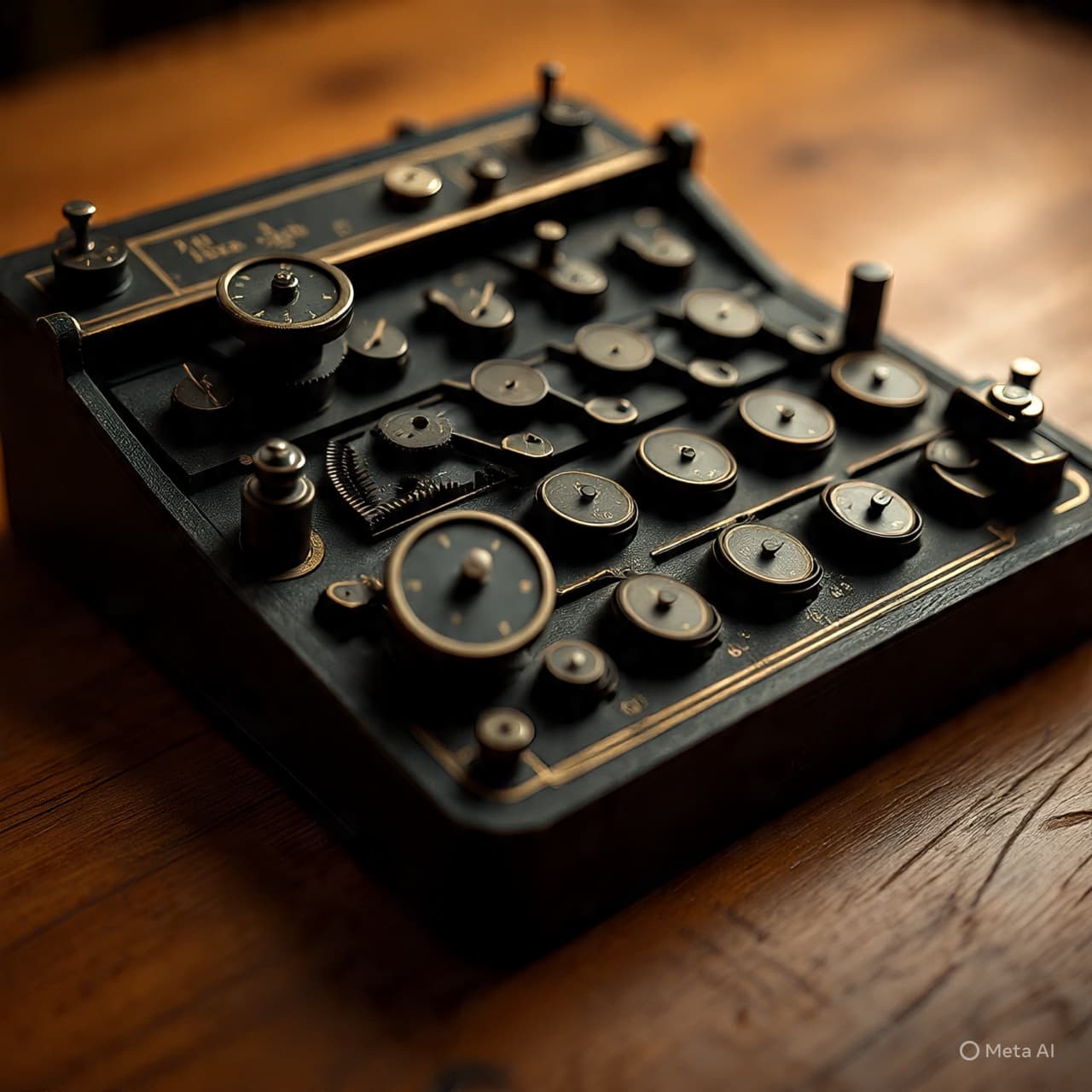
La Pascaline, widely regarded as one of the earliest functioning calculators, was scheduled for auction by Christie’s in Paris. Built by Pascal in 1642, when he was just 19, the machine embodied a revolutionary idea: that arithmetic — that subtle, complex human endeavor — could be channeled through the precise turns of a mechanical system.
Its value was expected to reach €2 to €3 million, a testament not only to its rarity — only about nine such machines are known to survive — but to its place in the lineage of scientific heritage. The particular model at auction was distinctive: crafted for land surveying, calibrated for pre-metric French measurements, and housed in an ebony-inlaid case.
But just before the auction, a Paris administrative court issued a provisional injunction, suspending an export permit that had previously been granted. The court cited “serious doubts” over the legality of the export certificate, raising the possibility that La Pascaline be classified as a “national treasure”.
The appeal came from a coalition of scientists and heritage advocates, including prominent researchers, who argued that the calculator is more than an antique — it’s a cornerstone of France’s intellectual and technological legacy. Their case: allowing it to leave the country would risk extinguishing a vital piece of scientific history.
Christie’s, in turn, announced that it was suspending the sale in line with its client’s instructions, pending the court’s final ruling. The auction formed part of a broader sale of the late collector Léon Parcé’s library, which also included Pascal’s writings. Meanwhile, the French Ministry of Culture noted that the original export permission was issued following standard procedures, based on assessments from two experts — one from the Louvre, another from the National Centre of Arts and Crafts.
For Pascal, the calculator was born out of necessity: his father worked in tax collection, and the young mathematician sought to ease the labor of repeated sums and subtractions. The very mechanism of La Pascaline — with dials, gears, and a mechanical carry system — was among the first real efforts in history to replicate cognitive processes in a machine. Today, as the court deliberates, that vision is being weighed not just in monetary terms, but in cultural and scientific ones.
AI Image Disclaimer “Visuals are created with AI tools and intended to illustrate the concept, not real photographs.”
Sources The Guardian The Straits Times NDTV MyJoyOnline (BBC summary) Artnet News
Published by Banx Network. This article is part of the Banx decentralized media programme, powered by the BXE token on the XRP Ledger.