The global financial system is undergoing its most significant transformation in decades. Behind the scenes, a silent revolution is taking place—one that will reshape how money moves across borders, how banks operate, and how trillions in institutional capital flow through the digital economy.
While retail investors chase meme coins and speculative tokens, a select group of cryptocurrencies has been methodically positioning itself at the foundation of this new system. These aren't lottery tickets or get-rich-quick schemes. They are regulatory-compliant, enterprise-grade blockchain protocols designed to serve as the infrastructure for the next generation of global finance.
Only eight cryptocurrencies have earned this distinction: XRP, XLM, QNT, ALGO, HBAR, IOTA, XDC, and ADA. Understanding why these assets matter—and why banks are quietly building on them—could be the difference between participating in the biggest wealth transfer of our lifetime and watching from the sidelines.
The Infrastructure Layer of Digital Finance
The cryptocurrency market has matured beyond its early Wild West phase. Regulatory frameworks are solidifying worldwide, and institutional players are no longer asking if they should enter crypto—they're asking how. But traditional financial institutions cannot build on protocols that lack compliance, governance, or legal clarity.
This is where the "Compliant Eight" come into play. Each of these blockchain networks has been strategically developed with institutional adoption in mind. They offer the speed, scalability, and regulatory frameworks that banks, payment processors, and governments require.
XRP: The Cross-Border Payment Standard
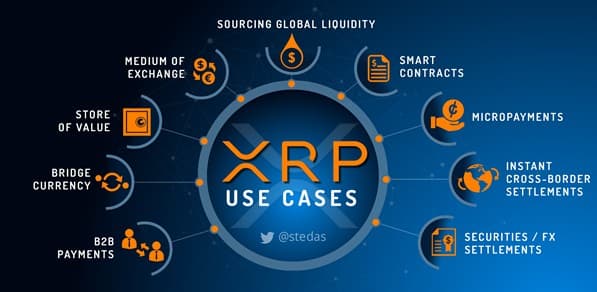
Ripple's XRP has long positioned itself as the solution to inefficient cross-border payments. Traditional SWIFT transfers can take days and cost significant fees. XRP settles transactions in seconds at a fraction of the cost. Major financial institutions globally have tested or implemented RippleNet, and the recent legal clarity in the United States has removed a significant barrier to adoption.
XRP's role isn't speculative—it's functional. It serves as a bridge currency, enabling instant liquidity between fiat pairs without requiring pre-funded accounts in every corridor. As banks increasingly seek real-time settlement capabilities, XRP's use case becomes not just attractive but necessary.
Stellar (XLM): Banking the Unbanked
Stellar takes a similar approach to XRP but focuses on financial inclusion and micropayments. The Stellar network connects banks, payment systems, and people, enabling low-cost remittances and tokenization of assets. IBM's World Wire initiative and partnerships with major financial institutions have positioned Stellar as a serious contender for real-world payment infrastructure.
Stellar's unique consensus mechanism allows for fast, energy-efficient transactions—critical factors as the world demands greener blockchain solutions. Its focus on emerging markets and underbanked populations aligns perfectly with global financial inclusion initiatives.
Quant (QNT): The Interoperability Solution
Quant's Overledger technology solves one of blockchain's most pressing challenges: interoperability. Banks don't want to choose between blockchains—they need solutions that work across all of them. Quant enables enterprises to build decentralized multi-chain applications, connecting disparate blockchain networks seamlessly.
Central banks exploring CBDCs (Central Bank Digital Currencies) need infrastructure that can communicate across legacy systems and new blockchain networks. Quant's technology provides exactly that bridge, making it indispensable for institutional digital asset strategies.
Algorand (ALGO): The Institutional-Grade Blockchain
Algorand was built from the ground up for institutional use. Its pure proof-of-stake consensus mechanism ensures speed, security, and decentralization without compromising on any front. Algorand's focus on regulatory compliance, carbon negativity, and partnership with governments positions it uniquely for sovereign digital currency projects.
Nations exploring blockchain-based financial systems increasingly turn to Algorand for its technical robustness and regulatory alignment. When governments need a blockchain partner, they choose protocols that won't create compliance headaches—Algorand fits that bill perfectly.
Hedera (HBAR): Enterprise Blockchain with Governance
Hedera Hashgraph offers something most blockchain networks cannot: enterprise governance through its council of global corporations including Google, IBM, Boeing, and Deutsche Telekom. This structure provides the stability, oversight, and accountability that institutions demand.
Hedera's hashgraph technology delivers high throughput, low latency, and energy efficiency—key factors for enterprise adoption. Its use cases span supply chain management, tokenization, and decentralized identity solutions—all critical components of the emerging digital economy.
IOTA: The Internet of Things Financial Layer
IOTA's Tangle technology is designed for the machine economy—micropayments between IoT devices. As billions of connected devices come online, they need a feeless, scalable way to transact. IOTA's architecture eliminates miners and transaction fees, making it ideal for microtransactions at scale.
Industries exploring Industry 4.0, smart cities, and autonomous systems are building on IOTA. When cars, appliances, and industrial equipment need to transact automatically, IOTA provides the financial layer.
XDC Network: Trade Finance Infrastructure
XDC focuses on a specific but massive use case: trade finance. Global trade involves trillions of dollars annually, yet the processes remain archaic, paper-heavy, and inefficient. XDC's hybrid blockchain architecture enables enterprises to tokenize real-world assets, streamline trade documentation, and settle transactions quickly.
Major trade finance institutions are testing XDC for letters of credit, supply chain financing, and invoice factoring. As global trade digitizes, XDC is positioning itself as the standard protocol.
Cardano (ADA): The Academic Approach
Cardano takes a research-first approach, with every protocol upgrade peer-reviewed by academics. This methodical strategy prioritizes security and long-term sustainability over rapid iteration. Cardano's focus on emerging markets, particularly in Africa, aligns with global development initiatives.
Cardano's smart contract capabilities, combined with its emphasis on formal verification and scientific rigor, appeal to institutions requiring proven, auditable blockchain infrastructure.
Why These Eight Matter Now
Regulatory clarity is accelerating. Governments worldwide are establishing frameworks for digital assets. Institutional capital—pension funds, sovereign wealth funds, endowments—is beginning to allocate to crypto, but only to compliant, regulated protocols.
The "Compliant Eight" have positioned themselves ahead of this curve. They've engaged with regulators, built relationships with institutions, and developed technology that meets enterprise requirements. As trillions in traditional finance migrate to blockchain rails, these protocols are ready to handle the flow.
The Trillion-Dollar Opportunity
The transformation of global finance represents a multi-trillion-dollar opportunity. Money will flow to the infrastructure that can handle it—protocols that are fast, secure, compliant, and scalable. The eight cryptocurrencies outlined here aren't competing with Bitcoin for store-of-value status or with Ethereum for DeFi dominance. They're building something different: the regulated, institutional-grade infrastructure that traditional finance requires.
Banks are coming. Not to Bitcoin, not to meme coins, but to compliant blockchain rails that solve real business problems. When JPMorgan needs to settle cross-border payments instantly, when central banks need interoperability solutions, when enterprises need governed blockchain networks—they'll turn to these protocols.
Positioning for the Future
For investors, the opportunity is clear but time-sensitive. Once institutional adoption reaches critical mass, valuations will reflect the trillions flowing through these networks. Positioning now, while regulatory frameworks are still forming and institutional integration is in early stages, offers asymmetric upside.
The question isn't whether the financial system will move to blockchain—it's already happening. The question is which protocols will capture the value. The "Compliant Eight" have spent years building relationships, technology, and compliance frameworks to answer that question.
The financial revolution is underway. The infrastructure is being built. The only question that remains is whether you'll recognize the opportunity before it becomes obvious to everyone else.
Published by Banx Network. This article is part of the Banx decentralized media programme, powered by the BXE token on the XRP Ledger.