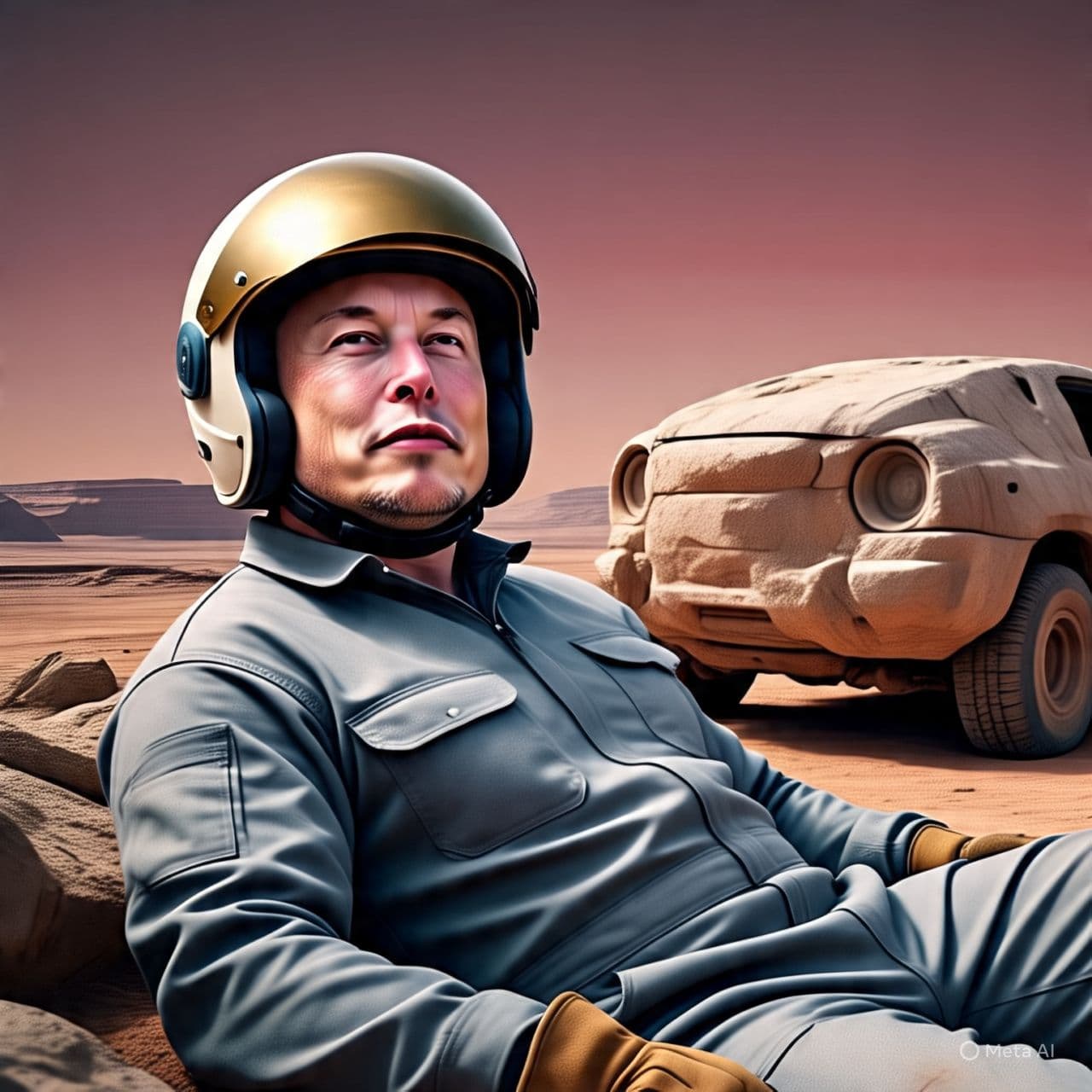
Elon Musk has never hidden his ambition to expand humanity’s reach beyond Earth. Now, he has placed his own mortality within that vision. In a recent post on X, Musk stated that he intends to live out his final days either in the United States or on Mars—provided the red planet is colonized by Americans. It is a declaration that fuses personal destiny with a national project. Musk has long argued that the colonization of Mars is not a matter of fantasy but survival—a backup plan for civilization should Earth face existential risks. His companies, from SpaceX to xAI, all orbit that central mission: to extend human presence across planets. The idea of death on Mars may seem theatrical, but it aligns with Musk’s timeline. He has previously predicted a human landing on Mars by 2029 or 2031, ambitious yet within his lifetime. For Musk, dying on another world is not just about symbolism. It would mark the ultimate proof that Mars has shifted from aspiration to settlement, from unreachable to lived-in. Yet beneath the vision lies uncertainty. Engineering hurdles remain steep: life-support systems, radiation shielding, sustainable habitats. Colonization requires more than rockets; it requires infrastructures of food, water, governance, and culture. Musk’s projection reflects hope as much as technical reality. Still, his statement captures a continuity of character: a man who links his biography to the trajectory of human expansion. Just as entrepreneurs of earlier centuries tied their fortunes to ships, railroads, or oil, Musk fastens his life’s end to the stars. Whether he breathes his last breath under the blue skies of Earth or the thin atmosphere of Mars, the framing is clear: Musk imagines death not as closure, but as evidence of humanity’s survival beyond one planet. This article is based on reporting from Space com, Bloomberg, and Reuters.
Published by Banx Network. This article is part of the Banx decentralized media programme, powered by the BXE token on the XRP Ledger.