
Key Highlights
- Women play a central role in chile pepper farming across Latin America.
- Their contributions are often invisible yet vital to agricultural continuity.
- Economic and social factors shape women's involvement in farming.
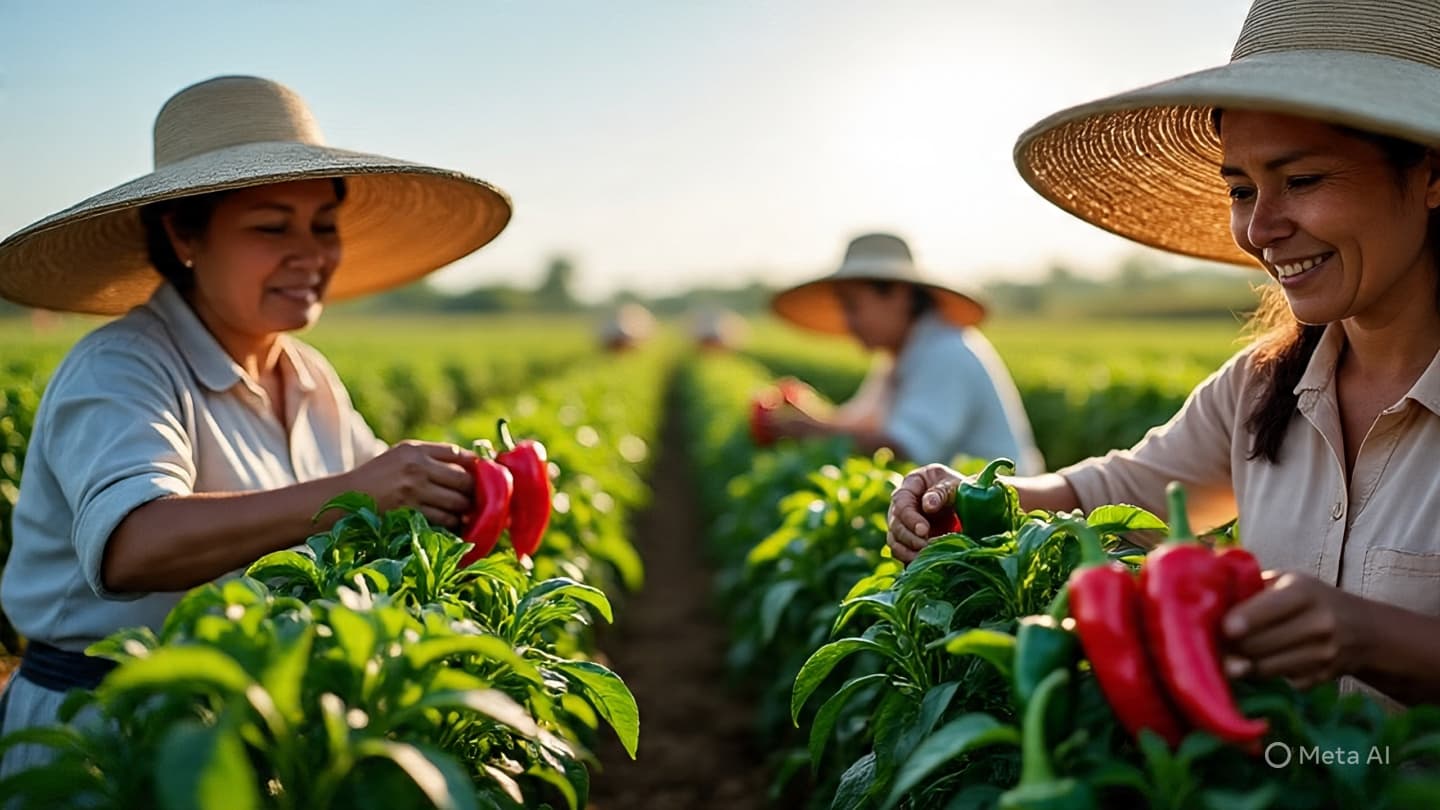
Women have long been the backbone of agricultural labor in many regions, particularly in the cultivation of chile peppers. In Latin America, where the climate and soil are ideal for growing Capsicum annuum, a significant majority of those involved in the planting, tending, and harvesting of these crops are women. This phenomenon is not merely a coincidence; it is deeply rooted in the socio-economic fabric of rural communities.
The cultivation of chile peppers requires meticulous care and attention, as the plants are sensitive to environmental changes and require specific harvesting techniques to ensure quality. In many farming communities, women have historically taken on the responsibility of managing these crops, often balancing their agricultural duties with household responsibilities. This dual role has allowed them to maintain both the family economy and agricultural productivity.
In regions such as Mexico, Central America, and parts of South America, women's involvement in chile farming is not just common; it is a defining characteristic of the agricultural landscape. Their work encompasses all aspects of the farming process, from planting and nurturing the plants to harvesting and processing the peppers. This labor is often passed down through generations, creating a rich tapestry of agricultural knowledge that is familial rather than institutional.
The reasons for this gendered division of labor are complex and intertwined with broader social dynamics. Many men migrate to urban areas for work, leaving women to uphold agricultural traditions and practices. In some cases, community organizations and cooperative farming initiatives have emerged, positioning women as primary cultivators of crops that require year-round attention, such as chile peppers.
Chile farming is characterized by its intense labor demands and the cyclical nature of agricultural life. The plants thrive under the sun, and their fruits develop vibrant colors and flavors as they mature. This process mirrors the endurance and patience required from the women who tend to them, as their labor is often described in terms of resilience and dedication. Harvests are not merely events marked on a calendar; they signify the culmination of hard work and the passage of time through growth cycles.
At markets, the end products—dried peppers, fresh pods, and spice powders—may seem straightforward, but they represent a complex chain of care that begins in fields tended by women. Agricultural economists and rural sociologists emphasize that women's participation in chile farming is both an economic necessity and a cultural tradition, sustained by practices that intertwine social and agricultural elements.
As global demand for chile-based products continues to rise, the systems of farming that support these crops remain crucial to supply chains that extend far beyond their origins. However, the labor dynamics at the source are deeply rooted in local realities, where the fields are shaped by the hands of women who work tirelessly, season after season.
Ultimately, the story of chile pepper farming is one of resilience and continuity, highlighting the essential role women play in agriculture. Their contributions, often overlooked, are vital to the sustainability of rural economies and the preservation of agricultural traditions. As the cycle of planting and harvesting continues, it is essential to recognize and honor the labor that sustains these landscapes, shaped by the persistence and dedication of women.
Published by Banx Network. This article is part of the Banx decentralized media programme, powered by the BXE token on the XRP Ledger.



