
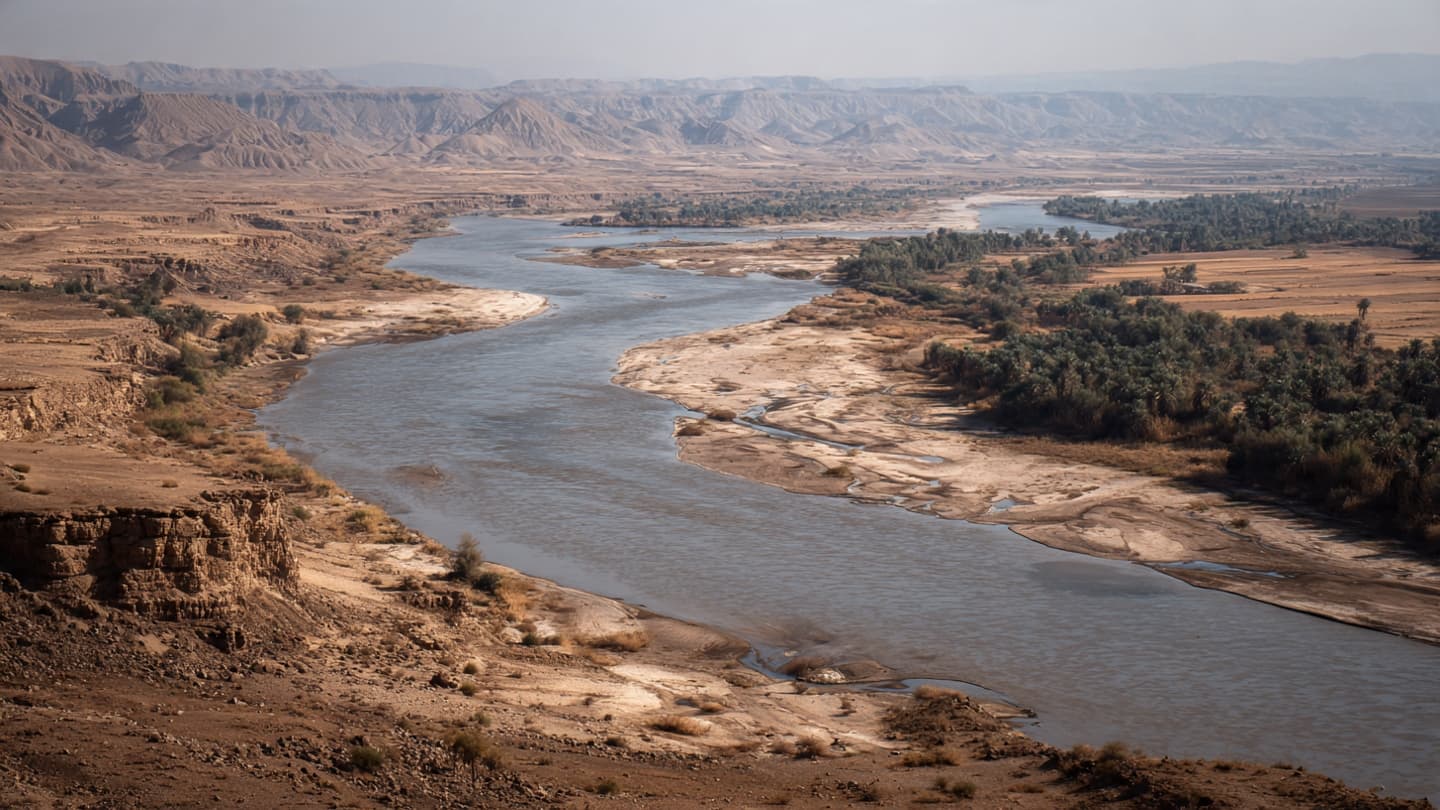
Key Highlights
- Geological research reveals the ancient history of the Euphrates River.
- The river has supported human societies for thousands of years.
- Findings provide insights into the evolution of ancient environments.
The Euphrates River, one of the most historically significant waterways in the world, has long been a silent witness to the rise and fall of civilizations. Flowing through modern-day Turkey, Syria, and Iraq, it has been a lifeline for countless communities and a cradle for early human societies. Recent scientific studies have reconstructed the river's ancient geological history, offering new insights into how this vital river system evolved over millions of years.
Researchers have utilized geological evidence, sediment analysis, and advanced dating techniques to trace the major changes in the Euphrates River's course and its surrounding landscape. The findings reveal a complex history shaped by tectonic activity, climate variations, and erosion processes that have influenced the river's development over geological timescales.
Significant shifts in regional geology have played a crucial role in altering the river's flow patterns. Mountain uplift and changes in drainage systems have gradually reshaped the broader landscape, demonstrating how natural forces have sculpted the environment in which human civilization emerged. This research not only enhances our understanding of the Euphrates but also contributes to broader scientific efforts aimed at understanding how river systems respond to long-term environmental changes.
The implications of this study extend beyond academic interest. Improved knowledge of the Euphrates' geological evolution can provide valuable context for interpreting archaeological sites throughout the region. Archaeologists have welcomed these findings, recognizing that a deeper understanding of the river's history can inform their work and enhance the interpretation of artifacts and settlements linked to ancient Mesopotamia.
As scientists continue to explore Earth's ancient landscapes, studies like this one reveal how natural processes unfolding over millions of years have shaped the environments that supported early human settlements. The Euphrates River, with its rich geological history, serves as a testament to the intricate relationship between natural landscapes and human civilization.
In conclusion, the research on the Euphrates River not only enriches our understanding of this iconic waterway but also highlights the importance of geological studies in uncovering the stories of our planet's past. As we delve deeper into the Earth's history, we gain insights that can inform our understanding of current environmental challenges and the resilience of ecosystems.
Published by Banx Network. This article is part of the Banx decentralized media programme, powered by the BXE token on the XRP Ledger.



