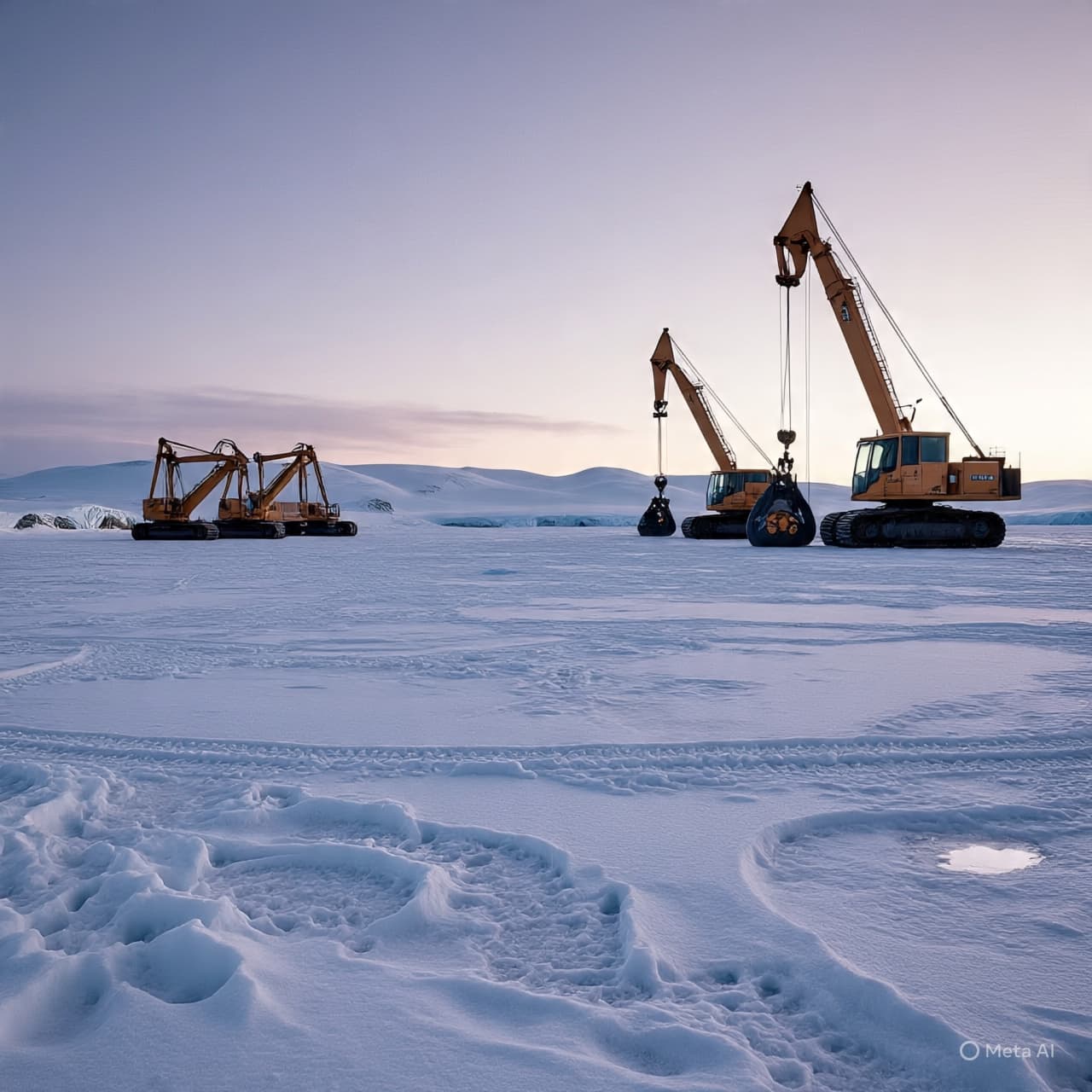
The land in Canada’s far north — rugged, silent, vast — has long been shaped by light glimmers under frozen skies: diamonds, pulled out from ancient rocks far beneath the ice. For decades, those gems supported livelihoods, communities, hopes. But now, as the lights dim at the mines, that sparkle is fading. In the reaching silence, the question echoes: what becomes of a territory built on diamond dust when the mines run dry?
In the Northwest Territories today, all three major diamond-producing mines — Diavik, Ekati, and Gahcho Kué — teeter on the brink. Once a backbone of the region’s economy and identity, the industry now faces “sub‑economic” conditions. For 2024, Diavik recorded C$127 million in losses; Ekati nearly C$94.7 million; Gahcho Kué’s owners also posted heavy losses. Global diamond‑price collapse, rising production costs, surging competition from lab‑grown stones, and trade‑market shifts have all sapped the region’s once‑steady shine.
At Ekati, the situation already hit home: the company behind the mine suspended open‑pit operations at its Point Lake site. Hundreds of employees and contractors were laid off almost immediately. Meanwhile, the planned closure of Diavik in early 2026 looms close; Gahcho Kué also remains under pressure, and Ekati’s future is uncertain.
For many in NWT — Indigenous communities, workers, small towns — the mines have been more than employers. They’ve been identity, stability, hope. Now, as closures draw near, local governments and Indigenous leadership scramble to soften the blow: offering tax breaks, redirecting funds, and pledging support for workers, businesses and communities.
Yet the challenges are stark. Economists warn that the territory may lose thousands of jobs — direct and indirect — and that mining‑related revenue may shrink dramatically. Recovery will require more than temporary relief: a vision for economic diversification, investment in new industries, perhaps even reimagining how the North builds its future beyond the rough brilliance of diamonds.
In a land shaped by ice, where stones once promised wealth and certainty, the coming years may deliver quiet upheaval. The mines may close — but for the communities of NWT, survival may mean digging for resilience instead of diamonds.
AI Image Disclaimer “Graphics are AI-generated and intended for representation, not real photography.”
Sources Mining News North, Crux Investor, Diamond World, Mining Weekly, ArcticToday, GNWT (Northwest Territories government), Economist analysis from Impact Economics
Published by Banx Network. This article is part of the Banx decentralized media programme, powered by the BXE token on the XRP Ledger.