It is perhaps the oldest riddle in human history, a circular puzzle that has sparked debate at dinner tables and in philosophy halls for millennia. Which came first, the chicken or the egg? For centuries, the question seemed to trap us in an infinite loop of causality, where each answer necessitated the other. Yet, in the quiet logic of evolutionary biology, the circle has been broken. The answer, it turns out, is not a matter of opinion but of deep time, revealing a truth that is both simple and profound. It invites us to look beyond the immediate and consider the vast, slow-moving river of life that brought us here.
The resolution lies not in semantics but in the fossil record and the genetic lineage of birds. By tracing the ancestry of the modern chicken, scientists have uncovered a timeline that places the egg firmly before the bird. This discovery is not just a victory for trivia enthusiasts but a gentle reminder of how evolution works—through gradual changes over millions of years, where new species emerge from the old in a continuous, unbroken chain. It is a story of patience, adaptation, and the enduring power of life to reinvent itself.
To understand the answer, one must first define what we mean by "egg." If we speak of eggs in general, the answer is clear: amniotic eggs evolved hundreds of millions of years ago with early reptiles, long before birds even existed. Dinosaurs laid eggs, as did their ancestors. But even if we narrow the question to the specific "chicken egg," the conclusion remains the same. The modern chicken, Gallus gallus domesticus, evolved from a wild ancestor known as the red junglefowl. At some point in this lineage, a genetic mutation occurred in the zygote of a bird that was not quite a chicken.
This mutation, carried within the egg, resulted in the first true chicken. Therefore, the egg containing the first chicken had to be laid by a parent that was not quite a chicken. In this sense, the egg came first. This process of speciation is gradual, making it difficult to pinpoint the exact moment a "non-chicken" became a "chicken," but the biological mechanism is clear. The genetic identity of an organism is determined at fertilization, meaning the creature inside the egg was already a chicken, even if its mother was not.
Recent studies in evolutionary developmental biology have further illuminated this transition. Researchers have examined the proteins involved in eggshell formation, noting that certain key proteins are specific to chickens. However, these proteins are produced by the hen’s ovaries, which might suggest the chicken came first. Yet, this argument overlooks the fact that the genetic instructions for these proteins were present in the ancestor’s genome, having evolved prior to the emergence of the modern species. The egg, therefore, remains the vessel in which the new species was realized.
The broader implication of this finding is a deeper appreciation for the continuity of life. We often view species as distinct categories, but nature sees them as fluid populations changing over time. The chicken is not a sudden creation but a snapshot in an ongoing process. By understanding its origins, we gain insight into how all living things are connected, sharing a common heritage that stretches back to the earliest single-celled organisms. It is a humble perspective that connects us to the natural world.
Moreover, this scientific clarity helps dispel the mystique that often surrounds such questions. While the riddle is fun, it can also create confusion about how evolution works. By providing a clear, evidence-based answer, scientists help foster a better public understanding of biology. It demonstrates that complex questions often have straightforward answers when viewed through the lens of deep time and genetic evidence. This clarity is essential for informed discussions about science and nature.
The story of the chicken and the egg also highlights the importance of ancestral traits. Many features of the modern chicken, from its behavior to its physiology, are inherited from its wild relatives. Understanding this lineage helps in conservation efforts and in managing domestic poultry health. It reminds us that even the most familiar animals have wild roots and a history that predates human civilization. This connection to the past is vital for responsible stewardship of biodiversity.
As we reflect on this ancient question, we are reminded of the power of scientific inquiry to resolve longstanding mysteries. What once seemed like a paradox is now a clear example of evolutionary mechanics. It shows that with patience and observation, we can uncover the truths hidden in plain sight. The answer may be simple, but the journey to find it reveals the complexity and beauty of life on Earth.
The debate over the chicken and the egg has finally been settled by the weight of evolutionary evidence. The egg came first, laid by an ancestor that was not quite a chicken. This conclusion not only solves a riddle but also offers a window into the processes that shape all life. In the end, it is a testament to the enduring quest for knowledge and the clarity that science brings to our understanding of the world.
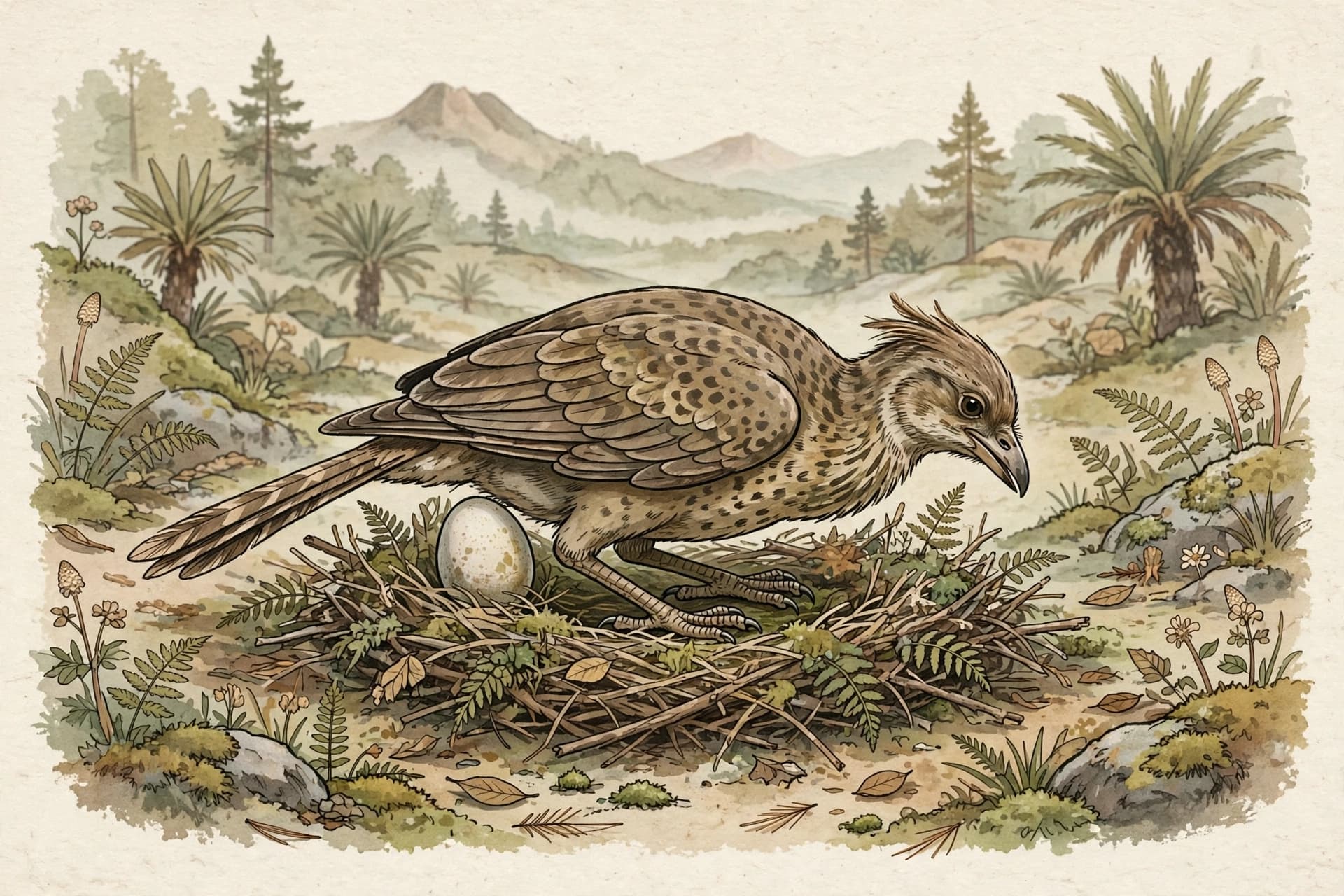
AI Image Disclaimer: The images accompanying this article are AI-generated illustrations designed to represent the concept of evolutionary biology without depicting specific scientific data or real animals.
Sources: The Guardian Harvard Gazette Curious Science BBC Earth
Published by Banx Network. This article is part of the Banx decentralized media programme, powered by the BXE token on the XRP Ledger.