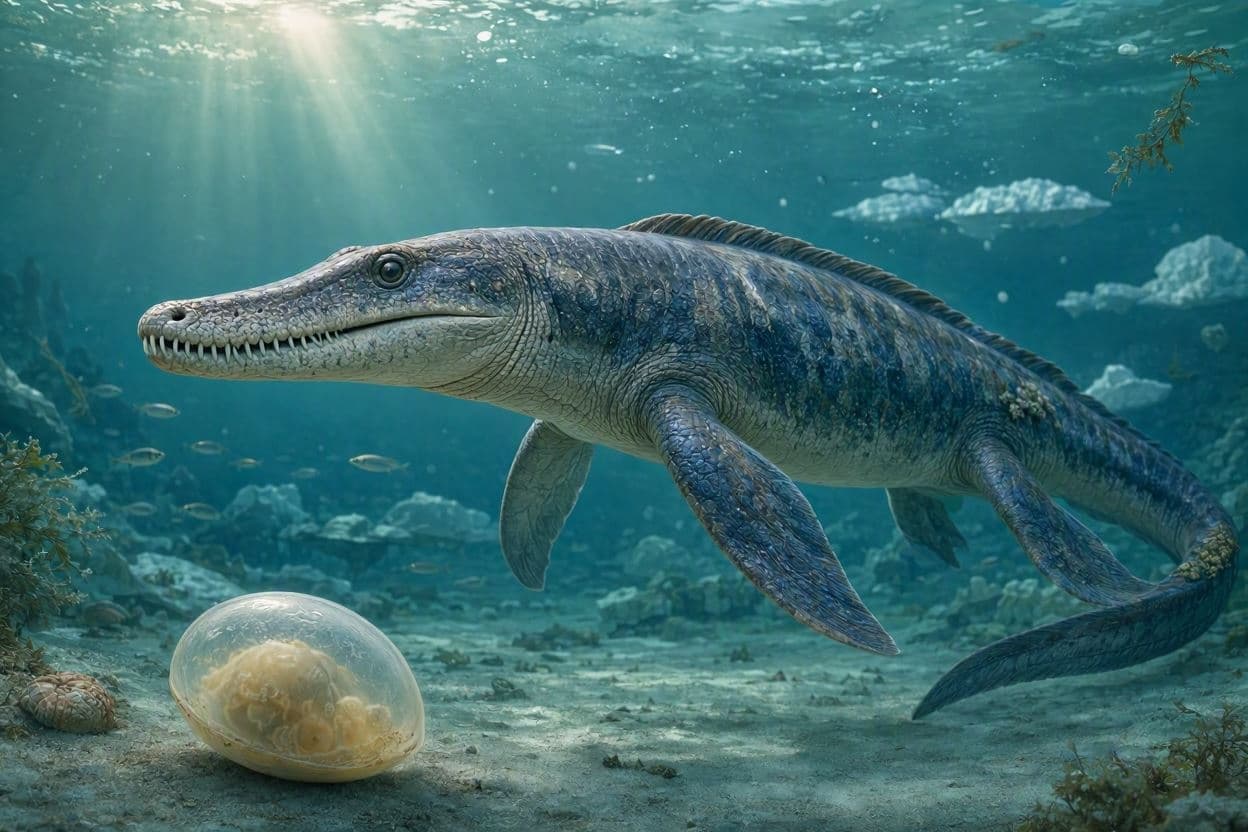
In the frozen silence of Antarctica, where ice covers secrets buried for eons, a discovery has emerged that challenges our understanding of ancient life. A 68-million-year-old fossil egg, roughly the size of a football, was unearthed on Seymour Island, revealing that some massive marine reptiles may have laid eggs rather than giving birth to live young. This finding, nicknamed "The Thing" due to its initial mystery, reshapes the narrative of reproduction in the prehistoric oceans.
For decades, scientists believed that large marine reptiles like mosasaurs and plesiosaurs were viviparous, meaning they gave birth to live offspring in the water. This assumption was based on the lack of fossilized eggs and the logistical challenges of laying eggs on land for animals that spent their entire lives at sea. However, the discovery of this soft-shelled egg suggests that at least some of these giants returned to shallow waters or even land to reproduce, much like modern sea turtles.
The egg’s preservation is remarkable given its age and the harsh conditions of its discovery. Soft-shelled eggs are rarely fossilized because they decompose quickly, making this find exceptionally rare. Detailed analysis revealed that the egg was likely laid by a mosasaur, a formidable predator that ruled the Late Cretaceous seas. The size of the egg indicates that the mother was enormous, possibly reaching lengths of up to 10 meters, highlighting the scale of life in ancient Antarctic waters.
This discovery prompts a reevaluation of the behavior and ecology of marine reptiles. If mosasaurs laid eggs, they must have had specific breeding grounds, possibly in warmer, shallow coastal areas that existed in Antarctica during the Cretaceous period. This implies a level of site fidelity and migratory behavior that was previously unconsidered, adding complexity to our understanding of their life cycles.
The implications extend to the evolution of reproductive strategies in reptiles. The shift from egg-laying to live birth is a significant evolutionary step, and finding evidence of egg-laying in such large marine animals suggests that this transition may have occurred later or differently than thought. It opens new avenues for research into how environmental pressures influenced reproductive choices in ancient species.
For paleontologists, the egg is a treasure trove of information. Future studies may extract DNA or other biomolecules, although this is challenging due to the age of the fossil. Even without genetic material, the structure of the shell and its chemical composition can provide clues about the environment in which it was laid, such as temperature and salinity, offering a snapshot of the ancient world.
As we continue to explore the frozen continent, more surprises may lie beneath the ice. This single egg reminds us that our knowledge of the past is always evolving, shaped by new discoveries that challenge established beliefs. In the quiet of Antarctica, the story of ancient life continues to unfold, one fossil at a time.
AI Image Disclaimer: The images used in this report are AI-generated visuals created to illustrate the prehistoric marine environment and the fossil discovery.
Sources: Nature Communications, Earth.com, Futura-Sciences
Published by Banx Network. This article is part of the Banx decentralized media programme, powered by the BXE token on the XRP Ledger.