In the stillness that follows periods of tension, words often begin to carry more weight than movement itself. They settle into the air like distant weather—half prediction, half memory of what has already passed. In the evolving exchange between the United States and Iran, statements from military and political voices have increasingly taken on this suspended quality, where even caution can sound like anticipation.
A recent warning attributed to the Islamic Revolutionary Guard Corps suggested that while a new direct strike from the United States may be considered unlikely under current conditions, any escalation could still lead to severe consequences. The phrasing—firm, sharpened by years of regional confrontation—reflects a posture shaped by deterrence as much as by memory.
Such statements do not emerge in isolation. They are layered onto a long history of exchanges, sanctions, proxy tensions, and intermittent military encounters that have defined much of the modern relationship between Washington and Tehran. In this context, language itself becomes part of the strategic landscape, where warnings serve both as signals outward and reassurances inward.
The idea of something being “unlikely” sits uneasily beside the more forceful imagery that often accompanies such warnings. It suggests a calculated reading of current conditions, an assessment of risk thresholds, and an attempt to define boundaries in a space where those boundaries have repeatedly shifted. Yet in the same breath, the invocation of severe consequences underscores how fragile that reading remains.
Across the region, the atmosphere surrounding such statements is rarely static. Diplomatic channels continue to operate in parallel with military readiness, and regional actors adjust their posture in response to signals that may be official or inferred. Each announcement, whether from Washington, Tehran, or allied institutions, becomes part of a broader interpretive field in which intention is constantly being read, re-read, and reassessed.
Within Iran’s strategic narrative, warnings from the IRGC often function as both deterrent messaging and internal consolidation. They frame external pressure as something that can be absorbed, resisted, or redirected, while reinforcing the idea of preparedness. In Washington, responses tend to be measured through official defense statements, intelligence assessments, and broader policy positioning that emphasizes deterrence without immediate escalation.
Yet beneath these structured exchanges lies a quieter reality: the region’s long familiarity with cycles of escalation and pause. Moments of heightened tension are often followed by intervals of recalibration, where rhetoric softens but does not fully disappear. It is within these intervals that the word “unlikely” takes on its particular ambiguity—not a closure, but a conditional space.
As observers track these developments, attention often turns not only to what is said, but to what is left unsaid: the thresholds not crossed, the responses not triggered, the lines that remain visible but unbreached. In such a landscape, stability is less a fixed condition than a continually negotiated balance.
For now, the warning stands as part of that negotiation—an assertion of consequence within a system where consequence is already well understood. Whether it signals restraint, readiness, or both at once depends on how the next movements unfold across a region accustomed to reading between the lines of its own uncertainty.
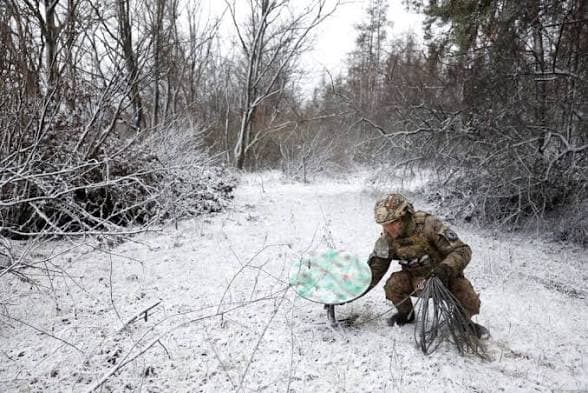
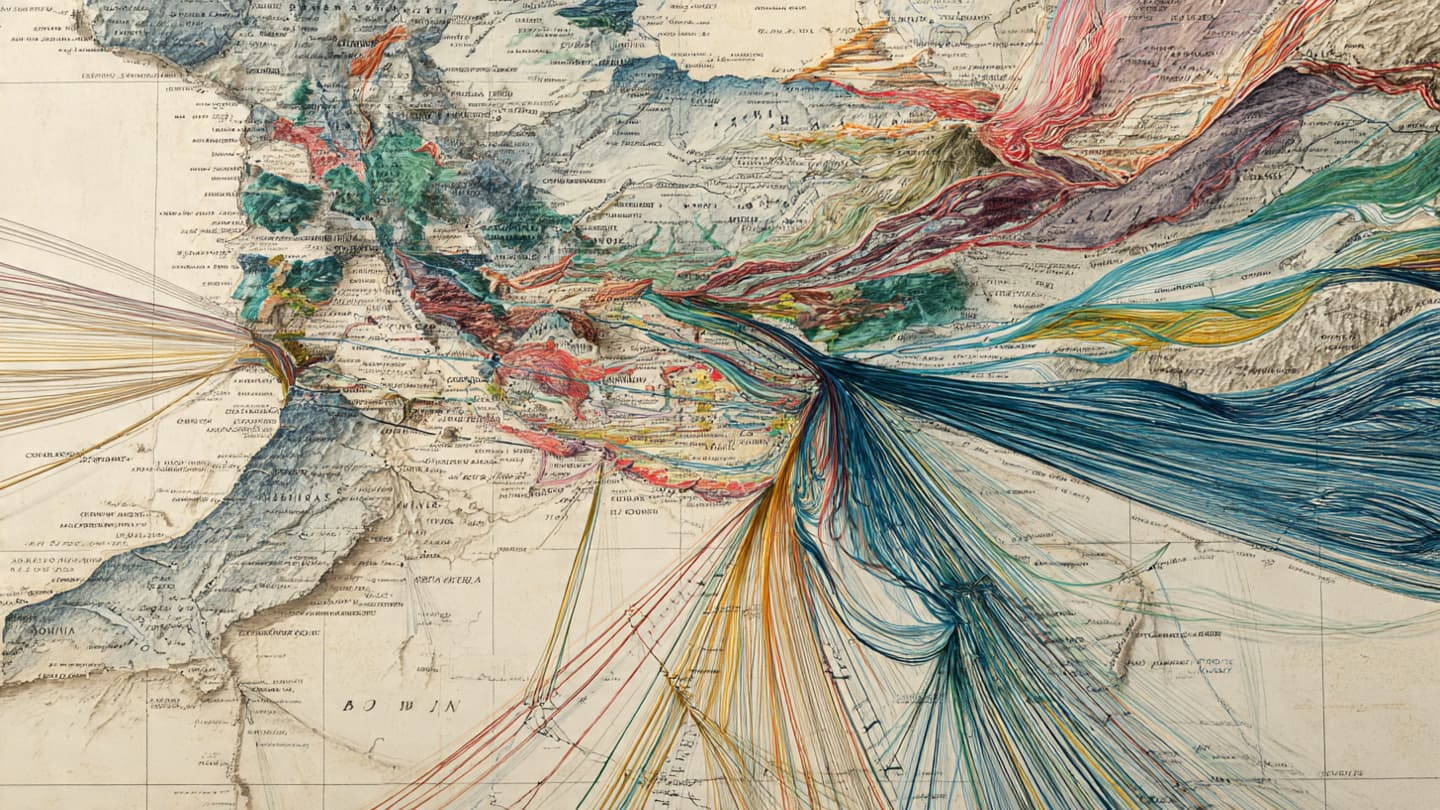
AI Image Disclaimer Images are AI-generated and intended as conceptual visual representations, not actual documentary photographs.
Sources Reuters, Associated Press, BBC News, Al Jazeera, The Washington Post
Published by Banx Network. This article is part of the Banx decentralized media programme, powered by the BXE token on the XRP Ledger.