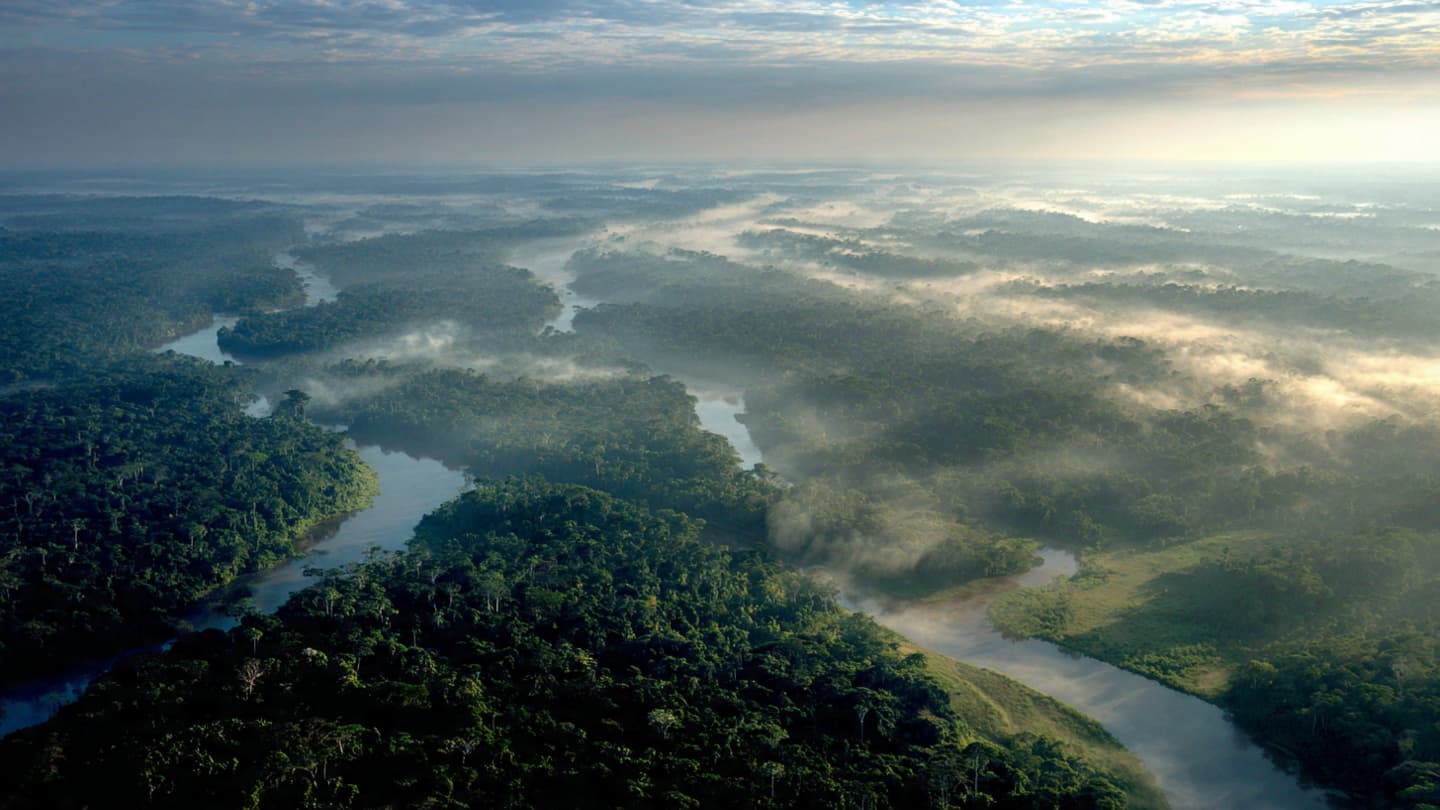
In the long breath of the forest, where green rises like a living tide and mist gathers in the early hours as if the earth itself is remembering its shape, the Amazon has once again entered a quieter chapter. The canopy, vast and layered like an ancient archive of light and shadow, has not been still—but its losses, measured from above by satellites and distant instruments, have slowed to their lowest pace in six years.
Across Brazil, the forest does not speak in headlines. It speaks in clearings that widen or shrink, in rivers that carry sediment differently after each season, in the subtle rearrangement of green against brown. And in recent years, those patterns have begun to shift again under renewed monitoring and enforcement, as deforestation in the Brazilian Amazon shows a marked decline recorded through national satellite systems.
The Brazilian Space Research Institute, known as INPE, has been at the center of this quiet observation. Its PRODES system, which tracks forest loss across annual cycles, has indicated that the pace of deforestation has eased compared to the more accelerated years that preceded it. The change is not absolute stillness, but rather a measurable deceleration—a forest under pressure, yet momentarily less fragmented than before.
On the ground, this shift is entangled with policy and presence. Environmental enforcement agencies such as IBAMA have resumed operations with renewed visibility, focusing on illegal logging corridors, unregulated mining sites, and land clearing activities that once advanced with less resistance. Under the administration of President Luiz Inácio Lula da Silva, environmental policy has been repositioned within broader national and international commitments, including efforts to restore monitoring capacity and re-engage with global climate partnerships.
The Amazon Fund, supported by international contributors such as Norway and Germany, has also regained momentum, directing resources toward conservation projects and enforcement infrastructure. These layered efforts—policy, funding, surveillance, and field operations—form a network that extends across an ecosystem too vast to be governed by a single thread.
Yet the forest remains a place of tension between continuity and pressure. While official data points to a slowdown, challenges persist in remote areas where illegal extraction and land conversion continue to press into the green margins. The Amazon is not a static landscape but a shifting one, where gains in protection often exist alongside localized losses, like light breaking through cloud cover in uneven patterns.
For Indigenous communities and riverine populations, these changes are not abstract. They are experienced through the availability of resources, the stability of waterways, and the changing proximity of encroachment. The forest’s condition is not only an environmental measure but also a lived geography—one that shapes daily movement, food systems, and cultural continuity.
As global attention turns periodically toward the Amazon, the latest slowdown in deforestation offers neither closure nor certainty. It instead suggests a pause in acceleration, a recalibration of pressures rather than their disappearance. The forest continues to exist in negotiation with economic demand, enforcement reach, and ecological resilience.
And so, in the quiet statistical language of satellites and surveys, a broader story unfolds—not of resolution, but of adjustment. The Amazon remains expansive and vulnerable, persistent and changing, holding within its canopy both the weight of loss and the possibility of recovery.
AI Image Disclaimer Visuals are AI-generated and intended as conceptual representations rather than real-world photographs.
Sources INPE, IBAMA, Brazil Ministry of Environment and Climate Change, World Resources Institute, Reuters
Published by Banx Network. This article is part of the Banx decentralized media programme, powered by the BXE token on the XRP Ledger.