Key Highlights
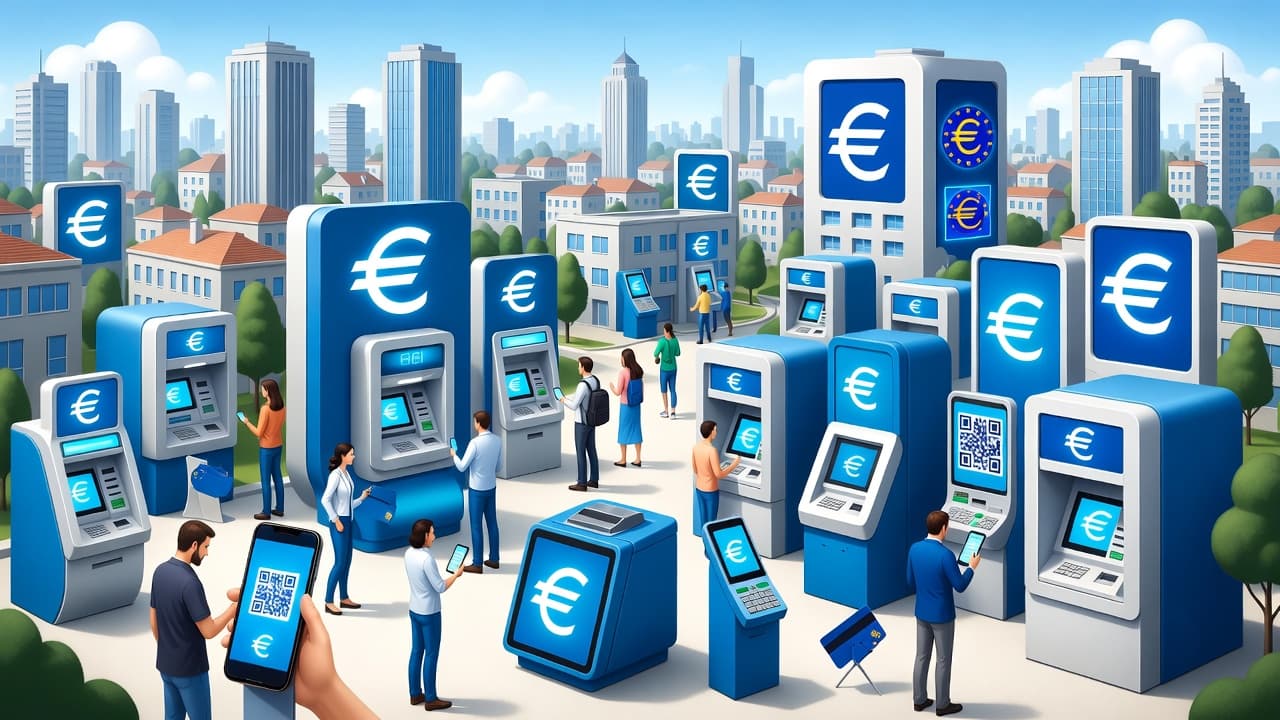
- ECB's Call: The European Central Bank is seeking experts to assist in integrating the digital euro into ATMs and payment terminals.
- Implementation Phase:This marks a significant shift from conceptual studies to real-world application.
- Pilot Program:A large-scale pilot for payment service providers is set for 2027.
The European Central Bank (ECB) is taking a significant step towards the implementation of the digital euro by calling for experts to assist in integrating this new currency into ATMs and payment terminals. This initiative represents the most tangible sign yet that Europe is moving beyond theoretical discussions and into the practical phase of digital currency deployment.
[Single Rulebook for the Entire Euro Area]
The ECB's digital euro scheme aims to establish a unified set of rules, standards, and procedures that all intermediaries, including banks, fintechs, and payment service providers, must adhere to. This rulebook is designed to ensure that the digital euro will be accepted universally, similar to cash today, whether online or offline, via smartphone or card, at local bakeries or e-commerce sites.
To finalize this technical manual, the ECB's Rulebook Development Group (RDG), which includes representatives from consumers, merchants, and payment service providers, is calling on field experts through two new workstreams. The first, Workstream G5, focuses on Implementation Specifications for ATM and Terminal Providers. Its objective is to define how the digital euro will function on existing ATMs and point-of-sale (POS) terminals, utilizing technologies such as NFC, QR codes, and Bluetooth Low Energy (BLE). Key considerations include offline integration, cost-effective use of current standards, and compatibility with existing infrastructure.
The second workstream, Workstream B1 (Renewed), aims to establish a certification and approval framework for testing and certifying all payment and acceptance solutions, including terminals, applications, and payment service provider infrastructures. Experts in payment and acceptance devices are encouraged to apply, with applications due by April 10, 2026.
[Not Alone: A Real-World Pilot Planned for 2027]
This call for experts is part of a broader acceleration of the digital euro initiative. On March 5, 2026, the ECB opened applications for payment service providers to participate in a large-scale pilot program scheduled for the second half of 2027. This pilot will involve testing person-to-person (P2P) payments both online and offline, as well as person-to-business (P2B) payments in physical stores and e-commerce environments. Selected providers will work closely with ECB and national central bank staff, as well as participating merchants, to evaluate the user experience.
The application deadline for this pilot program is May 14, 2026, with a public information session set for March 20, 2026. The ECB's Governing Council approved the transition to this next phase in October 2025, and if European legislation is adopted in 2026, the first issuance of the digital euro could occur as early as 2029.
[Why This Matters: A Complement to Cash, Not a Replacement]
The digital euro is designed to be issued directly by the ECB and the Eurosystem, ensuring accessibility for all, including the unbanked. It will function offline, similar to physical cash, and will prioritize user privacy, with the ECB not monitoring individual transactions. The digital euro will coexist with traditional banknotes, coins, and private payment solutions like Apple Pay and bank cards.
Integrating the digital euro into ATMs and POS terminals is crucial, as it allows citizens to withdraw or spend digital euros without altering their existing habits, thereby minimizing investment costs for banks and merchants. This initiative has significant implications for various stakeholders, including banks and payment service providers, who will need to quickly certify their solutions, and merchants, who can update existing terminals rather than replace them.
[Europe Is Taking the Lead]
As countries like China rapidly roll out their digital currencies, Europe is methodically developing a unique and inclusive standard that aligns with democratic values. The ECB's recent call for experts signifies that the work is no longer theoretical; the interfaces that consumers will use at ATMs and checkout counters are already in the design phase. Industry experts, including ATM manufacturers and POS makers, are encouraged to apply promptly, as this represents a pivotal opportunity to shape the future of payment infrastructure in Europe.
Published by Banx Network. This article is part of the Banx decentralized media programme, powered by the BXE token on the XRP Ledger.