There is a particular stillness that follows the earth's sudden movement—a pause in which people emerge from buildings and gather in open spaces, waiting for news, waiting for certainty. On Friday afternoon, that stillness settled over Panama as two powerful earthquakes and a cascade of aftershocks reminded the nation of the forces that lie beneath its soil.
The first quake struck at magnitude 7.7, centered near the remote community of Pitaloza Arriba in Herrera Province, according to the U.S. Geological Survey . It was felt as far away as Colombia, shaking buildings in Panama City and prompting evacuations across the country . A second quake, magnitude 6.6, followed shortly after, and seismologists at the University of Panama recorded more than 45 aftershocks, many too weak to be felt but sufficient to keep nerves on edge .
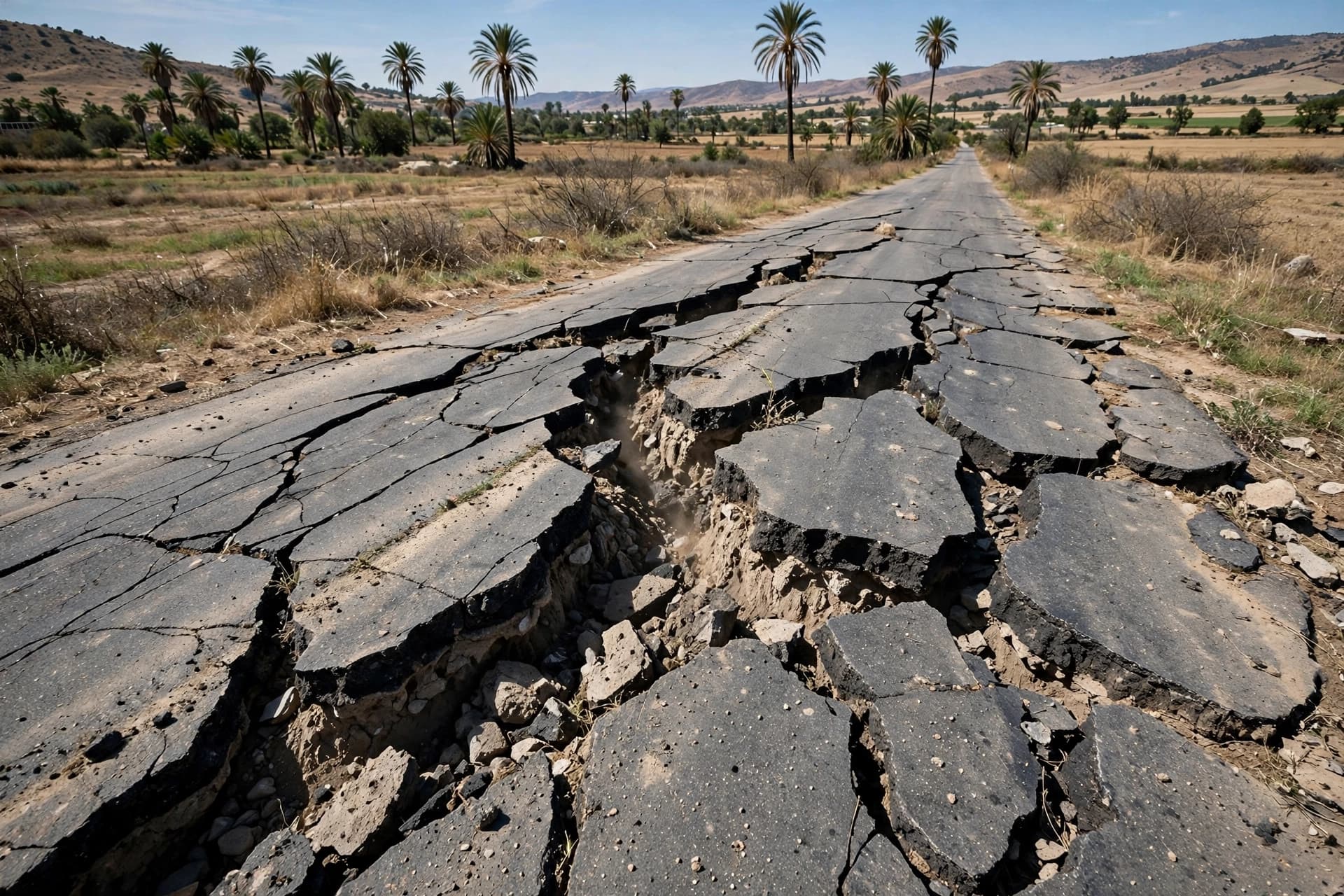
The damage was concentrated in Panama's central provinces—Veraguas, Herrera, and Los Santos—where images of crumbling buildings and deep fissures in roadways emerged . The bell tower of St. John the Baptist Cathedral in Penonomé collapsed, and the colonial-era Church of San Atanasio, a National Historic Heritage Site since 1938, was reported to have fallen . The governor's office building and the Dos Continentes hotel also sustained damage .
President José Raúl Mulino called for calm, writing that what had happened "should not be used to cause alarm or disorder" . Omar Smith of the National Civil Protection Service confirmed several injuries, including one person struck by debris in Penonomé, but reported no immediate casualties . Tocumen International Airport, one of the region's busiest hubs, suspended operations temporarily and activated evacuation plans .
This earthquake arrives in a region already battered by seismic devastation in recent months. Back-to-back quakes in Venezuela's La Guaira state in June killed more than 6,500 people and left 17,000 homeless, while a 7.4 magnitude earthquake in Colombia in August killed at least 289 . The USGS estimated that economic losses from Friday's quake could amount to between one and ten percent of Panama's gross domestic product .
Panama lies along the Ring of Fire, a 40,000-kilometer arc of volcanoes and fault lines where most of the world's earthquakes occur . The Azuero-Sona Fault System, which triggered Friday's quake, is a system of active faults that occasionally releases accumulated stress, according to Panama's geosciences institute . "The seismic signals have travelled throughout the national territory and that is why it could be felt everywhere," director Nestor Luque said .
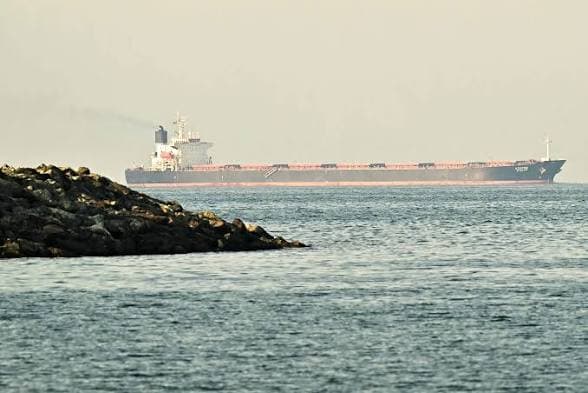
Tsunami warnings were issued for the coasts of Panama, Colombia, Ecuador, Nicaragua, and Guatemala, and extended as far as Chile's Easter Island, about 3,500 kilometers away . The warnings were later lifted, and the Panama Canal Authority reported that operations along the key trade route were continuing normally . Power was down across six provinces, and about 90 vessels were waiting at both ends of the waterway .
The earth beneath Panama has always been restless, shaped by the slow collision of tectonic plates over millennia. What Friday's quakes revealed is how quickly that ancient geology can intrude upon the present—collapsing a bell tower that had stood for generations, cracking roads, and sending families into the streets. Recovery will take time, and the aftershocks may continue. But for now, the priority is simple: safety, shelter, and the quiet work of assessing what the earth has done.
AI Image Disclaimer: The visuals accompanying this article were generated by artificial intelligence for illustrative purposes only.
Sources: Associated Press, Australian Broadcasting Corporation, Reuters
Published by Banx Network. This article is part of the Banx decentralized media programme, powered by the BXE token on the XRP Ledger.