

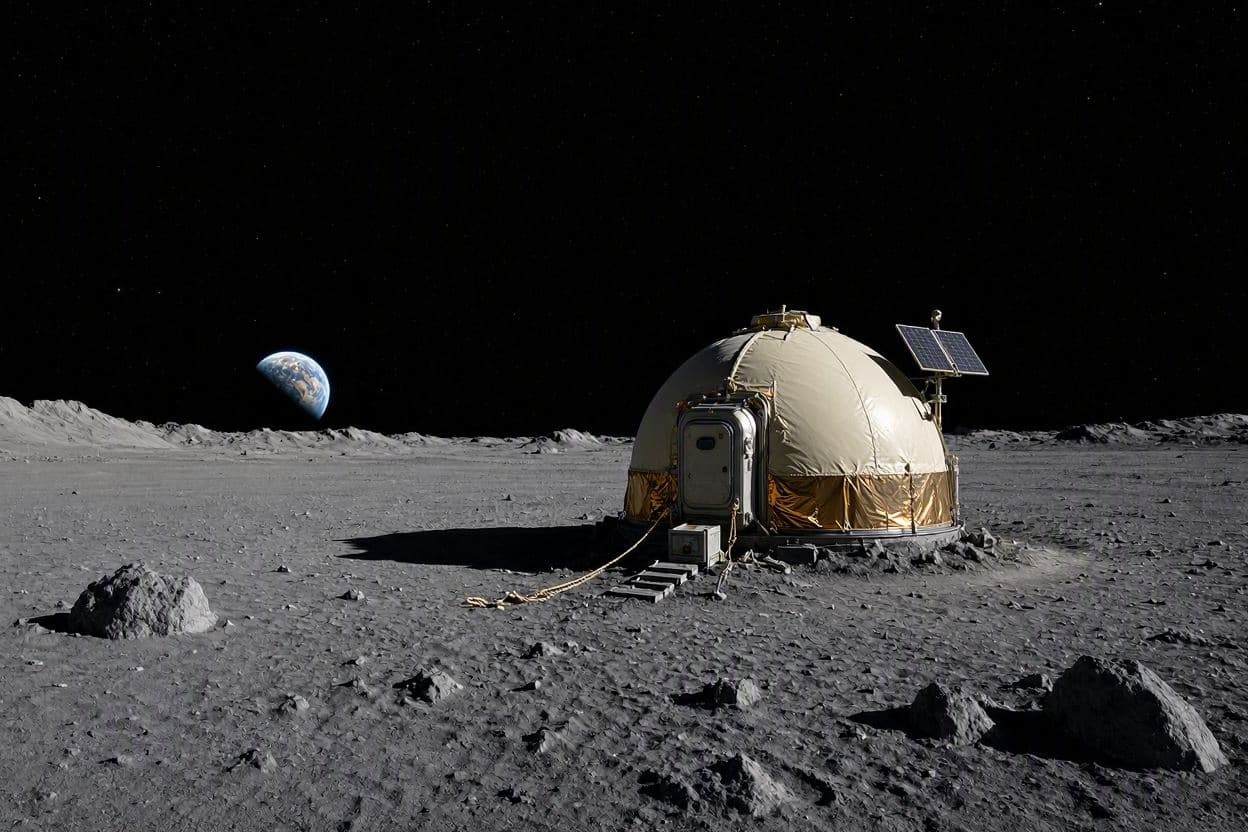
The moon has long captivated the human imagination, a silent companion in the night sky that promises adventure and expansion. Yet, as plans for lunar colonization become more concrete, a sobering reality emerges from the data: the moon is far drier than we hoped. Scientists warn that the scarcity of water may pose an insurmountable barrier to the establishment of sustainable cities on its surface.
Water is the essence of life and the backbone of any long-term human settlement. It is needed for drinking, agriculture, and hygiene, but perhaps most critically, it can be split into hydrogen and oxygen to create rocket fuel and breathable air. Without accessible water sources, a lunar city would depend entirely on expensive and risky shipments from Earth, making self-sufficiency impossible.
Recent studies have analyzed the distribution of water ice in permanently shadowed craters near the lunar poles. While traces of water exist, the quantities are significantly lower than earlier estimates suggested. Moreover, extracting this ice requires complex machinery and immense energy, as it is mixed with regolith and frozen at extremely low temperatures. The logistical challenges of mining and processing this resource are daunting.
Scientists argue that the energy cost of extraction may outweigh the benefits, especially when compared to the ease of transporting water from Earth or other celestial bodies like asteroids. The infrastructure required to support large-scale mining operations on the moon would be massive, requiring a level of industrialization that is currently beyond our reach. This economic reality casts doubt on the viability of large permanent settlements.
Furthermore, the harsh lunar environment presents additional hurdles. Radiation, extreme temperature fluctuations, and micrometeorite impacts require robust shielding and maintenance. Without the buffer of a thick atmosphere or abundant local resources, maintaining a city would be a constant struggle against entropy. The margin for error is slim, and the cost of failure is high.
Some proponents suggest that smaller, specialized outposts rather than full cities are more realistic. These bases could focus on scientific research and resource exploration, relying on regular supply chains from Earth. This scaled-down approach acknowledges the limitations of the lunar environment while still allowing for human presence and exploration.
The conversation is shifting from colonization to sustainable exploration. Instead of building cities, humanity may focus on establishing temporary habitats that serve as stepping stones for deeper space travel. This pragmatic view recognizes the moon not as a new home, but as a challenging frontier that demands respect and careful planning.
As we look to the stars, the moon remains a powerful symbol of our ambitions. However, the lack of water serves as a gentle reminder of the constraints of our solar system, urging us to approach space exploration with humility and realistic expectations.
AI Image Disclaimer: Visuals for this report are AI-generated interpretations designed to convey the themes of lunar exploration and resource scarcity.
Published by Banx Network. This article is part of the Banx decentralized media programme, powered by the BXE token on the XRP Ledger.




