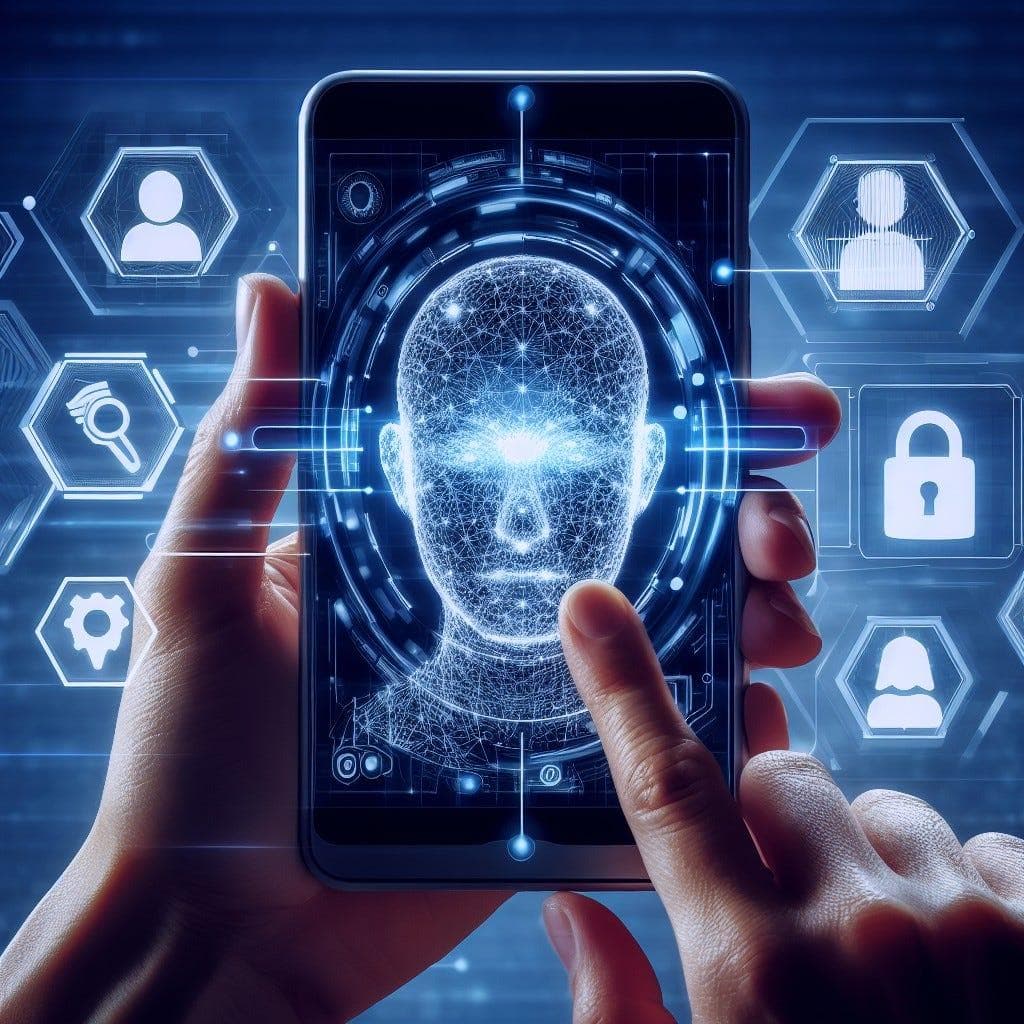
1. The Battle to Control Your Digital Identity
Every time someone opens a bank account, applies for a job, signs up for an online service or accesses a government portal, they may be asked to prove their identity.
Traditionally, this has meant presenting a passport, driving licence, utility bill or other document. In an increasingly digital economy, however, organisations are looking for faster ways to establish that a person is who they claim to be.
Digital identity systems offer an alternative. They can verify a person's identity, confirm particular attributes such as age or employment status, and allow credentials to be reused across different services.
The market is already substantial. A UK government report published on 8 July 2026 estimated that 275 firms were providing digital identity products and services in Britain, generating approximately £2.03 billion in annual revenue during 2024–2025 [1].
These systems are becoming part of the infrastructure supporting online banking, employment checks, fraud prevention and public services.
But digital identity is about more than convenience. It raises fundamental questions about privacy, surveillance, security and personal freedom.
If a person's identity becomes increasingly dependent on digital systems, the organisations that operate those systems could gain significant influence over how that person accesses essential services.
The central battle is therefore not simply about creating better digital identification technology. It is about deciding who controls it, who can access the information it contains and what rights individuals retain.
2. What Exactly Is Digital Identity?
Digital identity is a digital representation of a person that can be used to establish who they are or verify specific information about them.
It can include several different elements:
Identity verification: Establishing that a person is who they claim to be.
Authentication: Confirming that someone attempting to access an account is authorised to do so.
Verified credentials: Digitally proving facts such as age, qualifications, employment status or professional registration.
Biometric verification: Using characteristics such as facial features or fingerprints to help confirm identity.
Digital identity wallets: Applications that store credentials and allow users to present them when required.
These functions are related, but they are not interchangeable.
A password may authenticate access to an account without establishing a person's legal identity. A digital driving licence may prove that someone holds a valid driving entitlement, while a digital age credential could confirm that they meet an age requirement without revealing their full date of birth.
A well-designed system can therefore allow people to prove a particular fact without repeatedly submitting entire identity documents.
For example, a website selling age-restricted products might need confirmation that a customer is over 18. It may not need the customer's home address, passport number or exact date of birth.
This principle, known as data minimisation, is central to privacy-conscious digital identity design.
The challenge is ensuring that the technology delivers these benefits without creating new opportunities for tracking, data collection or exclusion.
3. Europe Is Building a New Digital Identity Infrastructure
One of the most significant developments is the European Union's digital identity wallet initiative.
Under the EU's European Digital Identity Framework, member states are expected to make digital identity wallets available to citizens, residents and businesses by the end of 2026 [2].
These wallets are designed to let users identify themselves, store digital documents, share verified information and create legally binding electronic signatures.
Potential uses include opening bank accounts, accessing public services, presenting digital driving licences, sharing educational qualifications and signing contracts.
The EU's stated approach places emphasis on user control and privacy. Individuals should be able to choose what information they share when using their wallets, rather than automatically handing over every detail associated with their identity.
Consider a person applying for a job in another EU country. Instead of sending multiple documents and waiting for manual checks, they could potentially share verified credentials through a digital wallet.
A similar process could simplify cross-border banking or the verification of professional qualifications.
The benefits could extend to businesses as well. More standardised credentials may reduce administrative costs, accelerate customer onboarding and make it easier to verify information across national borders.
However, the success of the initiative will depend on more than technical standards. Wallets must be secure, accessible, interoperable and trusted by the public.
People must also understand what information they are sharing and whether they can continue using alternative identification methods.
A system designed to give individuals greater control will only fulfil that promise if users genuinely have meaningful choices.
4. Britain's Digital Identity Strategy Has Taken a Different Direction
The United Kingdom is developing digital identity infrastructure, but its approach differs from the EU's wallet programme.
A House of Commons Library briefing published on 4 September 2026 reported that the UK government had cancelled plans for a national digital ID scheme [3].
That decision does not mean digital identity has disappeared from Britain.
The country continues to support a framework for digital verification services, allowing providers to be assessed against standards covering the reliability and trustworthiness of identity-related services [4].
Digital identity is already relevant to areas such as opening bank accounts, employment checks, company director verification and accessing online services.
The UK government's 2026 sector report estimated that 77% of surveyed residents had used a digital identity service for at least one purpose. However, the report also found that only 43% viewed the current direction of digital identity development positively, despite 71% believing these services would be important over the following five years [1].
These figures reveal an important tension. People may recognise the growing importance of digital identity without necessarily agreeing with every proposed system or how it should be introduced.
The distinction between a national government identity scheme and a market of certified digital verification providers also matters.
A country can expand digital identity services without creating a single universal identity database. Equally, a system involving multiple providers can still raise serious privacy concerns if organisations collect excessive data or share information without appropriate safeguards.
The real question for Britain is how to make digital verification reliable and convenient while protecting personal choice, privacy and access to essential services.
5. The Promise of a Passwordless Future
Digital identity is closely connected to another major change in cybersecurity: the move away from passwords.
Passwords are frequently stolen, reused across websites or exposed through phishing attacks. Even users who follow good security practices can be deceived by convincing fake websites or manipulated into revealing login information.
Modern authentication methods can reduce these risks.
Passkeys, for example, use cryptographic techniques to help users sign in without typing a conventional password. Depending on the implementation, authentication may involve a device, a biometric check or a local PIN.
The US National Institute of Standards and Technology's digital identity guidance emphasises phishing-resistant authentication as an important security measure [5].
Digital identity wallets could extend this approach by combining secure authentication with verified credentials.
Imagine using a phone to confirm your identity to a bank, prove your age to a retailer and present a professional qualification to an employer. Instead of repeatedly entering personal details, you could authenticate securely and share only the credential required for each transaction.
This could make many online interactions faster and reduce some common forms of fraud.
But passwordless authentication does not eliminate every risk. Devices can be lost, accounts can be compromised and users can be tricked into approving actions they do not understand.
Security also depends on recovery procedures. If someone loses their phone or becomes locked out of a wallet, they need a reliable way to regain access without allowing criminals to impersonate them.
A more secure login method is valuable, but the entire identity lifecycle—from registration to recovery—must be designed carefully.
6. The Privacy Question: How Much Should You Have to Reveal?
One of the strongest arguments for digital identity is that it could reduce the amount of personal information people share.
In many situations, organisations request more information than they actually need.
A service verifying someone's age may ask for a full identity document. A company checking a professional qualification may collect information unrelated to the job. A website may retain identity records long after the original verification has finished.
Digital credentials could offer a more privacy-conscious alternative.
For example, a system could confirm that a user meets an age requirement without disclosing their exact date of birth. A professional credential could verify that a person holds a recognised qualification without requiring them to upload unrelated identity documents.
Some privacy-enhancing technologies are designed to support these kinds of selective disclosures.
However, the existence of such technology does not guarantee that every provider will use it.
A company might still collect unnecessary information, retain records for too long or combine identity data with other personal information.
Even a system that reveals little information to the organisation requesting verification may generate metadata showing when a credential was used, which service requested it and how frequently someone accesses particular services.
Those records can reveal sensitive patterns of behaviour.
The key question is therefore not simply whether digital identity can protect privacy. It is whether the system is designed to minimise data collection, restrict secondary use and give individuals meaningful control over their information.
7. Could Digital Identity Become a Tool for Mass Surveillance?
The same infrastructure that makes digital identity convenient could also make it attractive to organisations seeking greater visibility into people's activities.
If identity verification becomes embedded in more websites, financial services, workplaces and public systems, the number of interactions associated with a verified identity could increase.
That creates a potential surveillance risk, particularly if information collected by separate services is linked together.
For example, records from different systems might reveal when someone applies for a loan, accesses a public service, verifies their age or enters a workplace.
These activities are not necessarily problematic individually. The concern arises when information is collected, combined and used for purposes that people did not reasonably expect.
A system could also create risks if a government or company gained excessive authority to determine when identity verification is required, what information must be disclosed or whether someone can access a service.
However, digital identity does not automatically create a centralised record of every person's activities. The actual risk depends on the architecture, the data retained, the organisations involved and the legal protections in place.
Privacy-preserving credentials, decentralised storage, strict access controls and independent oversight can reduce some of these dangers.
The objective should be to make it possible to verify identity when necessary without turning routine digital activity into an opportunity for comprehensive tracking.
8. The Security Threat: What Happens When Identity Systems Are Hacked?
Digital identity systems could reduce certain types of fraud, but they may also become valuable targets for cybercriminals.
Identity data can be used to open fraudulent accounts, impersonate victims, take over existing accounts or attempt to obtain financial services under false pretences.
A compromised identity provider could potentially expose sensitive records belonging to many customers. An attacker who gains control of a user's account or recovery process might also attempt to impersonate that individual across multiple services.
Biometric systems create additional challenges. A stolen password can be changed, but a person's face or fingerprint cannot simply be replaced.
Modern biometric systems use different methods to protect and process biometric information, and a compromised system does not always mean raw biometric data has been stolen. Nevertheless, the consequences of a biometric data breach can be difficult to reverse.
Criminals may also attack the process before a credential is issued. They could use forged documents, manipulated video, synthetic identities or stolen personal information to persuade a provider to verify the wrong person.
The UK's 2026 sector analysis highlighted the growing use of biometrics and liveness detection among identity providers, partly in response to attempts to bypass remote verification systems [1].
This creates an ongoing technological contest. As verification systems improve, criminals develop new methods to deceive them.
Effective protection therefore requires more than strong encryption. It also involves secure registration, fraud detection, independent testing, restricted access, reliable recovery and clear procedures for responding to compromised credentials.
9. Artificial Intelligence Is Making Identity Verification More Complicated
Artificial intelligence is changing both sides of the identity-verification process.
On one side, AI can help identify suspicious patterns, detect inconsistencies in documents and support systems designed to distinguish genuine users from impersonators.
On the other, generative AI can help criminals create convincing fake documents, synthetic faces, cloned voices and manipulated video.
These capabilities make remote identity verification increasingly challenging.
A system that relies heavily on a photograph or video call may be vulnerable if it cannot reliably distinguish a genuine person from a sophisticated imitation.
Liveness detection attempts to establish that a biometric sample comes from a real, present person rather than a static image or artificial representation. Yet these systems must continue evolving as attack techniques become more advanced.
AI can also introduce fairness concerns. Verification tools may perform differently across demographic groups, lighting conditions, devices or image quality. A system that incorrectly rejects legitimate users could prevent people from opening accounts or accessing services.
Automated decisions must therefore be evaluated for both security and accuracy.
Organisations should also provide meaningful ways to challenge an incorrect result, particularly when identity verification affects employment, financial access or essential public services.
The future of digital identity will depend partly on whether providers can use AI to improve fraud detection without allowing automated systems to become unreliable gatekeepers.
10. The Rise of Decentralised Identity
Most people are familiar with accounts managed by individual organisations. A bank controls its banking login, a technology company controls its platform account, and a government department operates its own online service.
Decentralised identity proposes a different model.
Rather than requiring a single organisation to manage every aspect of a person's digital identity, this approach can allow individuals to hold verified credentials and present them to different services when needed.
In some designs, credentials are issued by trusted organisations and stored in a user-controlled wallet. A university might issue a digital qualification, for example, while an employer verifies it without needing to contact the university manually every time.
The term decentralised does not mean that trust disappears. Someone must still establish which organisations are authorised to issue credentials, whether those credentials are valid and how they can be revoked if necessary.
Blockchain technology may be used in some decentralised identity systems, but it is not essential to every implementation.
Nor does placing information on a blockchain automatically make an identity system private or secure. Publishing personal information on an immutable ledger could create serious privacy problems.
A better design generally avoids placing sensitive personal data directly on a public blockchain. Cryptographic proofs or references to credentials may support verification without exposing the underlying information.
The potential advantage is reduced dependence on a single identity provider and greater control over credential sharing.
The challenge is achieving broad acceptance. A digital credential is only useful if the organisations and services a person needs are willing and able to recognise it.
11. Who Should Own and Control Digital Identity?
Digital identity raises a fundamental question: who should have authority over the information used to represent a person?
There are several possible models.
Government-led systems can provide consistent standards and connect identity verification to public services. However, they require strong safeguards to prevent excessive centralisation or misuse.
Private-sector systems can innovate quickly and create convenient services. But commercial incentives may encourage providers to collect additional data or make users dependent on particular platforms.
User-controlled wallets can give individuals more control over which credentials they present. Yet users may still depend on issuers, wallet providers, device manufacturers and organisations that accept the credentials.
Federated systems allow different organisations to recognise credentials or authentication provided by trusted partners. This can improve convenience, but it introduces questions about how trust is distributed and how failures are managed.
No model automatically solves every problem.
A government-operated system can be privacy-preserving, while a private system can be intrusive—or vice versa. What matters is the actual design, the legal framework, the incentives of the operators and the ability of individuals to challenge misuse.
People should be able to understand who issued a credential, what information it reveals, who receives that information and how long associated records are retained.
They should also have access to independent complaints processes and remedies when a provider makes a mistake.
Identity is fundamental to participation in society. Decisions about its digital representation should not be left solely to the organisations that build or operate the technology.
12. Will Digital Identity Exclude People Who Cannot Go Digital?
Digital identity could make services more accessible, but it could also create barriers for people who cannot easily use digital systems.
Some individuals do not own a suitable smartphone. Others may have limited internet access, disabilities, low digital literacy or difficulty obtaining the documents required to establish an identity.
Older people, people experiencing homelessness and individuals who have lost access to their records may face particular challenges in some circumstances.
If an organisation makes digital verification the only practical route to accessing a service, these barriers can become more serious.
The UK's 2026 digital identity sector report found that among surveyed people who had not used digital identity services, common reasons included preferring physical identification and not having needed to prove their identity. Some also cited a lack of digital options or identity documents [1].
The figures suggest that adoption is not simply a question of whether the technology exists. It also depends on whether people need it, trust it and can access it.
A well-designed system should provide accessible interfaces, support for people who need assistance and reliable procedures for recovering access.
Where appropriate, alternative verification routes should remain available, particularly for essential services.
Digital identity should help people prove who they are, not make access to employment, healthcare, banking or public services dependent on owning the latest device or navigating a complicated application.
13. The Financial Industry Could Become One of the Biggest Winners
Banks and financial services companies have strong incentives to improve identity verification.
Financial institutions must establish who their customers are, meet regulatory obligations and manage the risk of fraud. Traditional onboarding processes can involve document checks, manual reviews and repeated requests for information.
Reusable digital credentials could make some of these processes faster and more consistent.
A customer might use verified information to support an application for a bank account, loan or insurance policy without repeatedly submitting the same documents.
Businesses could also benefit from more reliable checks when onboarding customers or verifying counterparties.
The UK's 2026 sector analysis found that financial and professional services remained the core customer sector for digital identity providers. It also identified know-your-customer and anti-money-laundering compliance, fraud prevention and secure access management among the leading reported use cases [1].
However, digital identity cannot eliminate financial crime.
Fraudsters may still exploit compromised credentials, false information supplied at registration, dishonest intermediaries or weaknesses in a provider's systems. A verified identity also does not establish that a financial transaction is legitimate.
Financial institutions will need to combine digital identity with transaction monitoring, fraud investigation, secure account management and other risk controls.
For customers, the benefits could include faster applications and fewer repetitive checks. The trade-off is that identity information must be handled responsibly and protected against unauthorised access.
14. Could Digital Identity Become a Major Technology Market?
Digital identity is creating opportunities across several parts of the technology industry.
Companies develop document-verification software, biometric authentication tools, identity wallets, credential-management platforms, fraud-detection systems and services that help organisations meet regulatory requirements.
The UK government's 2026 report estimated annual sector revenue of approximately £2.03 billion in 2024–2025, with around 9,624 full-time-equivalent jobs associated with digital identity roles [1].
The sector includes dedicated identity providers as well as larger businesses offering identity-related products alongside other services.
Demand could grow as more organisations digitise customer onboarding, employment checks, age verification and access management.
The expansion of AI-generated fraud may also increase demand for stronger identity verification.
However, growth in the market does not mean every provider will succeed. Identity systems must earn trust, integrate with existing infrastructure and demonstrate that their security is reliable.
The market may also face consolidation as larger technology firms acquire smaller providers or offer identity verification as part of broader cloud, cybersecurity and financial services platforms.
For investors, the industry offers exposure to a potentially important digital infrastructure market, but it also carries risks. These include competition, changing regulation, cybersecurity incidents, privacy disputes and the difficulty of establishing common standards.
The long-term winners may not simply be the companies that collect the most identity data. They may be those that can provide trustworthy verification while minimising the information users need to disclose.
15. What Regulation Must Get Right
Digital identity operates at the intersection of technology, privacy, cybersecurity and public policy.
Regulation must establish clear expectations without preventing useful innovation.
Several areas are particularly important.
Data minimisation: Providers should collect only the information necessary for a legitimate purpose and avoid retaining it indefinitely.
Security standards: Systems should use appropriate cryptography, access controls, secure recovery procedures and independent security testing.
Transparency: People should be able to understand who is requesting their information and why.
Accountability: Providers should be responsible for handling data securely and responding appropriately when systems fail.
Interoperability: Credentials should work across suitable services without forcing individuals into a single commercial ecosystem.
Accessibility: People who cannot use a digital wallet or automated verification system should have appropriate alternatives.
Redress: Individuals need a way to correct inaccurate records, challenge mistaken decisions and recover access after fraud or technical failure.
The UK has established a framework for certifying digital verification services, while the EU is developing its own digital identity wallet ecosystem [2][4]. Different approaches may reflect different political priorities, legal systems and expectations about the relationship between individuals, governments and businesses.
Over time, compatibility between systems may become increasingly important. People and companies operating across borders should not have to navigate an entirely separate identity process for every jurisdiction.
But interoperability should not become an excuse to weaken privacy. A credential that can be accepted in many places must still disclose only what is necessary for each transaction.
The objective is to create systems that are secure and convenient while preserving meaningful individual rights.
16. Three Possible Futures for Digital Identity
The future of digital identity will depend on technology, public trust, regulation and the choices made by governments and businesses.
Scenario One: The User-Controlled Digital Wallet
Digital wallets become widely accepted for everyday transactions. People use them to prove their age, qualifications, identity and eligibility for services without repeatedly submitting documents.
Strong privacy protections limit unnecessary data collection, while common standards allow credentials to work across providers and borders.
In this scenario, digital identity reduces administrative friction and gives individuals greater control over their information.
Scenario Two: A Fragmented Identity Market
Different governments, banks, technology companies and identity providers develop systems that do not work well together.
People must maintain several wallets and accounts, repeat verification checks and navigate conflicting rules. Large providers gain advantages because their systems are accepted by more organisations.
Digital identity still grows, but its benefits are uneven, and users become frustrated by complexity and dependence on particular platforms.
Scenario Three: Convenience Comes at the Cost of Privacy
Digital identity becomes deeply embedded in online and offline services, but protections fail to keep pace.
Organisations collect excessive information, identity records are linked across services, and security incidents expose sensitive data. Some people find it difficult to access services when automated verification fails.
Public trust deteriorates, encouraging resistance to new systems and stronger demands for regulation.
This is a risk scenario, not an inevitable outcome. Its likelihood depends on how identity systems are designed, governed and supervised.
17. How Individuals Can Protect Their Digital Identity
Individuals cannot control every aspect of the digital identity systems they use, but they can reduce some common risks.
Use strong authentication. Where available, use passkeys or other phishing-resistant methods rather than relying exclusively on passwords and text-message codes.
Protect identity documents. Avoid uploading passports, driving licences or other sensitive documents to services unless the request is legitimate and necessary.
Check who is requesting information. Access services through trusted websites or official applications rather than links in unexpected messages.
Limit unnecessary disclosure. If a service supports selective disclosure, share only the information needed for the transaction.
Secure your devices. Keep operating systems and applications updated, use a screen lock and protect account-recovery methods.
Be cautious with biometric requests. Understand how a service uses biometric information and whether alternatives are available.
Review account activity. Where a service offers security alerts or access logs, use them to identify activity you do not recognise.
Know the recovery process. Before relying heavily on a digital wallet or identity account, understand how to regain access if your device is lost or compromised.
These measures cannot eliminate all identity-related risks. Providers and regulators also have responsibilities to build secure systems, minimise data collection and offer effective remedies when things go wrong.
Digital identity security must be a shared responsibility, rather than a burden placed entirely on individuals.
18. Conclusion: Your Identity Is Becoming Digital Infrastructure
Digital identity is becoming an increasingly important part of the global economy.
Governments want more efficient public services. Banks need reliable customer verification. Businesses want to reduce fraud and administrative costs. Individuals want faster ways to prove who they are without repeatedly handing over sensitive documents.
The technology could make everyday transactions simpler and give people more control over their personal information.
But the same systems could also create new vulnerabilities, enable excessive data collection or exclude people who cannot access digital services.
Europe's digital identity wallet initiative and Britain's evolving digital verification framework illustrate that governments are exploring different ways to address these challenges. Neither technology nor regulation alone can guarantee a successful outcome.
The most important question is who controls the system and what protections exist when that control is misused.
A trustworthy digital identity system should allow people to prove the facts necessary for a transaction without exposing their entire personal history. It should protect sensitive information, work across appropriate services and provide alternatives when digital verification fails.
Above all, it should not turn identity into a privilege controlled by a small number of technology companies or institutions.
Your identity is more than a collection of data points. It is the foundation on which people access financial services, employment, public institutions and participation in modern society.
As that foundation becomes increasingly digital, the world faces a choice: build systems that give individuals greater control over their identities, or allow convenience to become a justification for ever-expanding surveillance and dependence.
The future of digital identity will be determined not only by the technology we create, but by the rights we insist on protecting.
References
[1] UK Department for Science, Innovation and Technology and Office for Digital Identities and Attributes. (8 July 2026). Digital Identity Sectoral Analysis Report 2026. https://www.gov.uk/government/publications/digital-identity-sectoral-analysis-report-2026/digital-identity-sectoral-analysis-report-2026
[2] European Commission. European Digital Identity. https://commission.europa.eu/topics/digital-economy-and-society/european-digital-identity_en
[3] House of Commons Library. (4 September 2026). Digital ID in the UK. https://commonslibrary.parliament.uk/research-briefings/cbp-10369/
[4] UK Department for Science, Innovation and Technology and Office for Digital Identities and Attributes. UK Digital Verification Services Trust Framework. https://www.gov.uk/government/collections/uk-digital-verification-services-trust-framework
[5] National Institute of Standards and Technology. (July 2025). Digital Identity Guidelines: Authentication and Authenticator Management (SP 800-63B-4). https://nvlpubs.nist.gov/nistpubs/SpecialPublications/NIST.SP.800-63b-4.pdf
Published by Banx Network. This article is part of the Banx decentralized media programme, powered by the BXE token on the XRP Ledger.