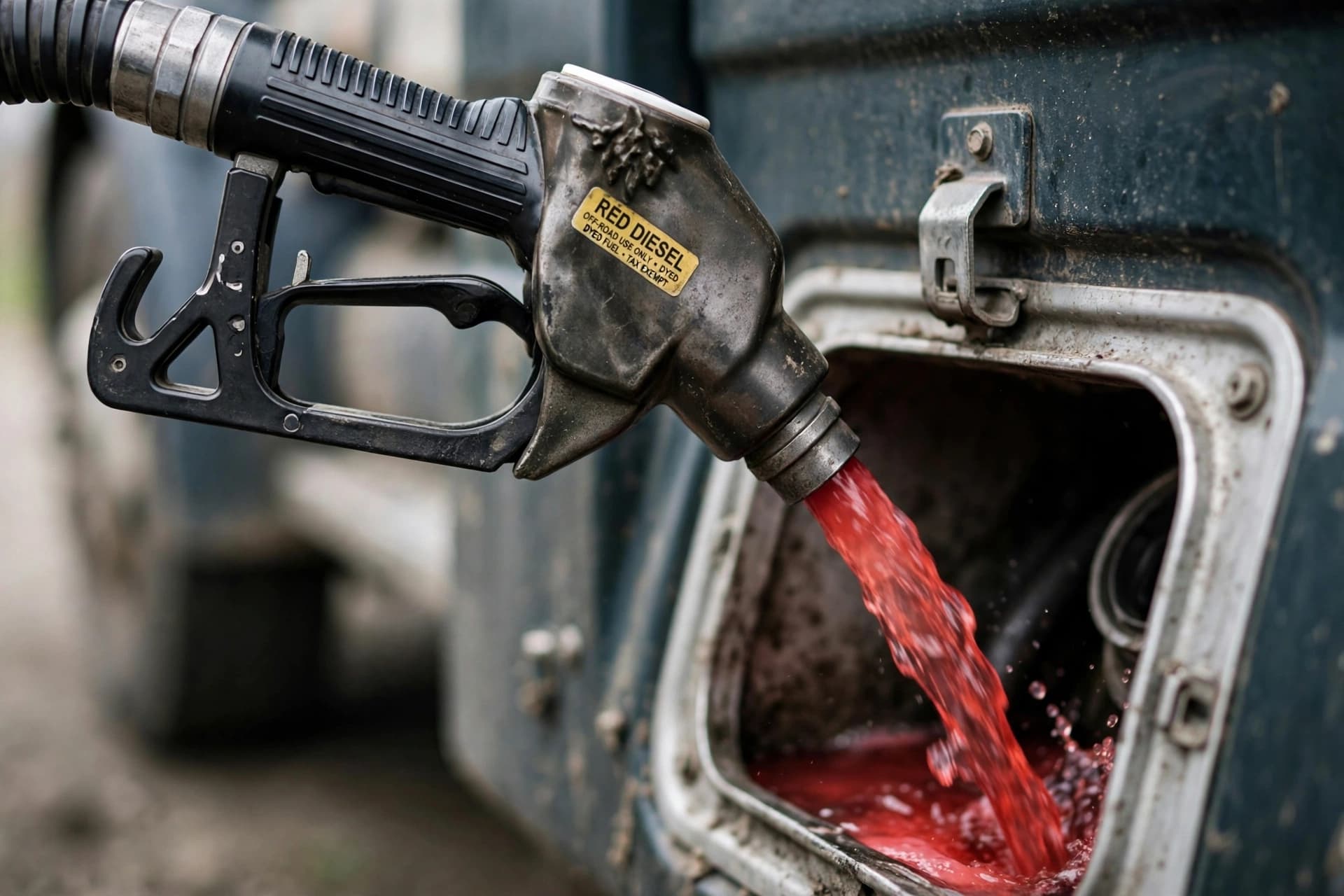
There is a certain irony in the way policy sometimes travels. A fuel designed for the quiet work of farms—tractors in fields, generators on construction sites—has now been invited onto the nation's highways, carrying with it the promise of relief at a moment when the cost of moving goods has become a weight on nearly every household budget.
On Monday, President Donald Trump signed an executive order allowing tax-exempt red-dyed diesel to be used on public roads, a fuel normally reserved for off-road equipment like farm machinery and construction vehicles . Speaking at a rally in Nebraska, Trump told supporters the order would “officially waive the off-road requirement and allow anyone to purchase tax-free red-dyed diesel for any reason” .
Red-dyed diesel is essentially the same fuel as standard diesel, but it is exempt from federal highway fuel taxes—currently more than 24 cents per gallon. The Internal Revenue Service uses the red dye to distinguish it from taxed, on-road fuel .
The order, however, is more limited than Trump's rally language suggested. Rather than scrapping the tax outright, it instructs Treasury Secretary Scott Bessent, in consultation with Defense Secretary Pete Hegseth, to defer the tax owed on dyed diesel used on roads until the end of 2026, without interest or penalties, and to explore ways to cancel the charges altogether . The White House also said federal authorities and state governors could use their discretion to halt inspections and waive tax liability .
The move comes as average diesel prices have surpassed $6.30 a gallon nationwide, driven by the ongoing war with Iran and global refining shortages . The administration's fact sheet made no mention of Iran, instead blaming the price surge on the Russia-Ukraine war and a global shortage of refining capacity .
The order follows similar actions by nearly a dozen governors across the Midwest and South, many of whom had already suspended state penalties for dyed diesel use to help farmers during harvest season. Governors from Iowa, Missouri, Louisiana, Mississippi, Tennessee, South Dakota, and North Carolina have issued statements praising the federal order and directing their state agencies to adjust enforcement .
Agricultural groups have welcomed the measure. The American Soybean Association said the policy would help farmers move the 2026 harvest to market at a time when “every cent per gallon matters” . The federal highway diesel tax, they noted, is “a big deal” for farmers running fleets of grain trucks and hauling livestock hundreds of miles .
Whether the order will meaningfully lower prices at the pump for ordinary drivers remains uncertain. The tax deferral is temporary, and the underlying supply pressures—war, refining constraints, global demand—have not changed. For now, the administration has offered what it can: a pause, a gesture, and a hope that the cost of moving forward will feel a little lighter.
AI Image Disclaimer: This article includes AI-generated imagery for illustrative purposes only.
Sources: Bangladesh Sangbad Sangstha (BSS), The New York Times, Anadolu Ajansı, The White House, The Peninsula Newspaper
Published by Banx Network. This article is part of the Banx decentralized media programme, powered by the BXE token on the XRP Ledger.