

Key Highlights
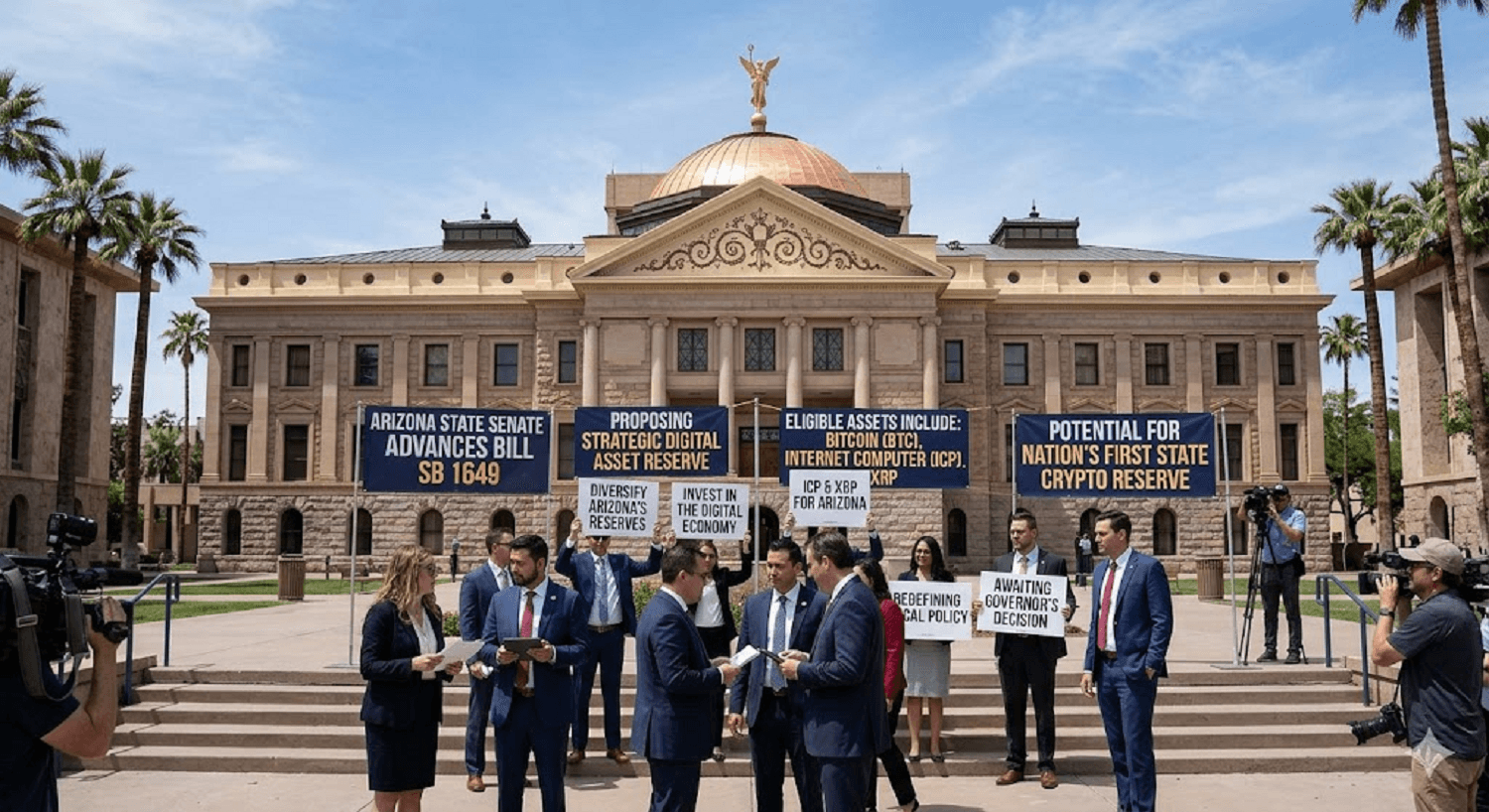
- Arizona Senate advances Bill SB 1649 to create a digital asset reserve.
- The bill includes Internet Computer (ICP), XRP, and Bitcoin (BTC) as eligible assets.
- Governor Katie Hobbs' skepticism poses a challenge for the bill's implementation.
In a groundbreaking move that could reshape fiscal policy at the state level, the Arizona State Senate has advanced Bill SB 1649, which proposes the establishment of a strategic digital asset reserve. If enacted, Arizona would be the first state in the U.S. to officially recognize and hold Internet Computer (ICP) and XRP alongside Bitcoin (BTC) as eligible reserve assets. This legislative initiative reflects a growing trend among states to explore the potential of digital currencies in their financial frameworks.
The bill, which successfully passed through key committees in late February 2026, empowers the State Treasurer to oversee a "Strategic Digital Asset Fund." Unlike traditional reserves that are primarily backed by gold or U.S. dollars, this fund is designed to be replenished through a combination of legislative appropriations and confiscated cryptocurrency assets. This innovative approach aims to diversify the state's financial portfolio and leverage the burgeoning digital economy.
The inclusion of ICP and XRP represents a significant shift from the typical "Bitcoin-only" initiatives seen in other states. Advocates of the bill argue that diversifying into these assets will provide Arizona with exposure to various sectors of the digital economy, particularly in decentralized cloud computing. This diversification is seen as a strategic move to enhance the state's financial resilience and adaptability in an evolving economic landscape.
Under the proposed framework, the State Treasurer would manage the fund based on three core principles: yield generation, secure custody, and strict investment limits. To generate passive income for the state budget, the Treasurer could issue "crypto loans," ensuring that all holdings are safeguarded by qualified, state-regulated custodians, such as specialized digital asset banks. Additionally, the bill includes a protective 10% annual investment cap to mitigate market volatility and protect Arizona's core fiscal reserves from potential downturns in the cryptocurrency market.
Despite the bill's progress in the Senate, its future remains uncertain due to the stance of Governor Katie Hobbs. Known for her skepticism towards digital assets, Hobbs has previously vetoed several crypto-related bills, citing concerns over the "extreme volatility" of the crypto market. Her administration has consistently emphasized the risks that such investments could pose to Arizona taxpayers, raising questions about the bill's viability.
However, the bill's sponsors are optimistic that the "Strategic Reserve" model, which focuses on managing seized assets rather than speculative purchases, will appeal to moderates and skeptics alike. One legislative aide remarked, "This isn't about gambling with tax dollars; it's about modernizing how we handle the assets the state already possesses." This perspective aims to frame the initiative as a prudent financial strategy rather than a risky venture.
The news of Arizona's legislative push has reverberated throughout the digital asset market. As of early April 2026, the crypto markets are experiencing a period of consolidation, but analysts suggest that state-level adoption of digital assets could establish a new "floor" for asset valuations. Should SB 1649 successfully navigate the Governor's desk, it could set a precedent for other states, such as Wyoming and Texas, to broaden their digital portfolios beyond Bitcoin, potentially igniting a competitive race to secure sovereign stakes in the future's financial infrastructure.
As the world watches closely, the fate of the "Desert Ledger" remains uncertain, with stakeholders eager to see if this legislative initiative will become a reality or fade into the background of political discourse.
Published by Banx Network. This article is part of the Banx decentralized media programme, powered by the BXE token on the XRP Ledger.




