
Key Highlights
- Incident:A landslide at Bantargebang landfill resulted in multiple casualties.
- Response:Authorities are investigating and revising safety protocols.
- Reflection:The tragedy prompts a reevaluation of urban waste management practices.
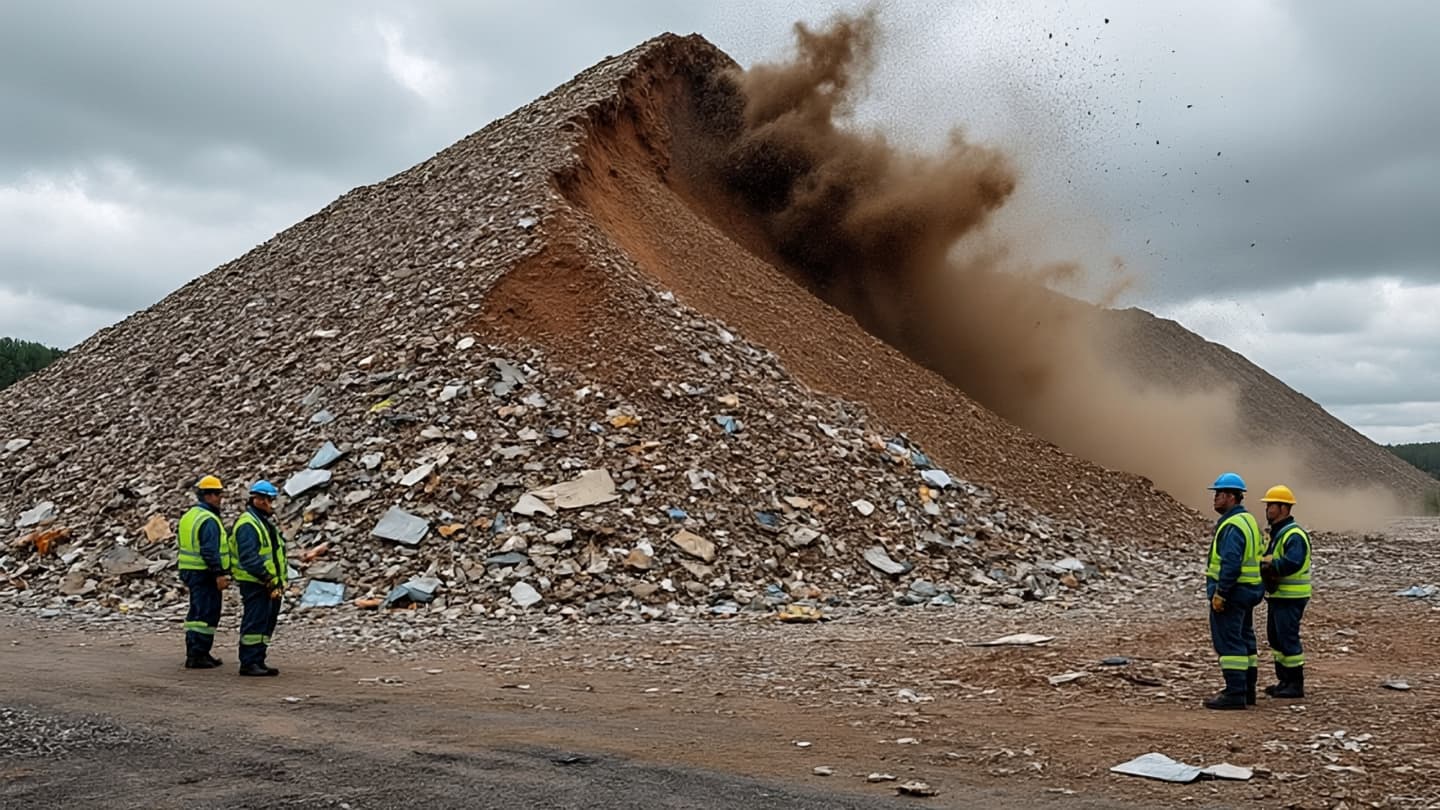
The recent landslide at the Bantargebang landfill in Indonesia has brought to light the precarious balance between urban growth and waste management. This tragic event unfolded unexpectedly, as layers of accumulated refuse collapsed, burying workers and scavengers who relied on the landfill for their livelihoods. The incident has not only claimed lives but has also ignited a critical conversation about the infrastructure that supports urban consumption.
In the aftermath of the disaster, families of the victims are left grappling with uncertainty and grief. The landfill, which has long operated beyond its intended capacity, has transformed from a mere waste disposal site into a complex ecosystem where survival is intertwined with the city’s refuse. The collapse serves as a stark reminder of the risks associated with neglecting infrastructure and the human lives that depend on it.
Local officials have initiated investigations into the causes of the landslide, with a focus on safety protocols and waste management strategies. There is a renewed urgency to address the structural risks that have been acknowledged for years but not adequately resolved. As the city seeks to implement reforms, the challenge remains: how to manage the growing volume of waste in a manner that ensures safety and sustainability.
The Bantargebang tragedy has prompted a broader reflection on urban consumption and its implications for infrastructure. As cities expand and populations grow, the question of how to effectively manage waste becomes increasingly pressing. The incident has highlighted the need for innovative solutions that not only address immediate safety concerns but also promote long-term sustainability.
As recovery efforts continue, the community is left to mourn the loss while also confronting the reality of their urban environment. The tragedy at Bantargebang is not just a moment of sorrow; it is a call to action for cities worldwide to rethink their approach to waste management and urban planning. The answers may not come swiftly, but the urgency of the questions raised cannot be ignored.
In conclusion, the Bantargebang landfill landslide serves as a critical juncture for urban centers grappling with the consequences of consumption and waste. It is a moment to reflect on how cities can grow responsibly while safeguarding the lives of those who navigate their complexities daily.
Published by Banx Network. This article is part of the Banx decentralized media programme, powered by the BXE token on the XRP Ledger.



