There are moments in science that arrive not with thunder, but with a whisper — a few pages, spare and precise, slipped quietly into the current of human thought. On March 1, 1974, one such whisper began to ripple outward. In the pages of Nature, a brief paper by a young theoretical physicist named Stephen Hawking gently unsettled one of the universe’s darkest certainties.
For centuries, black holes had been imagined as cosmic vaults — final, sealed, absolute. Even after Einstein’s equations gave them mathematical life, they were thought to devour matter and light without concession. Nothing escapes. That was the rule, as firm as gravity itself. Yet Hawking, working at the crossroads of quantum mechanics and general relativity at the University of Cambridge, began to wonder whether the silence at the edge of a black hole was truly silent at all.
His 1974 paper, published in Nature, was barely a handful of pages. Its argument, however, was vast. By applying quantum field theory to the curved space around a black hole, Hawking proposed something astonishing: black holes are not entirely black. Instead, they emit a faint thermal radiation — now known as Hawking radiation — slowly losing mass over immense stretches of time.
The idea was both elegant and unsettling. If black holes radiate energy, then they can, in principle, evaporate. What had seemed eternal becomes temporary. What had been a one-way door becomes part of a longer, subtler process. The universe, it turned out, keeps fewer secrets than we thought.
The implications unfolded gradually. Hawking’s insight bridged two towering but uneasy frameworks of modern physics — Einstein’s smooth geometric gravity and the jittering probabilities of quantum theory. In doing so, it illuminated a tension that remains unresolved: how to fully reconcile gravity with quantum mechanics. The paper did not complete that task, but it made clear that the boundary between the very large and the very small is not a wall. It is a conversation.
At first, even Hawking himself was surprised by the conclusion. Colleagues questioned the result. Calculations were checked and rechecked. Yet the mathematics held firm. Over time, Hawking radiation became one of the most profound theoretical predictions of twentieth-century physics — still not directly observed, but widely accepted as a cornerstone in the search for quantum gravity.
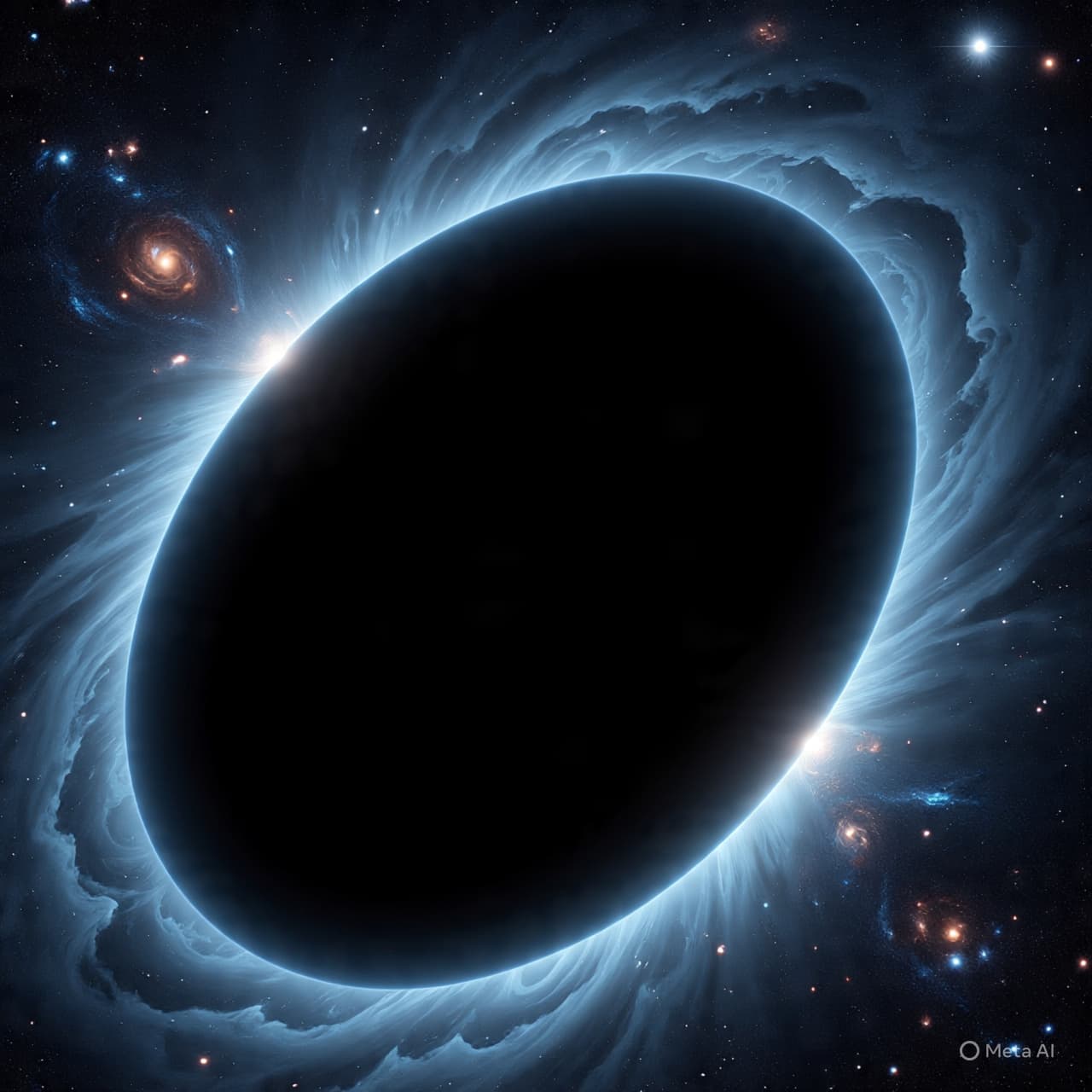
There is something quietly poetic about it. The darkest objects in the cosmos are not absolute voids, but faintly glowing embers. Even in places where gravity reigns supreme, quantum uncertainty flickers. The universe, in its vastness, seems reluctant to allow total finality.
March 1, 1974 did not bring a telescope image or a rocket launch. It brought a paper — brief, restrained, almost modest. Yet from that modest beginning, our understanding of black holes tilted. They were no longer the end of the story, but participants in a longer cosmic arc.
Today, Hawking radiation remains both a triumph and a challenge. It continues to guide research into information loss, event horizons, and the quantum structure of spacetime. The questions it raised are still alive in laboratories and equations around the world.
A tiny paper, quietly published, turned the universe slightly inside out — and reminded us that even the deepest darkness may carry a trace of light.
AI Image Disclaimer
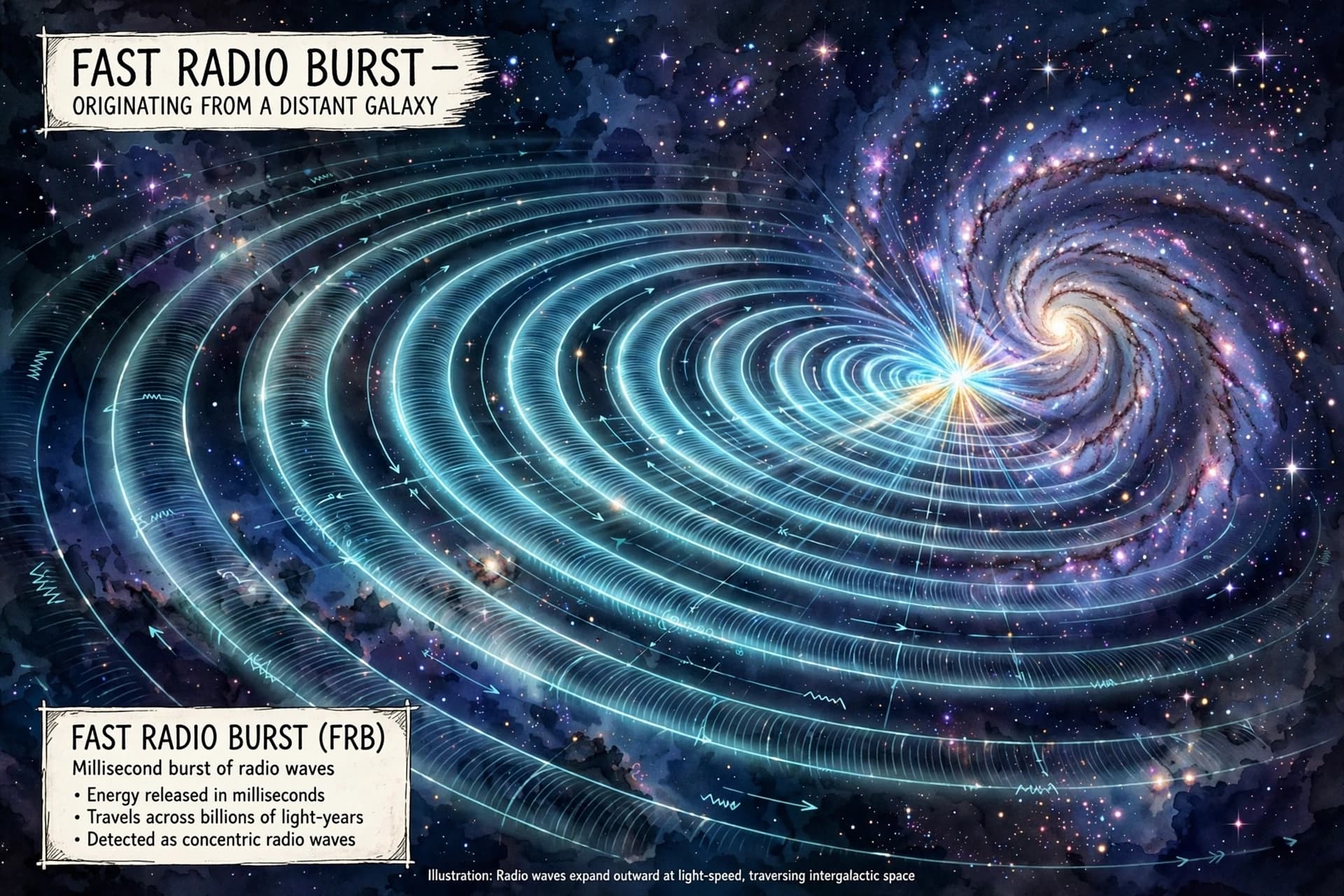
Illustrations were produced with AI and serve as conceptual depictions, not real astronomical photographs
Source Check — Credible Mainstream & Niche Media (5)
1. Nature
2. Scientific American
3. BBC
There are moments in science that arrive not with thunder, but with a whisper — a few pages, spare and precise, slipped quietly into the current of human thought. On March 1, 1974, one such whisper began to ripple outward. In the pages of Nature, a brief paper by a young theoretical physicist named Stephen Hawking gently unsettled one of the universe’s darkest certainties.
For centuries, black holes had been imagined as cosmic vaults — final, sealed, absolute. Even after Einstein’s equations gave them mathematical life, they were thought to devour matter and light without concession. Nothing escapes. That was the rule, as firm as gravity itself. Yet Hawking, working at the crossroads of quantum mechanics and general relativity at the University of Cambridge, began to wonder whether the silence at the edge of a black hole was truly silent at all.
His 1974 paper, published in Nature, was barely a handful of pages. Its argument, however, was vast. By applying quantum field theory to the curved space around a black hole, Hawking proposed something astonishing: black holes are not entirely black. Instead, they emit a faint thermal radiation — now known as Hawking radiation — slowly losing mass over immense stretches of time.
The idea was both elegant and unsettling. If black holes radiate energy, then they can, in principle, evaporate. What had seemed eternal becomes temporary. What had been a one-way door becomes part of a longer, subtler process. The universe, it turned out, keeps fewer secrets than we thought.
The implications unfolded gradually. Hawking’s insight bridged two towering but uneasy frameworks of modern physics — Einstein’s smooth geometric gravity and the jittering probabilities of quantum theory. In doing so, it illuminated a tension that remains unresolved: how to fully reconcile gravity with quantum mechanics. The paper did not complete that task, but it made clear that the boundary between the very large and the very small is not a wall. It is a conversation.
At first, even Hawking himself was surprised by the conclusion. Colleagues questioned the result. Calculations were checked and rechecked. Yet the mathematics held firm. Over time, Hawking radiation became one of the most profound theoretical predictions of twentieth-century physics — still not directly observed, but widely accepted as a cornerstone in the search for quantum gravity.
There is something quietly poetic about it. The darkest objects in the cosmos are not absolute voids, but faintly glowing embers. Even in places where gravity reigns supreme, quantum uncertainty flickers. The universe, in its vastness, seems reluctant to allow total finality.
March 1, 1974 did not bring a telescope image or a rocket launch. It brought a paper — brief, restrained, almost modest. Yet from that modest beginning, our understanding of black holes tilted. They were no longer the end of the story, but participants in a longer cosmic arc.
Today, Hawking radiation remains both a triumph and a challenge. It continues to guide research into information loss, event horizons, and the quantum structure of spacetime. The questions it raised are still alive in laboratories and equations around the world.
A tiny paper, quietly published, turned the universe slightly inside out — and reminded us that even the deepest darkness may carry a trace of light.
AI Image Disclaimer
Illustrations were produced with AI and serve as conceptual depictions, not real astronomical photographs
Source Check — Credible Mainstream & Niche Media (5)
1. Nature
2. Scientific American
3. BBC
4. The New York Times
5. Smithsonian Magazine
4. The New York Times
5. Smithsonian Magazine
Published by Banx Network. This article is part of the Banx decentralized media programme, powered by the BXE token on the XRP Ledger.