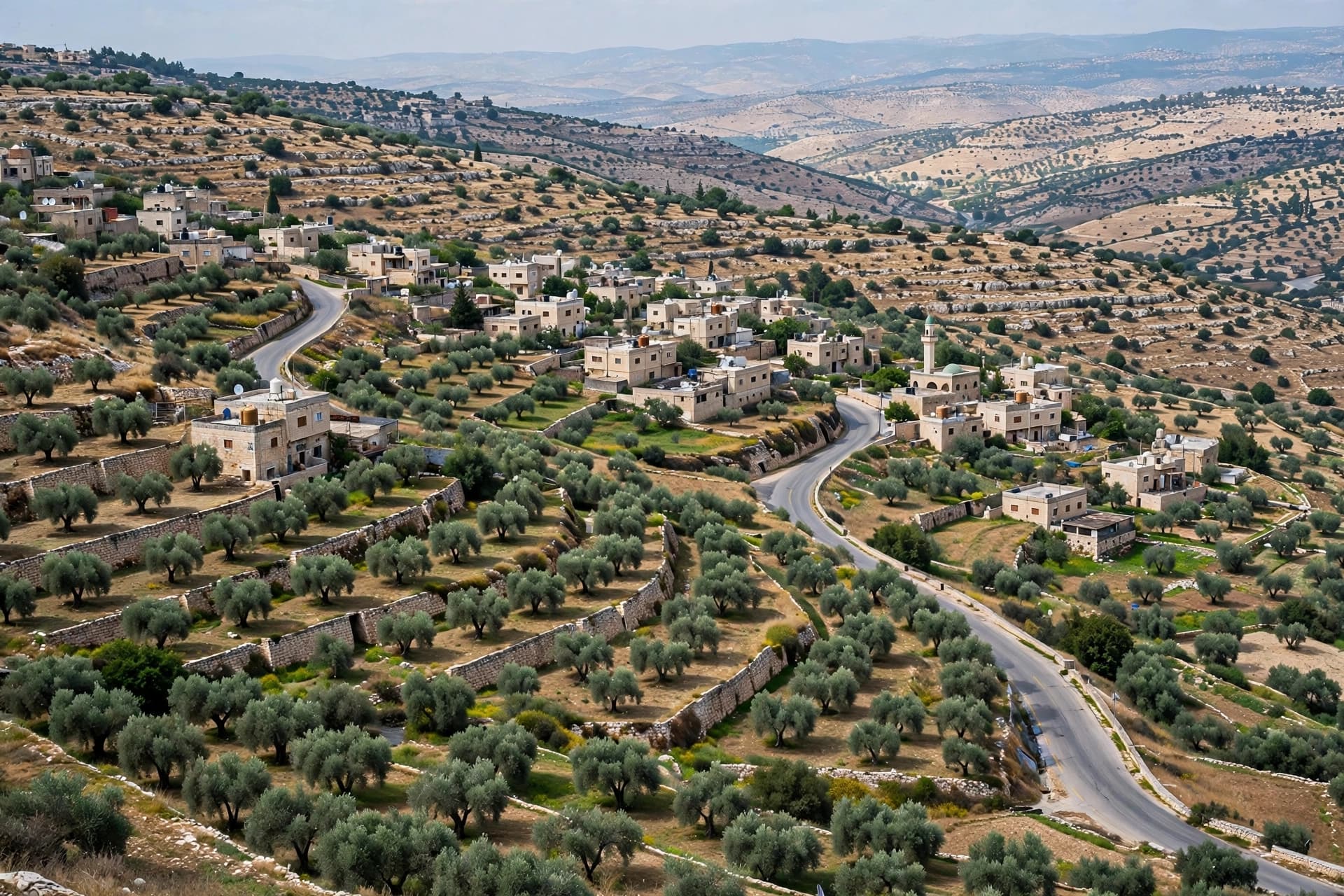
Sometimes the law speaks clearly, and the reality on the ground answers in a different language. In the West Bank village of Jalud, a Palestinian family named al-Tubasi had waited months for a court order to be enforced, for soldiers to escort them home, for the machinery of justice to deliver what it had promised. On Tuesday, that machinery arrived—and then it was overwhelmed.
More than 100 Israeli settlers attacked the village overnight as Israeli security forces attempted to return the family to their home, which settlers had seized and occupied for months . The family had been displaced in July after weeks of harassment and attacks, and Israel’s High Court had ruled earlier this month that they must be allowed to return . The court’s language was unusually direct, describing settler actions as “a completely unacceptable phenomenon that stands in contrast to the basic values and moral principles of the State of Israel” .
The return attempt unfolded by torchlight. Mahmoud al-Tubasi, his wife Aida, and their son Wael entered their home accompanied by Israeli police and military personnel. They found it destroyed—doors smashed, electrical fittings torn out, tiles ripped up, windows broken, the toilet shattered . “As soon as we entered the house, which had already been completely destroyed, settlers started throwing stones at us,” al-Tubasi told the BBC. “The army responded by firing tear gas at them, but there were so many settlers, more than 150, that the army could no longer control them” .
The Israeli military confirmed that “more than 100 Israeli rioters” blocked roads, set tires on fire, and threw rocks at security forces, lightly injuring three border police officers and damaging a vehicle . Settlers set fire to the al-Tubasi home and their car, and the family was evacuated in an armored vehicle . As they were driven away, smoke billowed from the house they had tried to reclaim .
Prime Minister Benjamin Netanyahu condemned the attack, but his language was narrowly drawn. He blamed “a handful of rioters” and said they “do not represent the law-abiding settler community in Judea and Samaria” . His statement focused on the harm done to security forces and did not address the attacks on Palestinians . President Isaac Herzog, whose role is largely ceremonial, offered a different framing, calling the attack “a moral stain, an assault on the rule of law and our most fundamental values as a people and a nation” .
The political context is not incidental. Israel’s upcoming general election has brought the question of settler violence into sharper relief, with Netanyahu’s main challenger, Gadi Eisenkot, blaming the actions on a “dangerous [government] policy” . Peace Now, an Israeli settlement watchdog, was more direct: “This is not a minority, not a handful and not weeds. This is a large and organized Jewish terror militia, backed and funded by your government” . The UN recorded more than 1,380 settler-related incidents in the first seven months of 2026 .
The al-Tubasi family now finds itself where it began: displaced, without a home, the court order unfulfilled. The grandfather, Mahmoud, described his feeling to the BBC with a plainness that requires no elaboration. “My feeling now is that I am happy to have escaped death,” he said. “I genuinely expected they were going to kill us” . The law had spoken. The settlers had answered. And the family was left to wait again.
AI Image Disclaimer: All images in this article were generated by artificial intelligence and do not depict real persons or events.
Sources: CNN, BBC News, Haaretz, Xinhua, CGTN, Middle East Eye, Jordan Times
Published by Banx Network. This article is part of the Banx decentralized media programme, powered by the BXE token on the XRP Ledger.