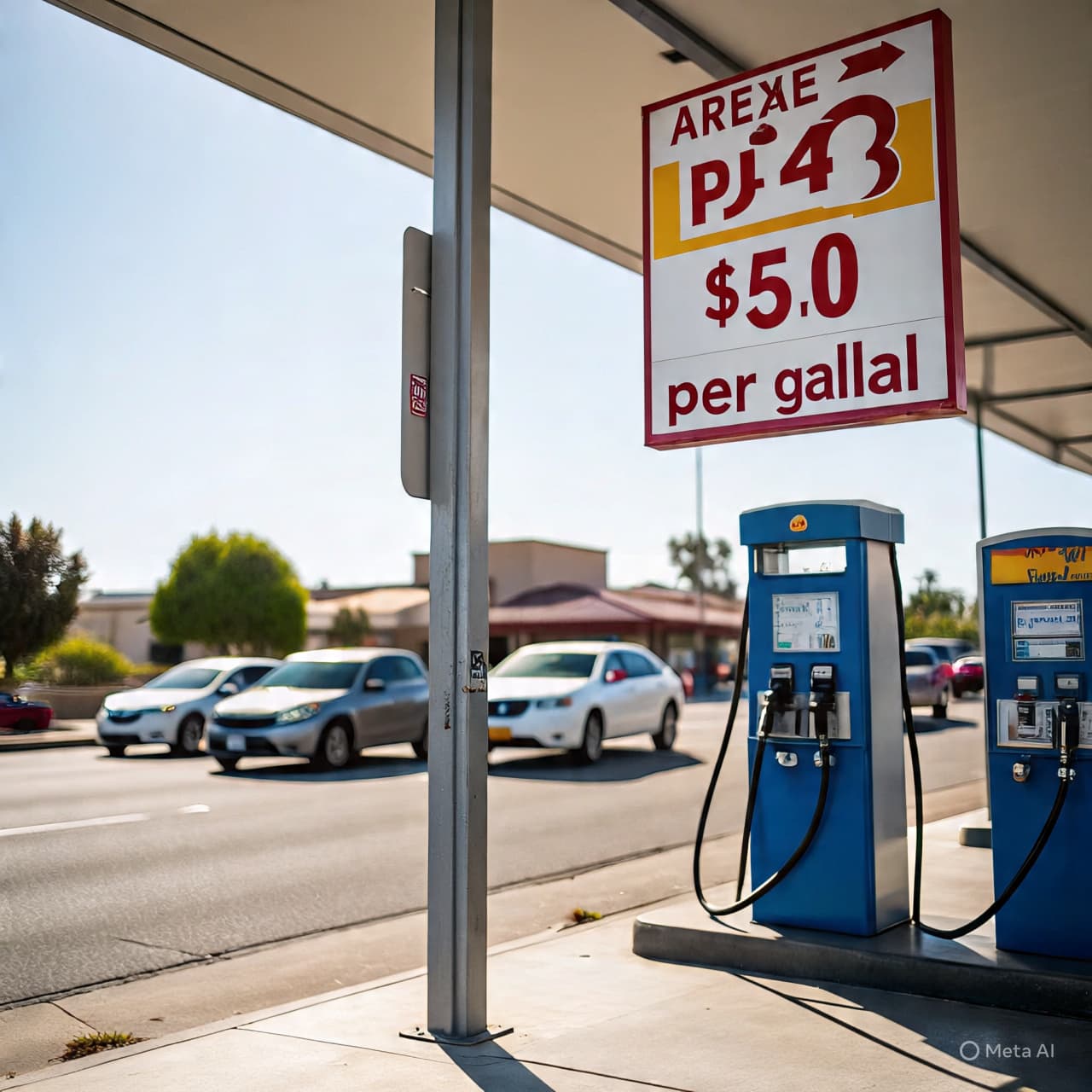
Morning traffic in Los Angeles moves with its usual rhythm. Streams of cars slide along the wide ribbons of freeway that connect neighborhoods, beaches, and distant suburbs. In the glow of early sunlight, the city’s gas stations quietly update their digital signs, numbers shifting upward in small increments that drivers notice almost immediately.
Lately, those numbers have crossed a familiar threshold.
Across California, average gasoline prices have climbed above five dollars a gallon once again, reflecting a convergence of global tension and regional market dynamics. The rise comes as the conflict involving Iran and military operations by the United States continue to reshape energy markets far beyond the Middle East.
For drivers filling their tanks along the Pacific coast, the connection between distant geopolitics and everyday expenses can feel both immediate and abstract. Yet the global oil market operates much like a network of currents, where disturbances in one region quickly ripple outward.
A central point of concern lies thousands of miles away in the Strait of Hormuz, a narrow corridor through which a large share of the world’s seaborne oil supply passes each day. Any perception that shipments through the strait could be disrupted tends to send oil prices climbing on international markets.
Those increases flow downstream into gasoline prices in places like California, where refining costs and environmental fuel standards already tend to push prices higher than the national average.
Energy analysts say the recent surge reflects both market anxiety and the logistical complexity of California’s fuel system. The state relies heavily on its own network of refineries and specialized gasoline blends designed to meet strict environmental standards. When global oil prices rise or supply chains tighten, the effect can be felt more sharply across the state.
Meanwhile, the broader energy market continues to respond to developments linked to the war with Iran. Military operations and rising regional tension have heightened concerns about supply disruptions across the Persian Gulf, an area central to the global oil trade.
Financial markets often anticipate such risks long before physical shortages appear. Traders adjust expectations for supply, pushing crude prices upward in response to uncertainty. Those movements eventually translate into higher costs at the pump.
For many Californians, the price increase arrives during daily routines that depend heavily on driving. Commutes stretch across metropolitan regions, and highways serve as essential links between homes, workplaces, and schools.
Yet the rising cost of gasoline also reflects a broader reminder of how closely local economies remain tied to global energy systems. A tanker crossing the Gulf, a refinery adjusting production, or a geopolitical decision made across the ocean can eventually shape the number glowing on a roadside sign in California.
In the evening, as the sun settles over the Pacific and traffic thins along the state’s freeways, the gas station displays continue their quiet work. Numbers change slowly, sometimes rising, sometimes falling, each digit representing a complex chain of events stretching across continents.
For now, those numbers remain above five dollars—a small but visible signal of how distant conflicts can travel far, arriving quietly at the pump beside the road.
AI Image Disclaimer Illustrations were created with AI tools to visually represent the topic and are not real photographs.
Sources Reuters Bloomberg BBC News The Wall Street Journal Associated Press
Published by Banx Network. This article is part of the Banx decentralized media programme, powered by the BXE token on the XRP Ledger.