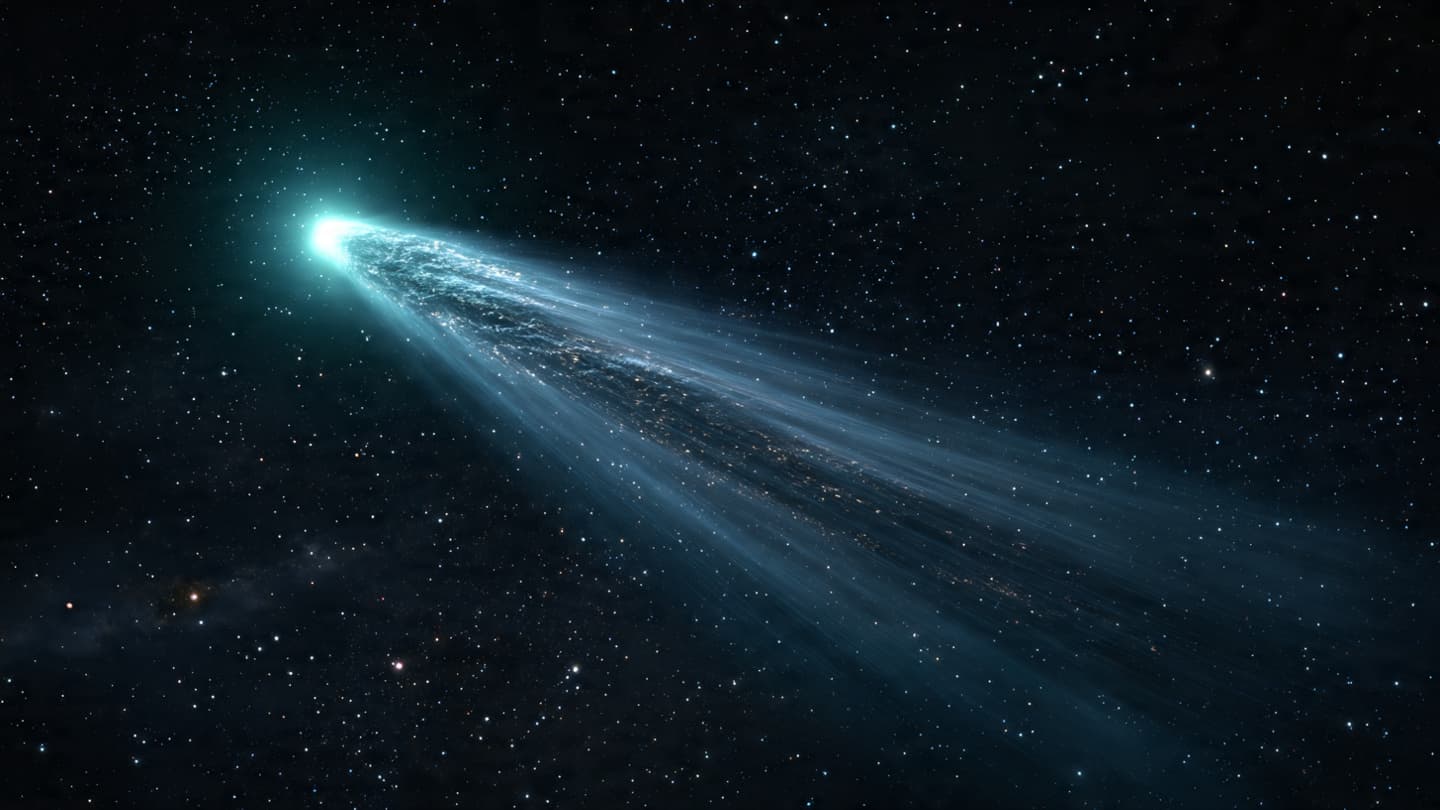
Comets are often described as time capsules from the early solar system, carrying ancient material through space as they orbit the Sun. Yet these icy travelers are far from motionless relics. New research suggests that Comet 41P may have undergone an extraordinary change in its rotation, raising questions about its long-term future.
Scientists studying the comet observed evidence indicating that its spin may have slowed dramatically before potentially reversing direction. Such behavior is highly unusual and has drawn significant interest from planetary researchers.
The phenomenon appears to be linked to jets of gas and dust escaping from the comet's surface. As sunlight warms the icy body, material can erupt outward, producing small but persistent forces that influence the comet's motion over time.
Researchers compare the process to a natural form of propulsion. Although each outburst generates only a modest effect, repeated activity across months and years can gradually alter rotational characteristics.
Comet 41P attracted attention in previous observations because of its unexpectedly rapid rotational changes. Compared with many other known comets, its behavior appeared unusually dynamic and difficult to predict.
The term "death spiral" has been used to describe a scenario in which continued rotational changes destabilize the comet. If internal stresses become too great, the object could eventually fracture or shed material at an accelerated rate.
Planetary scientists caution that further observations are needed before definitive conclusions can be reached. Space objects often display complex behavior, and long-term monitoring is essential for understanding how these processes evolve.
The study contributes to broader efforts aimed at understanding cometary physics. By examining how comets respond to solar heating, researchers gain insight into the structure and composition of some of the solar system's oldest objects.
As Comet 41P continues its journey through space, it offers another reminder that even seemingly simple celestial bodies can behave in surprising ways. The solar system remains a dynamic environment where motion, change, and discovery continue side by side.
AI Image Disclaimer: Images used with this article are AI-generated visualizations intended to illustrate scientific concepts related to comet behavior.
Source Verification Check: Science News, NASA, Space.com, The Planetary Society
Published by Banx Network. This article is part of the Banx decentralized media programme, powered by the BXE token on the XRP Ledger.