Key Highlights
- 2025 marked the worst annual performance for the US Dollar Index since 2017, dropping by 9%.
- As of March 2026, the DXY index fluctuates between 99.6 and 100.2, indicating a modest rebound.
- The dollar remains the world's primary reserve currency, accounting for 56-57% of global foreign exchange reserves.
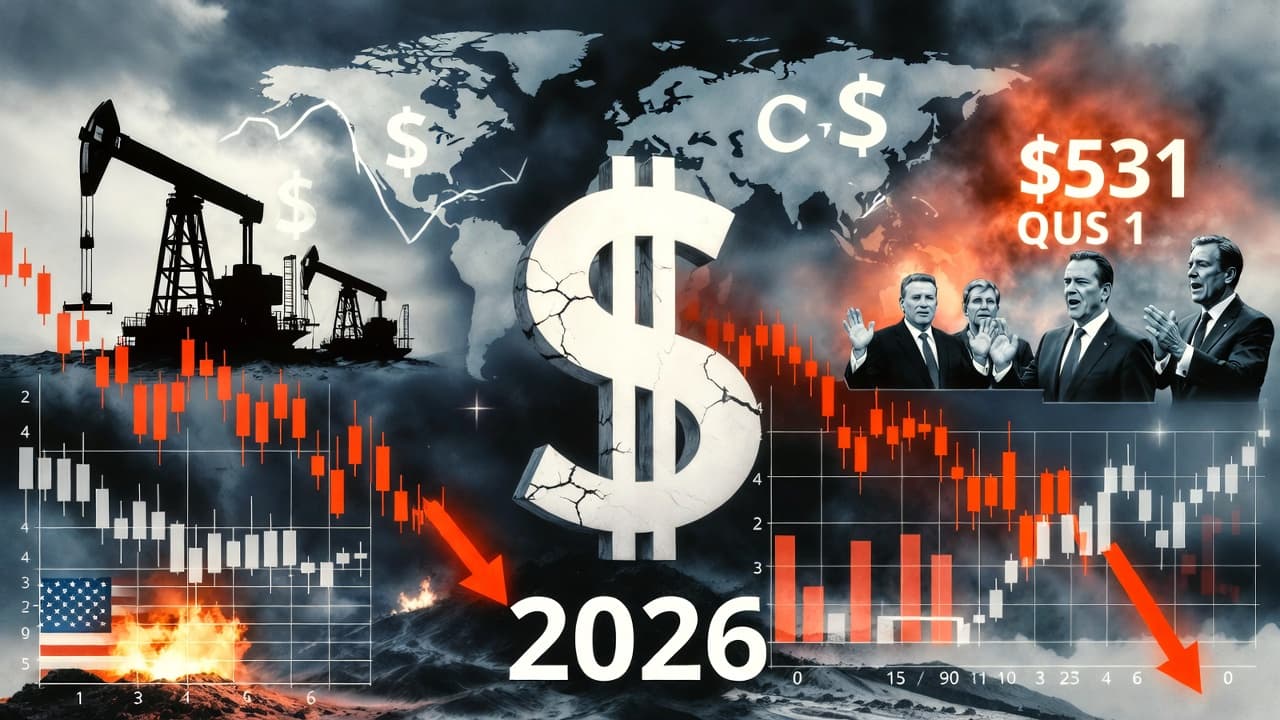
The year 2025 proved to be a challenging period for the US dollar, with the US Dollar Index (DXY) experiencing a significant decline of approximately 9%, marking its worst annual performance since 2017. This downturn can be attributed to several interrelated factors, including the Federal Reserve's prolonged rate-cutting cycle, which diminished the appeal of dollar-denominated assets. Additionally, political and fiscal uncertainties surrounding the US public debt, which has surpassed $38 trillion, along with geopolitical tensions, particularly in the Middle East, contributed to a decline in international investor confidence.
As we move into March 2026, the DXY index has shown some resilience, fluctuating between 99.6 and 100.2 after a modest recovery from earlier lows. Despite a 12% decline since the beginning of 2025, the dollar remains approximately 20% above its baseline level from January 2006. Importantly, its status as the world's primary reserve currency remains intact, with the dollar accounting for about 56-57% of global official foreign exchange reserves, according to the latest IMF COFER data. Furthermore, the dollar is involved in nearly 89% of foreign exchange market transactions, and stablecoins continue to be predominantly dollar-denominated.
The narrative surrounding a potential collapse of the dollar often stems from two main groups: crypto and gold maximalists, who predict the end of the dollar's dominance, and alarmist commentators who sensationalize minor fluctuations in the DXY. Notable figures such as Peter Schiff and Ray Dalio have contributed to this discourse, suggesting a shift towards alternative assets like gold or Bitcoin. However, the majority of institutional analysts, including those from Goldman Sachs and Morgan Stanley, view the current situation as a cyclical depreciation rather than an outright collapse.
Looking ahead, consensus forecasts for the DXY by the end of 2026 suggest a range between 97 and 100, indicating a potential further decline of 3-5%. Analysts anticipate continued weakness in the first half of the year, driven by ongoing Fed easing, followed by stabilization or a modest rebound in the latter half, supported by growth in public spending and advancements in sectors like AI and energy.
In conclusion, while the US dollar is experiencing a notable period of weakness, it is not on the brink of collapse. The dollar's position as the cornerstone of the global financial system remains largely unchallenged, despite the growing discourse around de-dollarization and structural vulnerabilities. Investors, corporations, and governments continue to navigate a landscape dominated by a weakened yet still dominant dollar, at least until the next significant economic crisis emerges.
Published by Banx Network. This article is part of the Banx decentralized media programme, powered by the BXE token on the XRP Ledger.