Time on Earth is not as fixed as it feels. Beneath the steady rhythm of days and nights lies a slower, almost imperceptible choreography between Earth and its closest celestial companion. The Moon, quietly present in our skies, has been part of that long conversation since the earliest chapters of planetary history.
Scientists have long understood that Earth’s rotation is gradually slowing due to tidal interactions with the Moon. This process, driven by gravitational forces between the two bodies, has stretched the length of a day over billions of years.
Research in geophysics and astronomy indicates that early Earth completed a full rotation in roughly 19 hours, compared to the 24-hour cycle we experience today. This change did not happen suddenly but unfolded across geological time scales shaped by ocean tides and planetary friction.
The mechanism behind this shift is subtle yet constant. As the Moon pulls on Earth’s oceans, tidal bulges form and move slightly ahead of the Moon’s orbit due to Earth’s rotation. This interaction transfers rotational energy from Earth to the Moon, slowing Earth’s spin in the process.
Over time, this energy transfer has also caused the Moon to drift slowly away from Earth. Measurements show that it is currently receding at a rate of a few centimeters per year, a distance small in human terms but significant across millions of years.
Geological records, including ancient coral growth patterns and sediment layers, provide indirect evidence of this changing rotation. These natural archives help scientists reconstruct how the Earth-Moon system has evolved over deep time.
While the phrase “the Moon is stealing time” captures imagination, scientists describe the process as a natural exchange of angular momentum rather than a loss. It is a gradual rebalancing of a system that has been evolving since the Moon’s formation.
The study of this relationship continues to inform broader understanding of planetary systems, including how tides, rotation, and orbital dynamics may operate on other worlds across the universe.
In scientific terms, Earth’s changing day length remains a quiet reminder that even the most familiar cycles are part of a much larger cosmic story still unfolding.
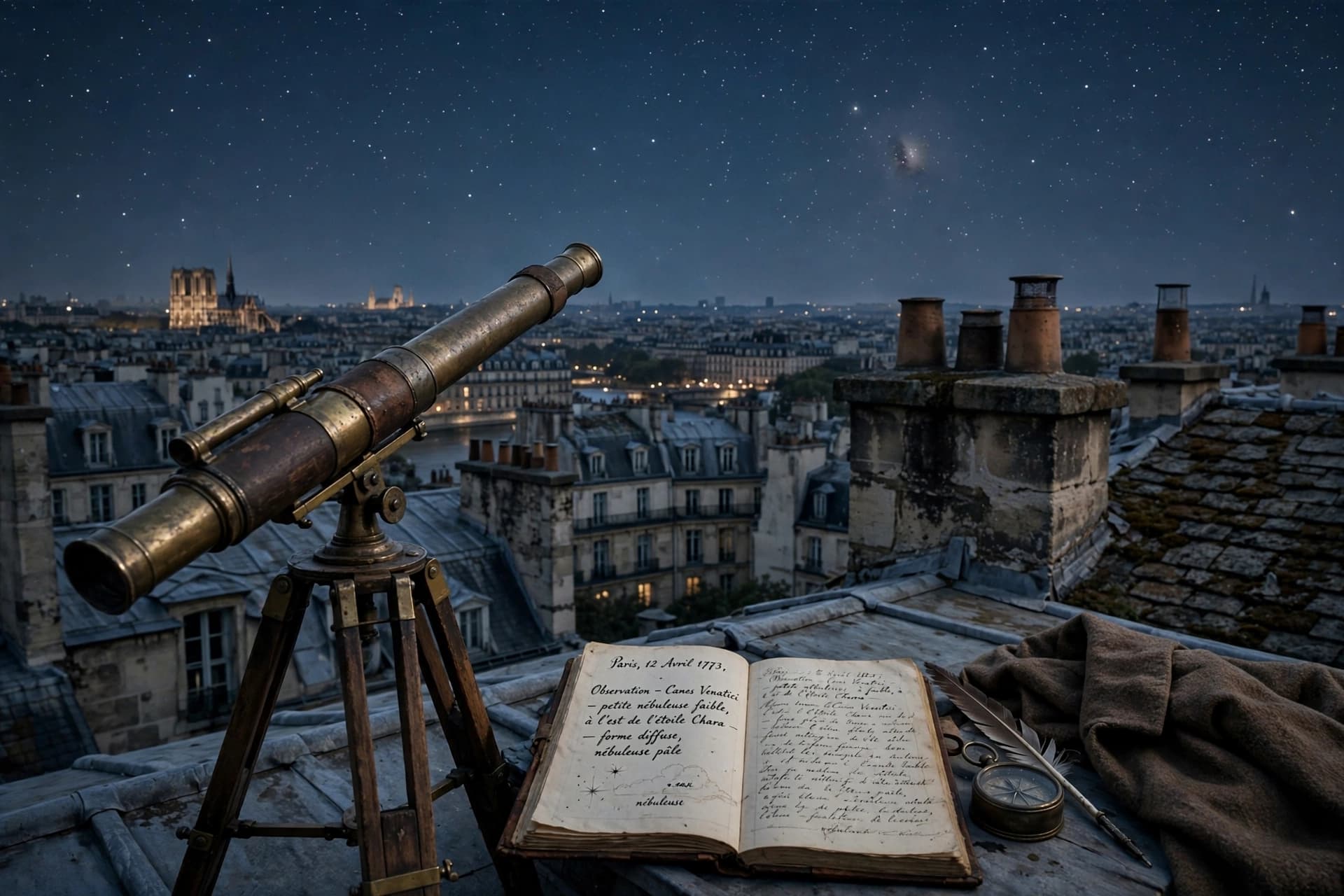
AI Image Disclaimer: The accompanying visuals are AI-generated illustrations created to represent Earth–Moon dynamics and are not based on real-time astronomical imagery.
Sources (Verification Check):
NASA Nature Science Magazine Smithsonian Magazine European Space Agency
Published by Banx Network. This article is part of the Banx decentralized media programme, powered by the BXE token on the XRP Ledger.