
Key Highlights
- Artemis II:A mission showcasing the beauty of Earth from lunar distance.
- Emotional reflections:Astronauts experience a unique perspective on home.
- Cosmic responsibility:The mission emphasizes our shared duty to the planet.
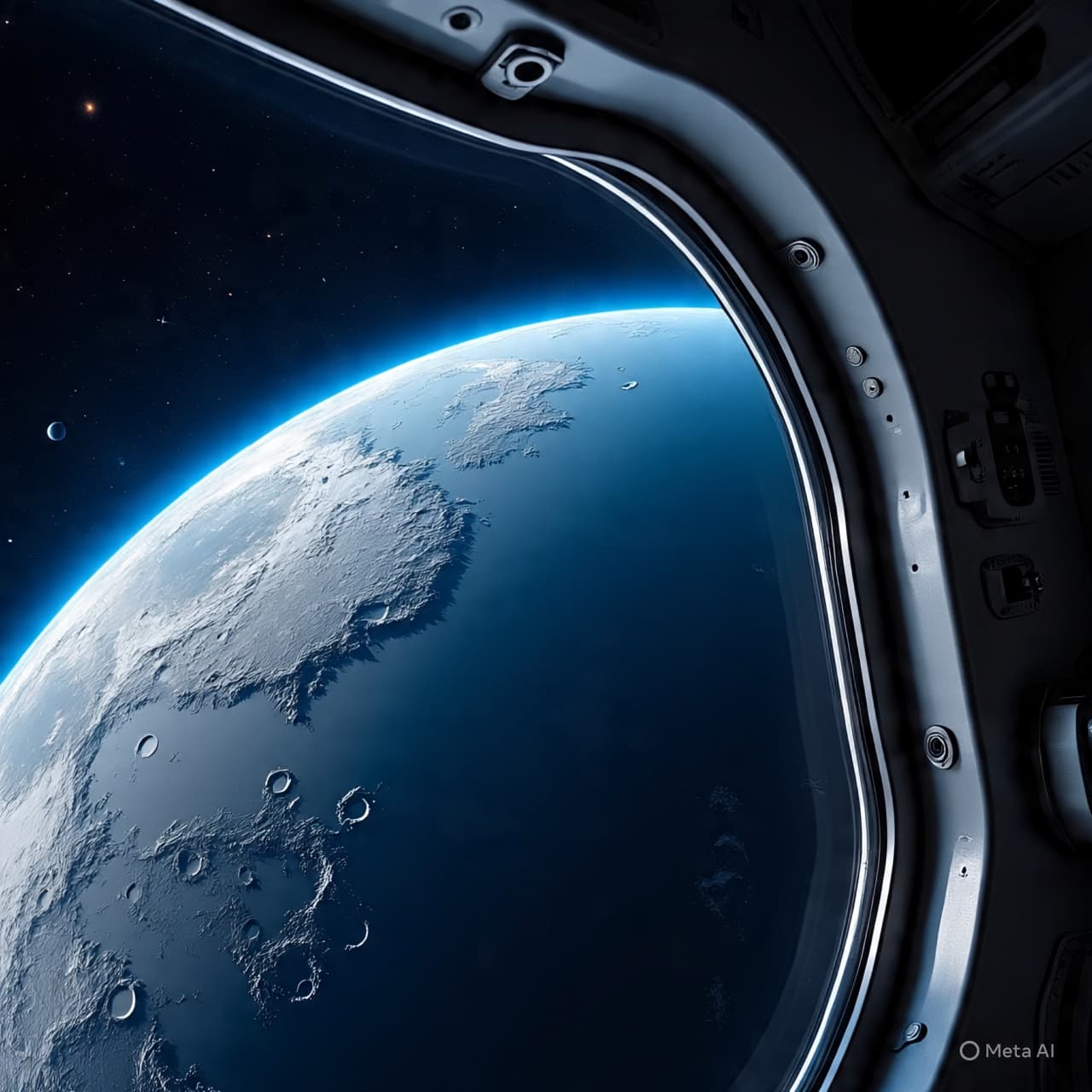
The Artemis II mission has provided a remarkable opportunity for astronauts to witness Earth from a vantage point few have experienced. As they gaze out from the capsule, the planet appears as a solitary, shimmering marble against the backdrop of the moon's desolate landscape. This moment, often referred to as an 'Earthset,' offers a profound perspective that transcends the complexities of human existence, reminding us of our singular place in the cosmos.
Viewing Earth from such a distance transforms our understanding of home. The vibrant blues of the oceans, the swirling whites of the clouds, and the warm browns of the continents coalesce into a delicate veil over a small, spinning sphere. In this moment, the noise of human history fades away, replaced by a visual clarity that is both beautiful and humbling. It serves as a poignant reminder that everything we know—every forest, city, and memory—is contained within that fragile, glowing curve.
The images captured during this mission are not merely scientific records; they are visual poetry sent back to a world that often feels divided. For the Australian astronauts aboard, witnessing the southern hemisphere from space carries a unique emotional weight. It is a homecoming viewed from a perspective that was once the realm of dreams and science fiction, evoking a deep sense of connection to their homeland.
The technology enabling such journeys is a testament to human ingenuity, yet it is the human eye that imbues these moments with meaning. As the capsule traverses the shadow of the moon, the Earth appears to 'set' behind the jagged lunar landscape, creating a stark contrast between the lifeless gray dust and the vibrant glow of our home planet. This visual metaphor underscores the preciousness of life in a universe that can often seem cold and indifferent.
These reflections echo sentiments from the Apollo era, yet they resonate more urgently today as our planet faces unprecedented challenges. The 'Earthset' serves as a cosmic mirror, compelling us to confront our shared environment and collective responsibility. Gazing at that small, luminous orb against the infinite black, it becomes clear that we are all passengers on the same vessel, navigating the same celestial sea. The perspective gained in space fosters a renewed commitment to the Earth we inhabit.
As the Artemis II mission progresses, the crew remains focused on the technical demands of deep-space navigation. However, the memory of witnessing Earth from such a distance will undoubtedly linger. The images will be studied and shared, but their true impact lies in the quiet awe they inspire in millions who view them from the comfort of their homes. This moment offers a collective pause, a chance to look up and recognize that our reach is extending further than ever, even as our hearts remain tethered to that distant blue light.
The Artemis II mission symbolizes a bridge to a future where human presence in space is a constant reality. Yet, as we venture further, our origins become increasingly significant. Each image of Earth captured from the lunar vicinity serves as a love letter to the planet that sustains us, a testament to the curiosity that drives us to explore and the love that draws us back. It is an editorial written in starlight and shadow, encapsulating the essence of our journey as a species among the stars.
The moon, with its silent craters and ancient dust, frames the vitality of Earth perfectly. It is a place of stillness that highlights the constant motion and energy of our home. As the mission eventually turns back toward that blue sphere, the crew will carry with them a perspective that is impossible to replicate. They have seen the Earth set, and in doing so, they have helped us all see ourselves a little more clearly in the vast, unfolding narrative of the universe.
Published by Banx Network. This article is part of the Banx decentralized media programme, powered by the BXE token on the XRP Ledger.



