
Key Highlights
- Aurora Australis:The Southern Lights have returned with rare intensity.
- Geomagnetic Activity:Recent G3-level storms have created vivid displays.
- Community Experience:Locals gather to witness the celestial phenomenon.
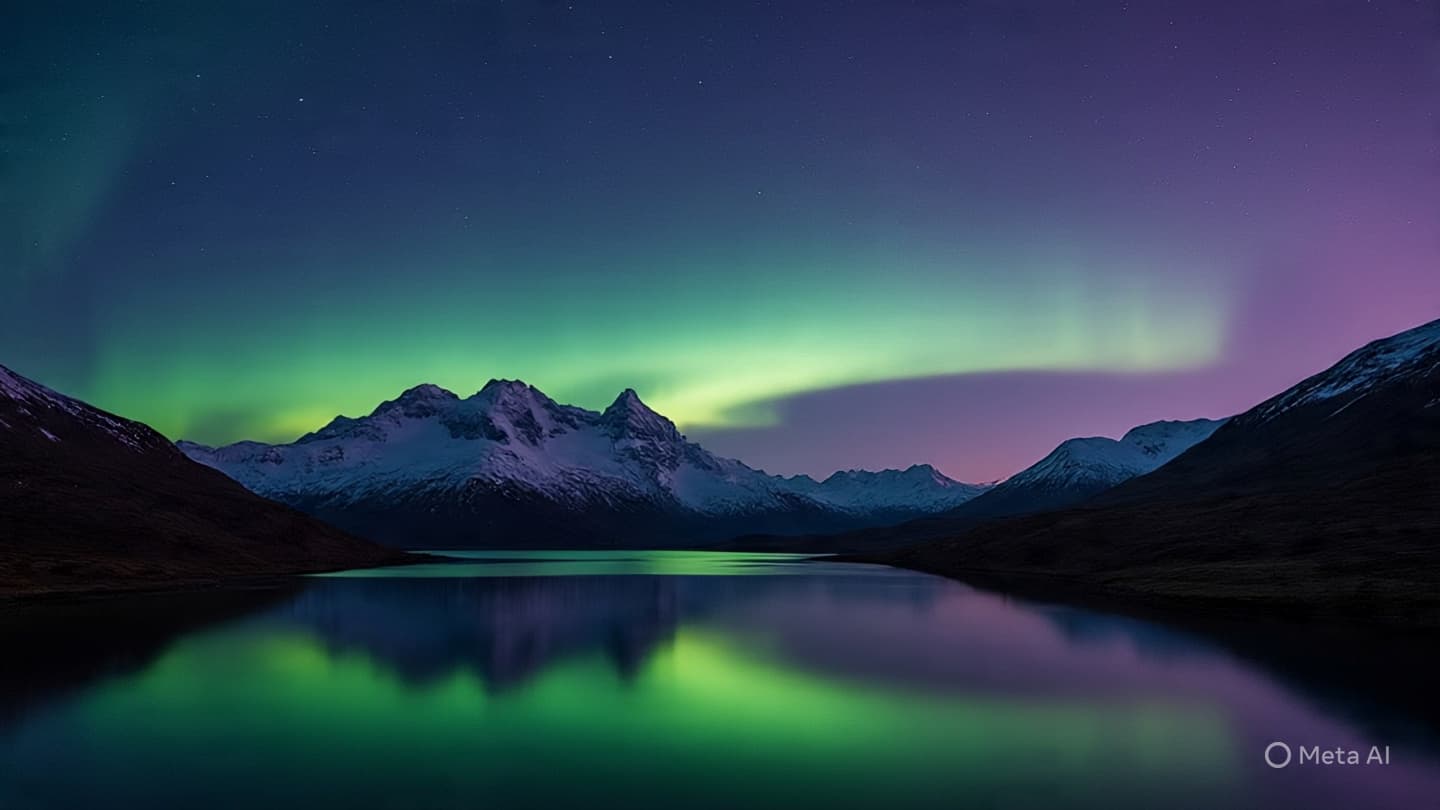
The night sky over the South Island of New Zealand often presents a profound darkness, a velvet expanse where stars shine like sharp, cold diamonds. However, on certain nights, this darkness is pierced by a spectral glow that defies atmospheric norms. Recently, the Aurora Australis, or Southern Lights, has returned with remarkable intensity, painting the heavens in vibrant ribbons of emerald, rose, and deep violet.
Experiencing the aurora is akin to feeling a visceral connection to the universe. These lights are the visual manifestation of solar winds colliding with the Earth's magnetic shield, a cosmic event occurring high above the clouds. This silent spectacle moves with ghostly grace across the southern horizon, transforming the familiar landscape of the Alps into something otherworldly.
In places like Queenstown and the Catlins, people gather on hillsides and beaches, united in a moment of hushed wonder. The noise of daily life fades, replaced by the ancient act of looking up at the sky. This experience serves as a reminder of our planet's constant interaction with solar energy, a small blue sphere enveloped in a protective, glowing embrace.
The colors of the aurora are almost too vibrant for the natural world. The greens resemble crushed mint, while reds and purples evoke a fire that burns without heat. As the light dances and folds across the stars, it creates a hypnotic sense of depth and motion, drawing the eye toward the horizon's edge.
In the isolated communities of the South Island, the appearance of the lights beckons residents to step outside and breathe in the cold night air. This communal experience transcends the digital age, where high-tech cameras and the naked eye alike are humbled by the scale of the event. The aurora arrives on its own schedule, a gift of pure beauty that does not conform to human plans.
The science behind the aurora involves electrons, oxygen atoms, magnetic fields, and solar cycles. Yet, for those standing in the dark, the experience overshadows the explanation. It tells a story of light and shadow, a narrative written by the sun on the canvas of the Earth's atmosphere. This spectacle offers perspective, reminding us of the vast forces that govern our environment.
As the display fades and colors dissolve back into the night, a sense of stillness lingers. The mountains of the South Island return to their familiar silhouettes, yet they are marked by the memory of the light that danced above them. This glow remains with us as we return home, a small piece of the infinite captured in our minds.
The Southern Lights are a seasonal visitor to these latitudes, a reminder of New Zealand's unique geography at the Antarctic's doorstep. Each display is distinct, a unique composition of light and color that will never be replicated. It is a fleeting mystery that keeps us gazing southward, eagerly awaiting the next time the sky decides to bloom.
This week, geomagnetic activity reached a G3-level storm status, resulting in some of the most vivid Southern Lights displays recorded in New Zealand this decade. Astronomers predict that the current peak in the solar cycle will likely produce several more significant aurora events throughout the coming year, particularly visible from the darker regions of the South Island.
Published by Banx Network. This article is part of the Banx decentralized media programme, powered by the BXE token on the XRP Ledger.



