Freedom, in its purest form, is not merely the absence of chains but the presence of choice, a spiritual and moral category that defines the essence of human dignity. As Ukraine marks thirty-five years of independence from Soviet totalitarianism, the nation finds itself at a poignant crossroads, celebrating a legacy of liberation while enduring the brutal realities of a war that seeks to extinguish that very light. Major Archbishop Sviatoslav Shevchuk, the head of the Ukrainian Greek Catholic Church, offers a reflective perspective on this anniversary, reminding the world that freedom is a gift that requires constant vigilance, courage, and the willingness to bear responsibility for one’s own destiny.
In a recent interview with Vatican News, Archbishop Shevchuk described July 2026 as the "bloodiest month" of the ongoing conflict, with civilian casualties reaching unprecedented levels. The war, he noted, has evolved into a high-tech campaign where drones and missiles are guided by operators who can see their targets in real time, stripping away the excuse of accidental harm. This technological precision, when turned against civilians, transforms suffering into a weapon of political pressure, challenging the moral foundations of international law and human decency. The Archbishop’s words serve as a sobering reminder of the cost of freedom when it is contested by those who seek to impose their will through fear.
Yet, amidst this darkness, the celebration of Independence Day remains a profound act of faith and defiance. For Archbishop Shevchuk, who lived through the collapse of the Soviet Union and the subsequent emergence of a democratic Ukraine, freedom is not just a political status but a spiritual journey. He recalls how, even under the oppressive regime of the past, Christians found inner freedom by holding fast to their values, becoming the leaven that transformed society. This historical perspective enriches the current struggle, framing it not just as a defense of territory, but as a continuation of the quest for authentic human flourishing.
The Archbishop emphasizes that true freedom is rooted in the ability to make good choices, choices grounded in truth and responsibility. He shares the poignant testimony of Ukrainian prisoners of war who, despite being bound and tortured, felt freer than their captors because they had chosen the path of righteousness. This paradox highlights the depth of the Ukrainian understanding of liberty: it is not license or anarchy, but a disciplined commitment to the common good and the dignity of every person. It is a freedom that empowers individuals to build their own futures rather than relying on autocrats to decide for them.
In a world where democratic values are increasingly challenged by authoritarian tendencies, Ukraine’s experience offers a vital message: do not grow tired of being free. The crisis of democracy, according to Shevchuk, stems from a flight from personal responsibility, a desire to shift the burden of citizenship onto others. By embracing the difficulty of freedom, Ukrainians demonstrate that it is worth the risk, worth the sacrifice, and worth the continuous effort to maintain. This message resonates beyond borders, calling on societies everywhere to reject infantilism and embrace the mature duty of self-governance.
The role of the Church in this context is pivotal, serving as a guarantor of democratic values by affirming the inherent worth of every human being. In an age where technology threatens to dehumanize, the Church stands as a defender of the soul, protecting people from being reduced to mere data points or collateral damage. Archbishop Shevchuk’s appeal to the universal Church is a call for solidarity, not just in prayer, but in action, urging believers worldwide to recognize the interconnectedness of human suffering and hope.
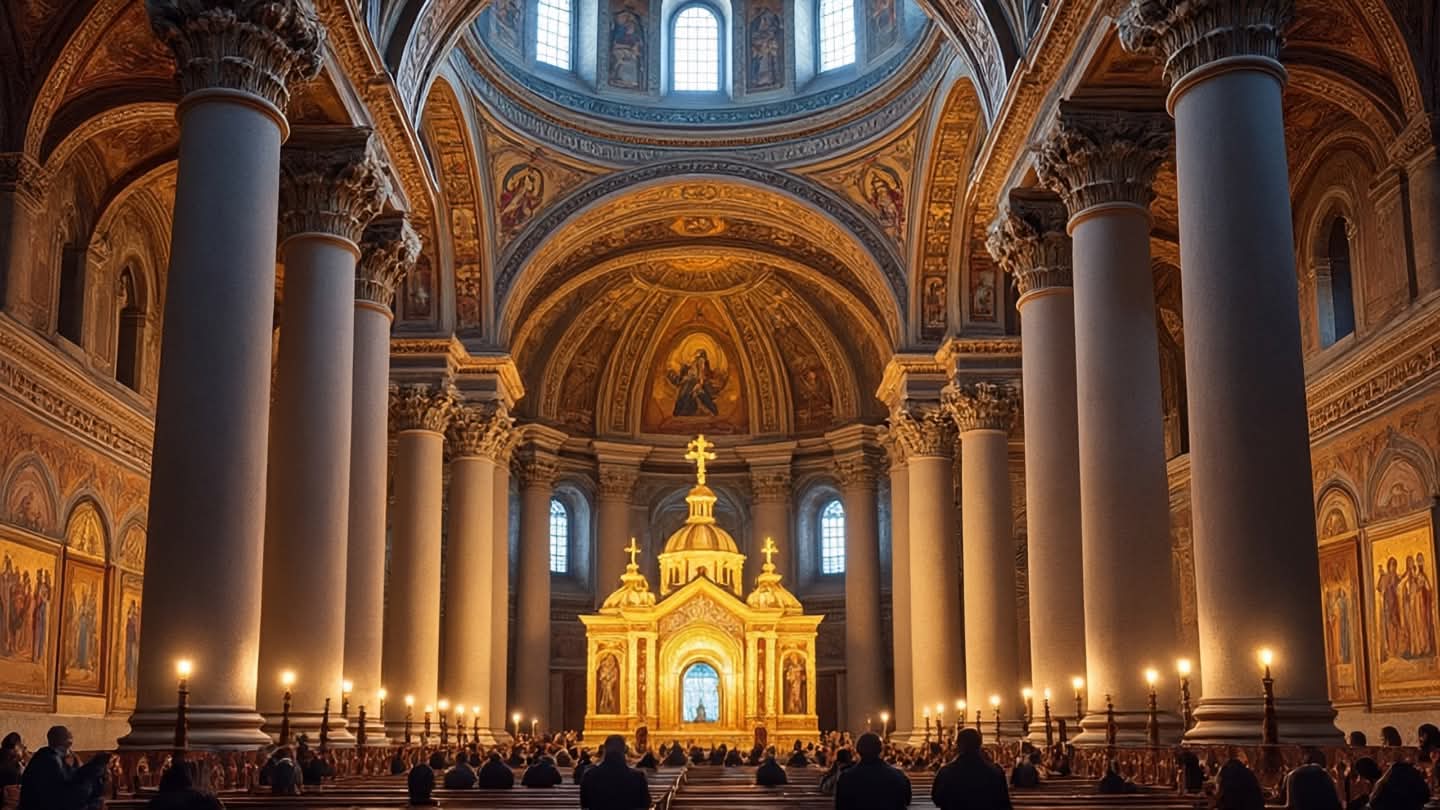
As the faithful gather at Saint Sophia Cathedral in Kyiv to pray before the ancient mosaic of the Oranta, the Praying Virgin Mary, they unite in a shared vision of peace. This act of worship is both a memorial to those who have suffered and a proclamation of hope for those who will inherit the future. It is a reminder that the highest expression of freedom is the capacity to love, to empathize with the suffering, and to extend mercy even in the midst of conflict.
Major Archbishop Shevchuk’s reflections invite us to look beyond the headlines and see the deeper spiritual struggle for freedom that defines this moment in history. As Ukraine continues to defend its independence, it offers the world a powerful lesson: freedom is not a static achievement but a dynamic practice, one that must be nurtured with courage, responsibility, and love. In remembering those who have paid the price, we are called to honor their sacrifice by never taking our own liberty for granted.
AI Image Disclaimer: The images associated with this article are AI-generated artistic interpretations intended to evoke the thematic elements of reflection and resilience, not to depict actual events or individuals.
Sources: Vatican News Herald Malaysia Doxologia Info News
Published by Banx Network. This article is part of the Banx decentralized media programme, powered by the BXE token on the XRP Ledger.