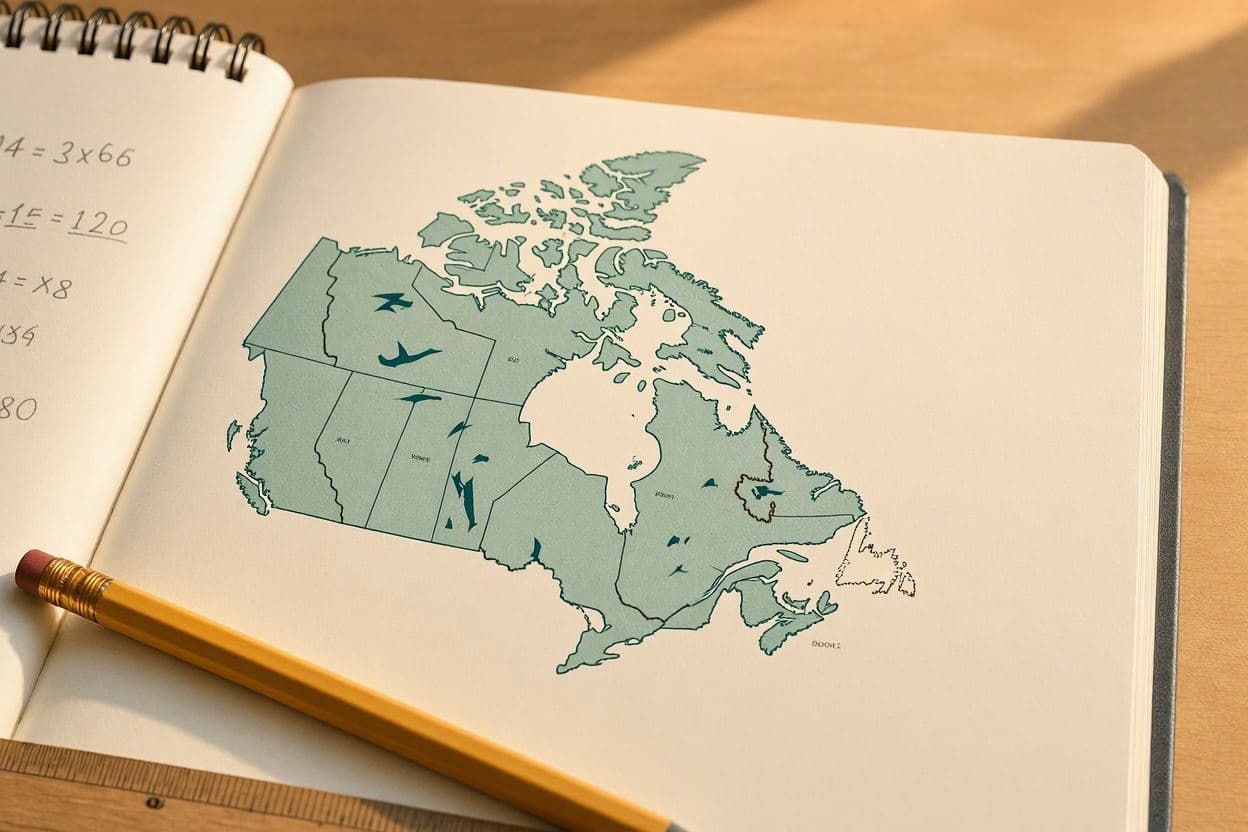
Maps are more than just tools for navigation; they are reflections of our understanding of the world. They teach us where we belong and how we connect to the broader geography. For students in Canada, an exercise book is often their first introduction to these spatial relationships. However, a recent discovery by shocked residents has revealed a surprising omission in some Hilroy brand notebooks: the province of Newfoundland and Labrador is missing from the printed map. This error, while seemingly small, touches on issues of identity, accuracy, and the importance of educational materials.
The issue came to light when parents and teachers noticed that the map of Canada printed on the cover or inside pages of certain Hilroy exercise books did not include Newfoundland and Labrador. For a province with a rich history and distinct cultural identity, its absence is jarring. It raises questions about the quality control processes of educational suppliers and the responsibility they hold in shaping young minds.
Hilroy, a well-known brand in Canadian schools, has acknowledged the error. The company stated that the maps were sourced from a third-party provider and that the omission was unintentional. They have since apologized and initiated a recall or correction process for the affected batches. This incident highlights the complexities of supply chains, where even minor oversights can have significant symbolic repercussions.
For residents of Newfoundland and Labrador, the reaction was one of disbelief and disappointment. The province joined Confederation in 1949, and its place in the Canadian mosaic is firmly established. To see it excluded from a common school supply feels like an erasure of its status and heritage. It underscores the emotional connection people have with geographic representation and the pain of being overlooked.
Educators emphasize the importance of accurate materials in the classroom. Maps are foundational tools for teaching geography, history, and civic knowledge. An incorrect map can lead to confusion and misinformation among students. Teachers are now taking the opportunity to discuss the error with their classes, turning it into a lesson about critical thinking and the importance of verifying information.
The incident also sparks a broader conversation about regional representation in national media and products. It reminds manufacturers and publishers that Canada is a diverse federation of provinces and territories, each with its own significance. Inclusivity in design is not just a moral imperative but a practical necessity for educational integrity.
In response, other educational suppliers are reviewing their own materials to ensure accuracy. The scrutiny serves as a beneficial check on the industry, encouraging higher standards for geographic content. It reinforces the idea that attention to detail matters, especially when dealing with tools that shape children’s understanding of their country.
As corrected versions of the exercise books make their way to shelves, the focus returns to the value of accurate education. The error, while unfortunate, has prompted a renewed appreciation for the completeness of the Canadian map. It serves as a reminder that every province plays a vital role in the nation’s story.
The omission of Newfoundland and Labrador from Hilroy exercise book maps has sparked concern and correction efforts. While unintentional, the error highlights the importance of accuracy in educational materials and the significance of regional identity. The incident serves as a reminder to verify the tools we use to teach the next generation.
AI Image Disclaimer: The images associated with this article are AI-generated visualizations intended to symbolize education, geography, and correction, using respectful and abstract imagery of maps and notebooks.
Sources: CBC News Global News Hilroy Company Statements
Published by Banx Network. This article is part of the Banx decentralized media programme, powered by the BXE token on the XRP Ledger.