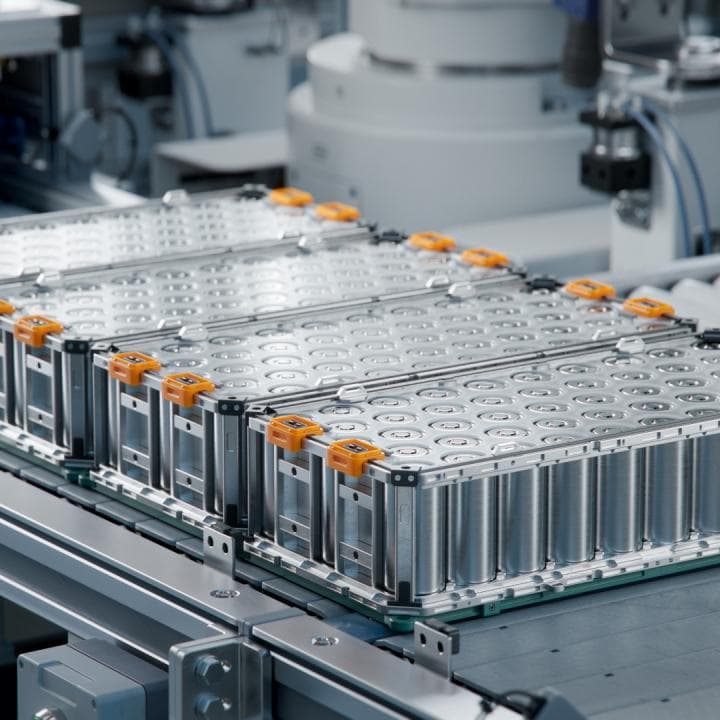
1. The Battery Race Is Entering a New Phase
Battery technology has become one of the most important battlegrounds in the global automotive industry.
Electric vehicles have advanced considerably, but concerns about charging times, driving range, battery costs and long-term performance continue to influence consumer decisions. Manufacturers are competing to overcome these limitations while reducing their dependence on expensive materials and strengthening their supply chains.
Solid-state batteries have emerged as one of the most closely watched potential solutions.
Unlike conventional lithium-ion batteries, which generally use a liquid electrolyte to transport lithium ions between electrodes, solid-state designs use a solid electrolyte. Depending on the chemistry and design, this could enable higher energy density, faster charging and improvements in safety.
The potential benefits are substantial. A battery that stores more energy in the same space could allow an electric car to travel further without becoming heavier. Faster charging could make long journeys more convenient, while improvements in durability could help reduce ownership costs.
However, these advantages are not guaranteed across every solid-state design. Different chemistries involve different engineering trade-offs, and laboratory performance does not necessarily translate into a reliable, affordable battery produced at industrial scale.
The industry is therefore moving into an important phase: proving that promising battery designs can work in real vehicles and eventually be manufactured in commercially meaningful quantities.
2. What Makes Solid-State Batteries Different?
To understand the excitement, it helps to examine how conventional lithium-ion batteries work.
A typical lithium-ion battery contains a positive electrode, a negative electrode and an electrolyte that allows lithium ions to move between them during charging and discharging. A separator helps prevent the electrodes from making direct electrical contact.
In conventional designs, the electrolyte is liquid. Solid-state batteries replace that liquid with a solid material, although some technologies described as semi-solid or quasi-solid retain liquid components.
The change could enable manufacturers to use different electrode materials and cell architectures. Some solid-state lithium-metal designs aim to use lithium metal at the negative electrode, potentially increasing the amount of energy stored relative to the battery's weight.
This is particularly attractive for electric vehicles, where battery weight affects efficiency, handling and range.
Solid electrolytes may also reduce certain fire risks associated with conventional liquid electrolytes. However, solid-state batteries are not automatically fireproof. Their electrodes, interfaces, packaging and operating conditions can still create safety challenges.
Manufacturers must also solve problems involving material stability, internal resistance, manufacturing consistency and the formation of defects that can shorten battery life.
The technology offers a promising route to better batteries, but the real achievement will be balancing energy density, charging speed, durability, safety and cost in a single commercial product.
3. Stellantis Takes Solid-State Batteries Onto the Road
One of the most important developments arrived in June 2026, when Stellantis announced that it had integrated solid-state battery cells developed with Factorial Energy into a Dodge Charger Daytona development vehicle.
The companies began road testing the vehicle to evaluate performance, safety and reliability under real-world driving and charging conditions. Stellantis described the milestone as the first automotive integration of the technology in North America. [1]
The battery cells had previously demonstrated an energy density of 375 watt-hours per kilogram. The companies also reported charging from 15% to 90% in approximately 18 minutes under their testing conditions. [1]
These figures are promising, but they need to be understood in context.
Energy density measures how much energy a battery stores relative to its weight. A higher figure can potentially improve vehicle range or reduce the mass required to deliver a particular amount of energy.
Charging performance, meanwhile, depends on more than the battery cell itself. The vehicle's charging system, temperature, battery management software, charger capability and the charging curve all influence how quickly energy can be added.
Most importantly, the Dodge Charger Daytona is a development vehicle rather than proof that consumers can already buy a mass-produced car with these cells.
Road testing is an important step because engineers can examine how a battery behaves outside laboratory conditions. However, further validation and manufacturing development are required before the technology can be deployed widely.
The milestone nevertheless demonstrates that solid-state development is progressing beyond laboratory experiments and into practical automotive testing.
4. QuantumScape Is Targeting a New Battery Market
QuantumScape is another major participant in the solid-state race.
The company is developing lithium-metal solid-state battery technology and has been working to demonstrate that its processes can be scaled beyond pilot production.
On 21 October 2026, QuantumScape announced plans for a 100-megawatt-hour battery-cell production line intended to serve markets including AI data centres, aerospace and defence. The company is partnering with German manufacturing technology specialist Muehlbauer Group, with cell production targeted to begin in 2028. [2]
The announcement is notable because it broadens the commercial focus beyond electric cars.
AI data centres require substantial amounts of electricity and dependable backup power. Aerospace and defence applications can also place a premium on compact energy storage and specialised performance characteristics.
These markets may value battery capabilities differently from automotive customers. A solution that is attractive for a specialised application could potentially be commercially useful even before it becomes competitive for mass-market electric vehicles.
However, QuantumScape's planned line is not the same as a fully operational, high-volume battery factory. The company still needs to execute the manufacturing plan, meet performance and quality requirements, and establish sufficient demand for its products.
The proposed 2028 production target is a company objective, not a guarantee that the line will begin operating on schedule or achieve its intended output.
For the wider industry, the development highlights an important possibility: solid-state technology may find its first significant commercial opportunities in applications where performance is more valuable than the lowest possible cost.
5. Toyota and the Race for Longer Driving Range
Toyota has also invested heavily in next-generation battery development.
The company has outlined a roadmap covering several battery technologies, including improved conventional lithium-ion batteries, lithium iron phosphate designs and solid-state batteries. Its published plans have included a target of introducing solid-state batteries for commercial use around 2027–2028. [3]
Toyota has previously described a potential solid-state battery offering a driving range of approximately 1,000 kilometres and charging from 10% to 80% in 10 minutes or less. These are stated development targets, not verified specifications for a mass-market vehicle currently available to buyers. [3]
If achieved in a production vehicle, such performance could significantly change the electric-car ownership experience.
A longer range could reduce the frequency of charging stops, while shorter charging times could make long-distance journeys more convenient. Manufacturers might also be able to use a smaller battery for a given range, depending on the final technology and cost.
Yet vehicle range is affected by more than the battery. Aerodynamics, vehicle weight, motor efficiency, driving speed, weather and heating or cooling requirements all influence how far a car can travel.
Toyota must also prove that its batteries can be manufactured reliably and affordably, with sufficient durability for years of everyday use.
The company's targets illustrate the technology's potential, but the real test will be the specifications, price and reliability of production vehicles once they reach customers.
6. Samsung SDI Is Looking Beyond Electric Cars
South Korean battery manufacturer Samsung SDI is also pursuing solid-state technology.
In March 2026, the company unveiled a pouch-type all-solid-state battery sample under development for applications involving physical AI, including humanoid robots. It also presented other next-generation battery technologies and identified the second half of 2027 as its target for mass production of its solid-state technology. [4]
The robotics connection is particularly interesting.
Humanoid robots need batteries that fit within limited space while providing enough energy for movement and the power demands associated with lifting, walking and manipulating objects.
A robot that requires frequent charging or long periods of downtime may be less useful commercially. Higher energy density and strong power delivery could therefore offer advantages in certain robotic applications.
However, battery requirements vary considerably. Some robots prioritise energy density, while others need high output, rapid charging, low cost or long service life.
Samsung SDI's announcement represents a development programme and commercial target rather than proof that solid-state batteries are already widely deployed in humanoid robots.
Nevertheless, it reinforces the idea that next-generation battery technology could have applications well beyond passenger vehicles.
As robotics, data centres and electrification expand, demand for better energy storage may come from several industries at once.
7. Could Solid-State Batteries Make Electric Cars Cheaper?
The prospect of cheaper electric vehicles is one of the most important potential benefits of battery innovation.
Battery packs represent a substantial component of an electric vehicle's cost. Improvements in energy density, manufacturing efficiency and material use could eventually help automakers reduce the amount of battery material required for a particular level of performance.
Solid-state technology could also allow manufacturers to design vehicles differently, potentially improving packaging and reducing weight.
However, the relationship between better battery performance and lower vehicle prices is not straightforward.
Early solid-state batteries may be expensive because their materials, production equipment and manufacturing processes are still developing. New factories require investment, and production yields must improve before manufacturers can reliably produce large quantities of consistent cells.
Some solid-state designs may also require specialised materials or tightly controlled manufacturing environments.
For consumers, a battery that offers significantly better performance could initially appear in expensive vehicles rather than affordable models. Manufacturers may choose to use early production capacity for premium products where customers are more willing to pay for improved range or charging.
Lower prices will depend on whether production costs fall sufficiently, supply chains expand and manufacturers can produce cells at scale.
In the meantime, conventional lithium-ion batteries continue to improve. Manufacturers are developing different chemistries and cell designs that can offer useful performance without requiring an entirely new manufacturing system.
Solid-state batteries will therefore compete against a moving target rather than an unchanged technology.
8. The Safety Question: Are Solid-State Batteries Better?
Battery safety is another major reason solid-state technology attracts attention.
Conventional lithium-ion batteries can experience thermal runaway, a process in which a cell overheats and triggers a self-sustaining reaction that may lead to fire or the release of hazardous gases.
A solid electrolyte can potentially reduce some risks associated with flammable liquid electrolytes. That is an important advantage, particularly in applications where battery failure could have serious consequences.
However, safety depends on the complete battery design rather than one material alone.
Solid-state cells can still suffer from internal defects, unwanted chemical reactions and mechanical stresses. Certain lithium-metal designs may also experience problems involving dendrite formation or degradation at interfaces between materials.
A battery can perform well in a laboratory test but behave differently after repeated charging, exposure to temperature extremes or years of use.
Automakers must therefore test cells under a wide range of conditions and ensure that battery packs include appropriate monitoring, protection and thermal management systems.
Solid-state technology could deliver meaningful safety improvements, but claims that it eliminates battery fires entirely should be treated with caution.
The real goal is to reduce the likelihood and severity of failures while maintaining performance throughout the battery's useful life.
9. China, Japan, South Korea and the Global Battery Competition
The battery race is also a contest over industrial leadership.
China has developed a powerful position in battery manufacturing and supply chains, while Japanese and South Korean companies have invested heavily in next-generation technologies. European and American automakers and battery developers are also working to secure access to advanced cells.
This competition matters because batteries are not just a component of electric cars. They are increasingly important to energy storage, consumer electronics, industrial equipment and emerging AI applications.
TrendForce reported in August 2026 that all-solid-state batteries had progressed into engineering validation, with companies including Toyota, Honda, Nissan and Samsung SDI advancing small-scale pilot production and automotive testing. It also highlighted efforts to broaden applications beyond vehicles. [5]
Engineering validation is a meaningful step, but it is not equivalent to mass production.
Companies still need to improve production yields, ensure consistent quality, establish dependable supplies of specialised materials and bring costs down.
The countries and companies that solve these problems could gain advantages in manufacturing, exports and intellectual property.
However, leadership will not be determined by laboratory performance alone. Access to capital, production equipment, skilled workers, raw materials and long-term customer relationships will all influence commercial success.
The global battery race is therefore as much about manufacturing capability as scientific innovation.
10. The Environmental Impact of Next-Generation Batteries
Battery innovation is frequently presented as a way to support cleaner transport, but the environmental impact depends on the entire lifecycle.
Electric vehicles do not produce exhaust emissions while driving, and they can reduce overall transport emissions when powered by electricity with sufficiently low carbon intensity. However, manufacturing batteries requires energy and raw materials, and the environmental costs vary by supply chain and production method.
Solid-state batteries will not automatically eliminate these impacts.
Their environmental performance will depend on the materials used, how they are extracted and processed, the energy consumed during manufacturing, how long the batteries last and whether their components can be recovered and reused.
If a new battery lasts longer or delivers more useful energy with less material, it could offer environmental benefits. Conversely, a complex manufacturing process or difficult-to-recycle materials could reduce those advantages.
Recycling will remain important as electric-vehicle adoption increases and more batteries reach the end of their useful lives.
Manufacturers and policymakers will need to evaluate solid-state technology using lifecycle evidence rather than assuming that a more advanced battery is automatically more sustainable.
The strongest long-term outcome would combine improved performance with lower material intensity, responsible sourcing, durable products and effective recycling.
11. The Investment Opportunity — and the Risks
The development of next-generation batteries could create opportunities across the energy and automotive industries.
Potential beneficiaries include battery manufacturers, materials suppliers, specialist equipment producers, automakers and companies providing recycling or manufacturing technology.
QuantumScape's planned production line illustrates another potential opportunity: advanced batteries may find customers in data centres, aerospace and defence as well as electric vehicles. [2]
However, investors should distinguish between technological progress and a proven commercial business.
A successful laboratory test does not guarantee profitable production. A pilot line does not guarantee mass manufacturing, and a partnership announcement does not necessarily mean that large orders or substantial revenue will follow.
Battery developers face several risks, including delays, manufacturing defects, high costs, competition from conventional lithium-ion technology and changes in electric-vehicle demand.
There is also a risk that expectations become excessive. If investors assume that solid-state batteries will rapidly replace existing technology, companies could face pressure when commercial adoption takes longer than anticipated.
Before evaluating an investment, it is worth examining production milestones, customer commitments, manufacturing yields, cash requirements and the company's ability to compete on cost.
Battery technology may offer significant long-term opportunities, but not every company developing a promising chemistry will become a successful manufacturer.
12. When Will Drivers Actually Be Able to Buy These Batteries?
The answer depends on the manufacturer, battery design and intended market.
Some companies have established targets around 2027 or 2028 for initial commercial applications. Others are still working through testing, manufacturing development and the transition from pilot production to larger-scale facilities.
These timelines should be treated as targets rather than guaranteed launch dates.
The earliest applications may appear in premium vehicles, specialist equipment or industrial markets where customers value performance enough to justify higher initial costs.
Widespread adoption in affordable passenger cars could take longer because manufacturers must meet demanding requirements for cost, safety, durability and production volume.
Even when a solid-state battery reaches the market, it will not necessarily replace conventional lithium-ion batteries immediately. Different chemistries may remain competitive in different applications.
Lithium iron phosphate batteries, for example, can offer cost and durability advantages in many uses, while other lithium-ion designs may remain attractive when energy density is the priority.
The future is likely to involve several battery technologies competing and coexisting rather than one design immediately replacing everything that came before it.
For consumers, the most important milestone will be when manufacturers can demonstrate that improved battery performance is available at a price that makes sense.
Conclusion: A Breakthrough Is Coming, but the Real Test Is Scale
Solid-state batteries could reshape electric vehicles and other energy-intensive industries by improving energy density, charging performance and potentially safety.
The latest developments suggest that the technology is moving beyond laboratory research. Stellantis and Factorial have begun road testing a development vehicle, QuantumScape is planning a new production line, Toyota continues to pursue commercial applications, and Samsung SDI is exploring solid-state batteries for robotics and other advanced uses.
Yet none of these milestones guarantees an immediate transformation of the automotive market.
The industry still needs to prove that solid-state cells can be produced consistently, survive years of use and compete economically with increasingly capable conventional batteries.
For consumers, the potential rewards include longer-range vehicles, shorter charging stops and eventually better value. For manufacturers and investors, the opportunity lies in turning laboratory performance into a reliable industrial product.
The battery revolution will not be decided by the most impressive prototype or the boldest announcement. It will be decided by the companies that can manufacture safe, durable and affordable batteries at scale.
Solid-state batteries may represent the next major step in electric mobility. But the real breakthrough will come when the technology moves from promising test results to products that ordinary drivers can afford.
Sources
[1] Stellantis — Stellantis and Factorial Integrate Advanced Solid-State Battery into Stellantis Development Vehicle and Launch Road Testing (11 June 2026) https://www.media.stellantis.com/uk-en/corporate/press/stellantis-and-factorial-integrate-advanced-solid-state-battery-into-stellantis-development-vehicle-and-launch-road-testing
[2] QuantumScape — QuantumScape Announces Plans for 100 MWh Solid-State Battery Production Line for AI Data Centers, Aerospace and Defense (21 October 2026) https://quantumscape.gcs-web.com/news-releases/news-release-details/quantumscape-announces-plans-100-mwh-solid-state-battery
[3] Toyota Europe — Toyota’s Advanced Battery Technology Roadmap (14 September 2023) https://newsroom.toyota.eu/toyotas-advanced-battery-technology-roadmap/
[4] Samsung SDI — Samsung SDI Unveils All-Solid-State Battery for Physical AI (9 March 2026) https://news.samsungsdi.com/global/press/view?seq=383
[5] TrendForce — ASSBs Enter Engineering Validation Phase as Japanese, Korean, and Chinese Suppliers Accelerating Auto Testing and Broaden beyond Auto to New Frontiers (12 August 2026) https://www.trendforce.com/presscenter/news/20260812-13178.html
Published by Banx Network. This article is part of the Banx decentralized media programme, powered by the BXE token on the XRP Ledger.