The Eiffel Tower controversy began with a simple question that quickly became much larger: why were female employees kept away from parts of a private visit by a Hindu religious delegation? A subsequent investigation by the General Inspectorate of the City of Paris has now found no explicit request from the BAPS delegation to exclude women from the visit, while identifying failures in how the arrangements were communicated and implemented.
The incident took place on September 5, when a delegation from Bochasanwasi Akshar Purushottam Swaminarayan Sanstha, commonly known as BAPS, visited the Eiffel Tower. Reports that female staff had been sidelined prompted anger among employees and led to a staff strike that temporarily closed the landmark. BAPS denied asking that female employees be removed or kept out of sight.
The latest inquiry provides a more complicated account of what happened. According to reporting on the investigation, there was no explicit request from the religious delegation to exclude women from the entire route. Instead, a message concerning interaction between religious figures and female employees was apparently altered or expanded as it passed through different levels of communication.
The investigation described the episode as a form of “collective dysfunction,” pointing to problems in the way the visit was assessed, approved and organized. Some security positions were assigned to male employees that morning, while other female staff members were temporarily asked to leave particular areas as part of the delegation’s movement through the tower.
That finding does not mean that nothing unusual occurred. Female employees were in fact affected by the arrangements, and the consequences were significant. Staff protests followed, the Eiffel Tower closed temporarily, and the controversy led to scrutiny of the management of the landmark and the company responsible for its operation.
BAPS had maintained from the beginning that it did not ask for women to be removed or excluded. In statements reported by AP, the organization said its delegation had explained certain religious practices involving its monks but that these personal practices were not intended to impose restrictions on women at places they visited.
The investigation also comes as the Eiffel Tower’s management faces organizational consequences. Patrick Branco Ruivo, director general of the company operating the monument, is scheduled to leave his position at the end of 2026. The operating company has said measures and training intended to reinforce gender equality will be introduced following the incident.
The latest findings therefore shift the focus from a claim that BAPS explicitly ordered women to be excluded toward a broader examination of communication, management decisions and how instructions were interpreted. The controversy may have begun with an allegation about one delegation, but the official investigation has highlighted the institutional process through which the incident unfolded.
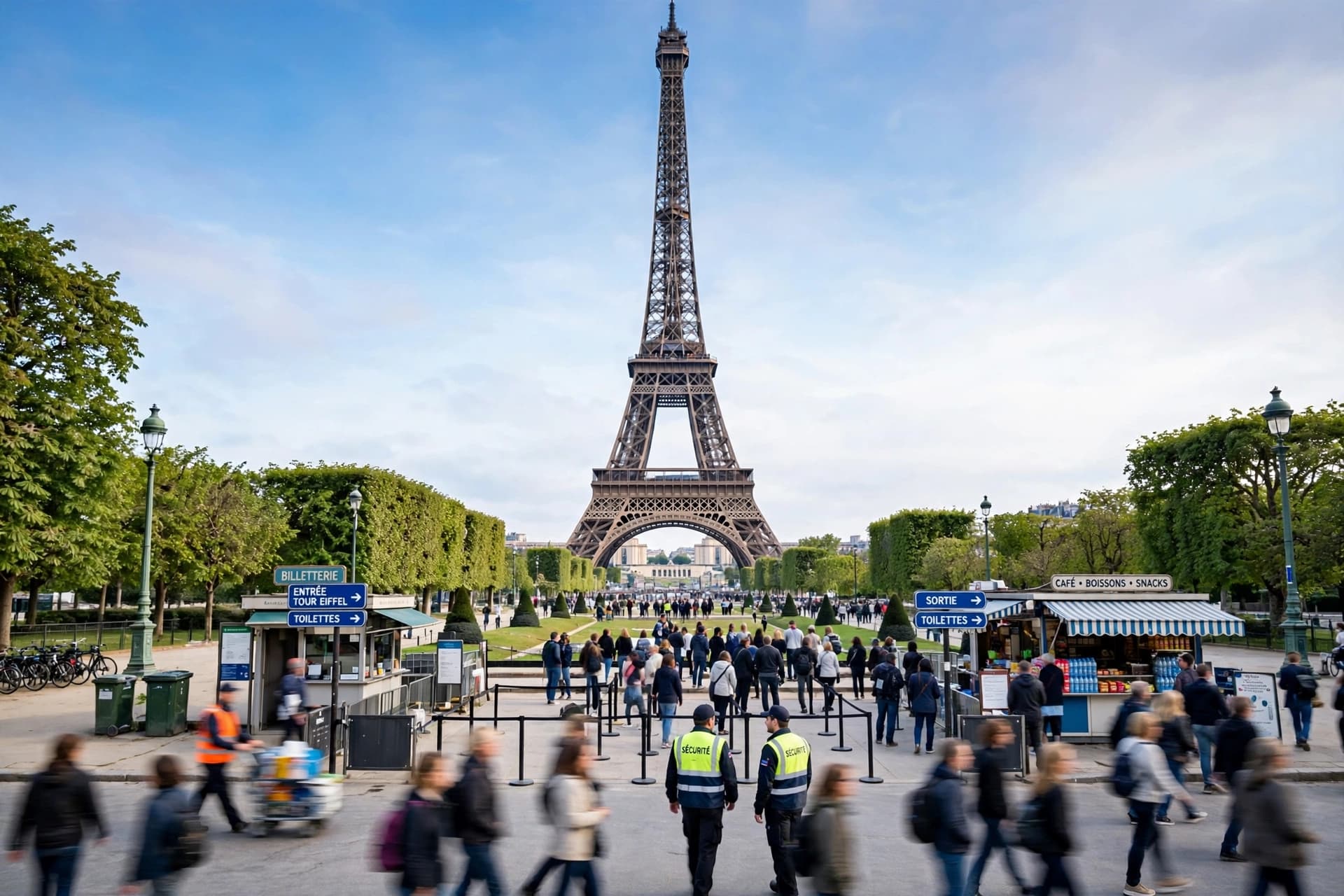
AI Image Disclaimer: Any image accompanying this article is AI-generated and should be viewed only as an editorial illustration, not as photographic evidence of the incident.
Sources: Associated Press Le Parisien Hindustan Times NDTV Free Press Journal
Published by Banx Network. This article is part of the Banx decentralized media programme, powered by the BXE token on the XRP Ledger.